






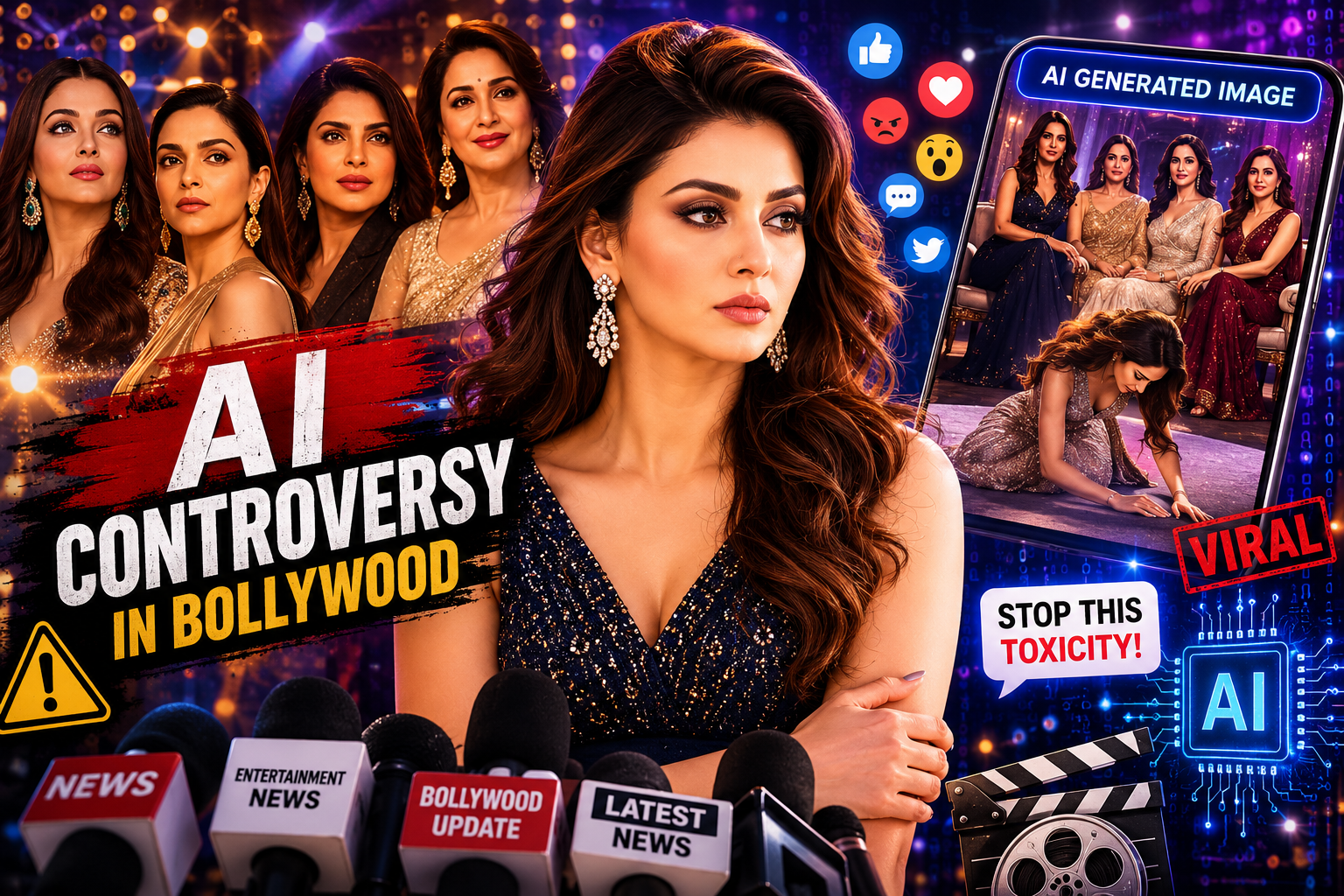
Urvashi Rautela has reacted strongly after a viral AI-generated image placed her in a controversial comparison with other leading Bollywood actresses.
The image triggered debate around online toxicity, celebrity ranking culture and the misuse of AI visuals.
Her response comes during a time when AI-generated celebrity content is spreading rapidly across social media.
The controversy raises a bigger question: how should Bollywood handle artificial images that blur entertainment, fan culture and personal dignity?
A Viral AI Image Sparks a Bollywood Debate
Bollywood has always been full of comparisons — box office numbers, star power, fashion moments, international appearances and fan following. But the latest controversy involving Urvashi Rautela shows how artificial intelligence has added a new and uncomfortable layer to celebrity culture.
A viral AI-generated image reportedly showed Urvashi Rautela kneeling before other Bollywood stars, including Aishwarya Rai, Deepika Padukone, Priyanka Chopra and Madhuri Dixit. The image appeared to visually rank actresses in a way that many viewers found insulting and divisive. Urvashi responded strongly and called out the toxicity around such content.
The issue is not only about one image. It is about the growing use of AI to create celebrity visuals that look dramatic, emotional or controversial but may not represent reality. These images can spread quickly because they are designed to trigger reactions. In the process, they can damage reputations, create unnecessary fan wars and reduce artists to online comparison charts.
Why Urvashi Rautela’s Response Matters
Urvashi Rautela’s reaction matters because it brings attention to a problem that many celebrities may increasingly face. AI-generated visuals can now create scenes that never happened, place actors in imaginary situations, and push misleading narratives without consent.
The Times of India reported that the viral image led to renewed discussion about harmful comparisons between women in the entertainment industry. This is important because Bollywood actresses have often been compared through beauty, global recognition, fashion appearances and box office influence. AI now makes those comparisons more visual, more viral and potentially more damaging.
In this case, the image was not simply fan art. It carried a clear hierarchy, suggesting that some actresses were above others. That kind of content can encourage toxic online behavior, especially when fans begin defending or attacking celebrities based on an artificial image.
AI Content Is Changing Celebrity Culture
Artificial intelligence has made image creation easier than ever. A user can generate a realistic-looking celebrity-style image within seconds. While this can be used creatively, it also creates serious risks when public figures are shown in false, humiliating or misleading situations.
Bollywood is especially vulnerable because celebrity culture is highly visual. Fashion looks, red-carpet appearances, film posters, award shows and social media pictures all shape public perception. When AI-generated visuals enter this space, many users may not immediately know whether an image is real, edited or completely artificial.
This is where responsible sharing becomes important. Fans, entertainment pages and social media users should clearly label AI-generated content. Without labels, artificial images can become misinformation. Even when the intention is humor or commentary, the result may be harmful for the person shown in the image.
The Pressure on Women in Bollywood
The controversy also highlights the intense pressure faced by women in the film industry. Actresses are often judged not only for their performances but also for their looks, public appearances, outfits, brand value and international visibility. Social media has made this pressure even stronger.
When AI-generated content adds ranking or humiliation to that environment, it can deepen unhealthy comparison. Instead of celebrating different careers and achievements, such visuals create a false competition. Aishwarya Rai, Deepika Padukone, Priyanka Chopra, Madhuri Dixit and Urvashi Rautela have all had different career paths and public identities. Reducing them to a single hierarchy does not reflect the complexity of their work.
This debate connects to a larger cultural problem: online audiences often consume celebrity content as rivalry. One actress is placed against another. One appearance is compared with another. One global event becomes a battlefield for fan groups. AI can intensify this by creating visuals that are more provocative than ordinary posts.
For readers following how digital culture affects public attention, our related news coverage on India’s next internet revolution and how 6G could change everyday life explains how faster digital systems may reshape media consumption.
For a deeper look at mental calmness, online pressure and emotional regulation, this related feature on how rhythmic breathing may help control anxiety may also be useful.
Should Bollywood Create Stronger AI Guidelines?
The entertainment industry may soon need clearer rules around AI-generated celebrity images. These rules could cover fan pages, promotional accounts, digital campaigns and entertainment portals. The basic principle should be simple: if an image is AI-generated, it should be clearly identified as AI-generated.
This is not about stopping creativity. AI art can be useful for posters, concepts, fictional characters and storytelling. But when real celebrities are shown in sensitive or humiliating situations, consent and labeling become important.
Bollywood has already faced issues around deepfakes, fake videos and edited celebrity content. The Urvashi Rautela controversy adds another example to the list. It shows that AI images do not need to be explicit or criminal to cause damage. Even a symbolic image can trigger public humiliation or unnecessary controversy.
A Wake-Up Call for Entertainment Media
The viral AI image controversy should act as a warning for entertainment media and social platforms. Celebrities are public figures, but they are not public property. There is a difference between criticism, satire and harmful digital manipulation.
Urvashi Rautela’s response may encourage more actors to speak out when AI-generated content crosses a line. It may also push audiences to think before sharing such posts. A funny or shocking image may seem harmless at first, but if it spreads a false or degrading message, it can contribute to a toxic online environment.
Bollywood’s future will include AI in some form. Film marketing, visual effects, poster design and digital campaigns may all use AI tools more frequently. But the industry must also protect artists from misuse. The balance between creativity and dignity will become one of the biggest digital challenges for entertainment in the coming years.
For now, the Urvashi Rautela episode is more than a celebrity reaction. It is a reminder that artificial images can create real emotional and reputational consequences. As AI becomes more powerful, Bollywood, media platforms and fans will need to become more responsible in how they create, label and share digital content.
Source: Times of India report on Urvashi Rautela’s reaction to the viral AI image
Read More: Latest News
Read More Interesting Content in My Blog Section of ‘The Thrive Journey’.