

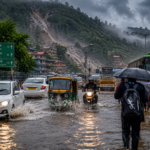






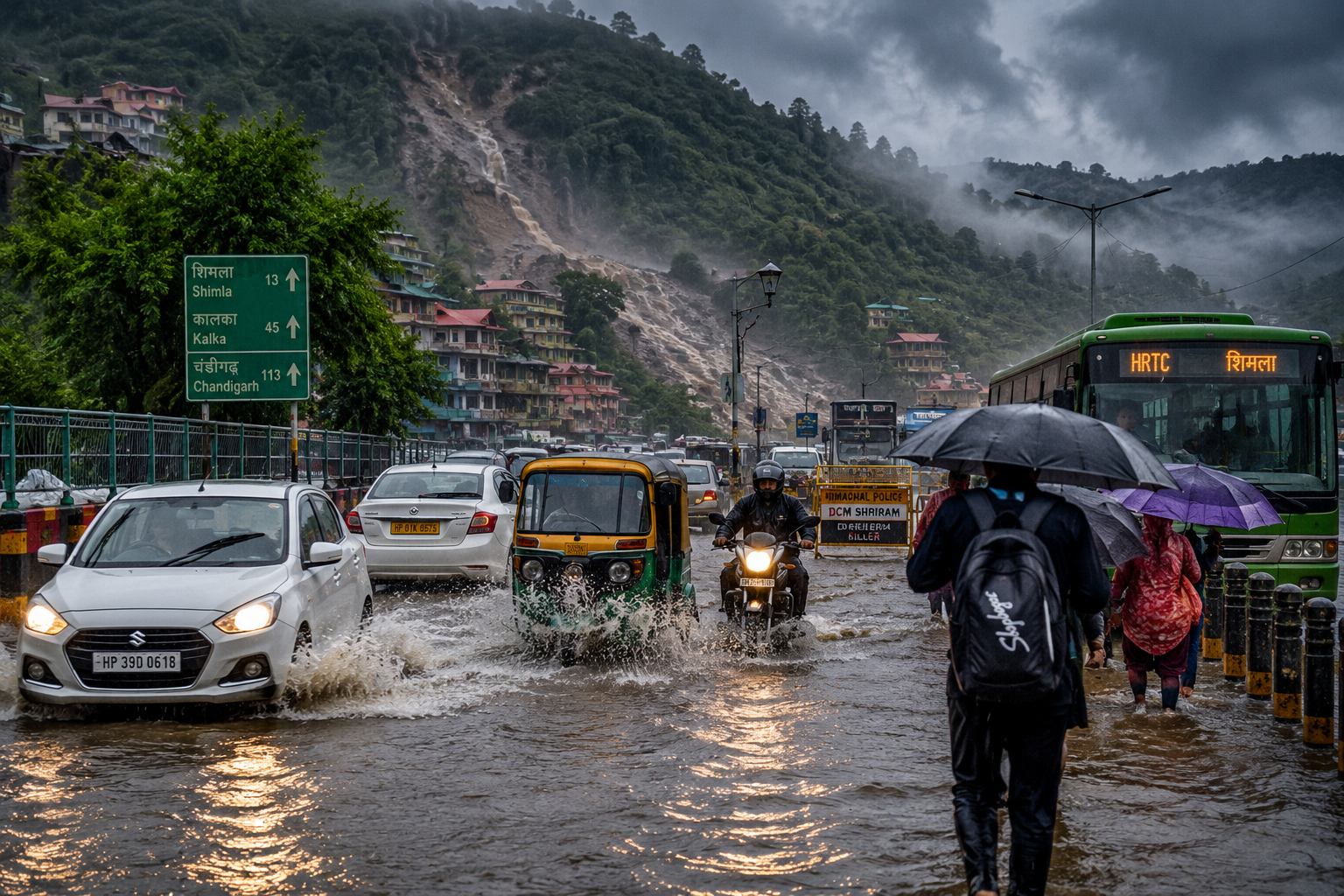
Heavy monsoon rain has placed several parts of India on alert, with Delhi-NCR, Himachal Pradesh, Uttarakhand, Uttar Pradesh, Bihar, West Bengal and the Northeast among the regions facing intense rainfall. The latest forecasts warn of waterlogging, traffic disruption, lightning, flash floods and landslides in vulnerable areas. Recent rain-related deaths and infrastructure damage have made the situation more serious for travellers and residents.
India’s monsoon has entered another dangerous phase as heavy rain, thunderstorms and gusty winds affect large parts of the country. The India Meteorological Department has forecast significant rainfall across northern, eastern and northeastern India, while several regions are also facing the risk of local flooding, landslides and reduced visibility.
The warning comes after recent monsoon showers caused deadly building collapses, landslides, flooded roads and travel disruption. At least four people were killed when a building collapsed in Delhi, while rain-related incidents were also reported in Kerala, Maharashtra, Gujarat and other parts of the country.
India Monsoon Alert at a Glance
| Region | Main weather concern | Possible impact |
|---|---|---|
| Delhi, Haryana and Chandigarh | Heavy to very heavy rain | Waterlogging, traffic jams and flight delays |
| Himachal Pradesh | Heavy rain through the coming days | Landslides, falling stones and blocked hill roads |
| Uttarakhand | Heavy rainfall and flash-flood risk | Local flooding, landslides and pilgrimage disruption |
| Uttar Pradesh | Heavy rain, thunderstorms and lightning | Flooded roads, reduced visibility and local disruption |
| Bihar | Heavy to very heavy rainfall | Waterlogging, river-level rise and crop damage |
| West Bengal and Sikkim | Heavy rain and thunderstorms | Flooding and disruption in hilly and low-lying areas |
| Northeast India | Widespread heavy rainfall | Flash floods, landslides and road closures |
| Coastal Karnataka and Kerala | Widespread rain in some areas | Slippery roads and local waterlogging |
| Gujarat, Maharashtra and Goa | Scattered to widespread showers | Highway flooding and transport delays |
On July 11, heavy rainfall was forecast across Delhi, Punjab, Haryana, Himachal Pradesh, Uttarakhand, Jammu and Kashmir and western Uttar Pradesh. Very heavy rainfall was also expected at isolated places across some northern and eastern regions.
The Northeast was expected to remain one of the wettest parts of the country, with heavy to very heavy rainfall affecting Assam, Meghalaya, Arunachal Pradesh, Nagaland, Manipur, Mizoram and Tripura. Eastern states including Bihar, West Bengal, Sikkim, Jharkhand and Odisha were also placed under close watch.
Why the Current Rainfall Is Dangerous
Heavy monsoon rainfall becomes especially dangerous when the soil is already saturated. Even a few additional hours of intense rain can trigger landslides, slope failures and sudden surface runoff in mountainous areas.
The IMD issued a flash-flood risk outlook for several Uttarakhand districts, including Dehradun, Nainital, Chamoli, Uttarkashi, Pithoragarh, Tehri Garhwal and Almora. Persistent rainfall in these regions can quickly affect mountain roads, rivers, small bridges and low-lying settlements.
The situation is not limited to the hills. In major cities, blocked drainage systems and rapid construction can cause water to accumulate within minutes. Waterlogging may delay ambulances, school buses, office commuters and airport passengers even when the rainfall itself lasts only a short time.
Recent scenes from Delhi showed flooded roads, fallen trees and commuters struggling through waterlogged streets. Delhi airport also advised passengers to allow additional travel time because roads leading towards the airport had been affected.
Readers planning travel during the current spell should also check our earlier guide on the 17-state IMD rain and travel warning, which explains the major risks for road travellers, hill tourists, students and flight passengers.
Lightning is another major concern. Many people wrongly assume that the danger ends when rainfall becomes lighter. However, thunderstorms can produce deadly lightning even when rain is intermittent. Open fields, rooftops, trees, water bodies, electric poles and exposed mountain locations should be avoided during thunderstorm activity.
What Residents and Travellers Should Do
People living in vulnerable areas should monitor updates issued by the IMD, district administrations, police and disaster-management authorities. Weather conditions can change quickly, particularly in hilly regions and areas close to rivers.
Road travellers should avoid unnecessary night journeys in Himachal Pradesh, Uttarakhand, Jammu and Kashmir and other mountainous regions. Falling rocks, mudslides and poor visibility can make familiar roads dangerous without warning.
Families travelling with children or elderly relatives should keep drinking water, essential medicines, dry clothing, power banks and emergency contact numbers ready. Phones should remain charged because electricity and mobile connectivity may be interrupted during severe weather.
Two-wheeler riders should stop at a safe covered location when rainfall becomes intense. Driving through deep or fast-moving water is dangerous because road depth, open drains and damaged surfaces may not be visible.
| Situation | Recommended action |
|---|---|
| Waterlogged road | Turn back rather than estimating the depth |
| Lightning nearby | Move indoors and avoid trees or metal structures |
| Hill-road journey | Check local police advisories before departure |
| Flight journey | Confirm status and leave home with extra time |
| Flood warning | Move documents, medicines and electronics higher |
| Landslide-prone area | Avoid slopes, riverbanks and unstable structures |
| Strong winds | Stay away from trees, hoardings and power lines |
Preparedness works best when it becomes part of everyday life rather than a last-minute response. The same principle of building reliable routines is explained in The Science of Habit Formation, where consistent small actions are shown to create stronger long-term results.
What Happens Next
Rainfall is expected to remain active across northwestern, eastern and northeastern India over the coming days. Himachal Pradesh and Uttarakhand may continue receiving heavy rain, while eastern Uttar Pradesh, Bihar, West Bengal, Sikkim and the northeastern states could experience further intense spells.
At the same time, the IMD has indicated that rainfall activity could become subdued over parts of central and southern peninsular India during the following six to seven days. This means the monsoon pattern will not be equally intense everywhere, but local thunderstorms and isolated heavy showers may still create disruption.
The current weather should therefore not be treated as an ordinary rainy-day inconvenience. For people living in flood-prone cities, mountainous districts or areas with weak infrastructure, a few hours of intense rainfall can rapidly become a serious emergency.
Residents should avoid spreading unverified weather videos or outdated warnings. The safest approach is to follow official forecasts, check local conditions before travelling and immediately obey evacuation or road-closure instructions.
Source: Reuters: Four die in Delhi building collapse as rains batter India and trigger landslides
Read More: Latest News
Read More Interesting Content in My Blog Section of ‘The Thrive Journey’.