




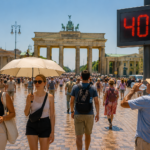

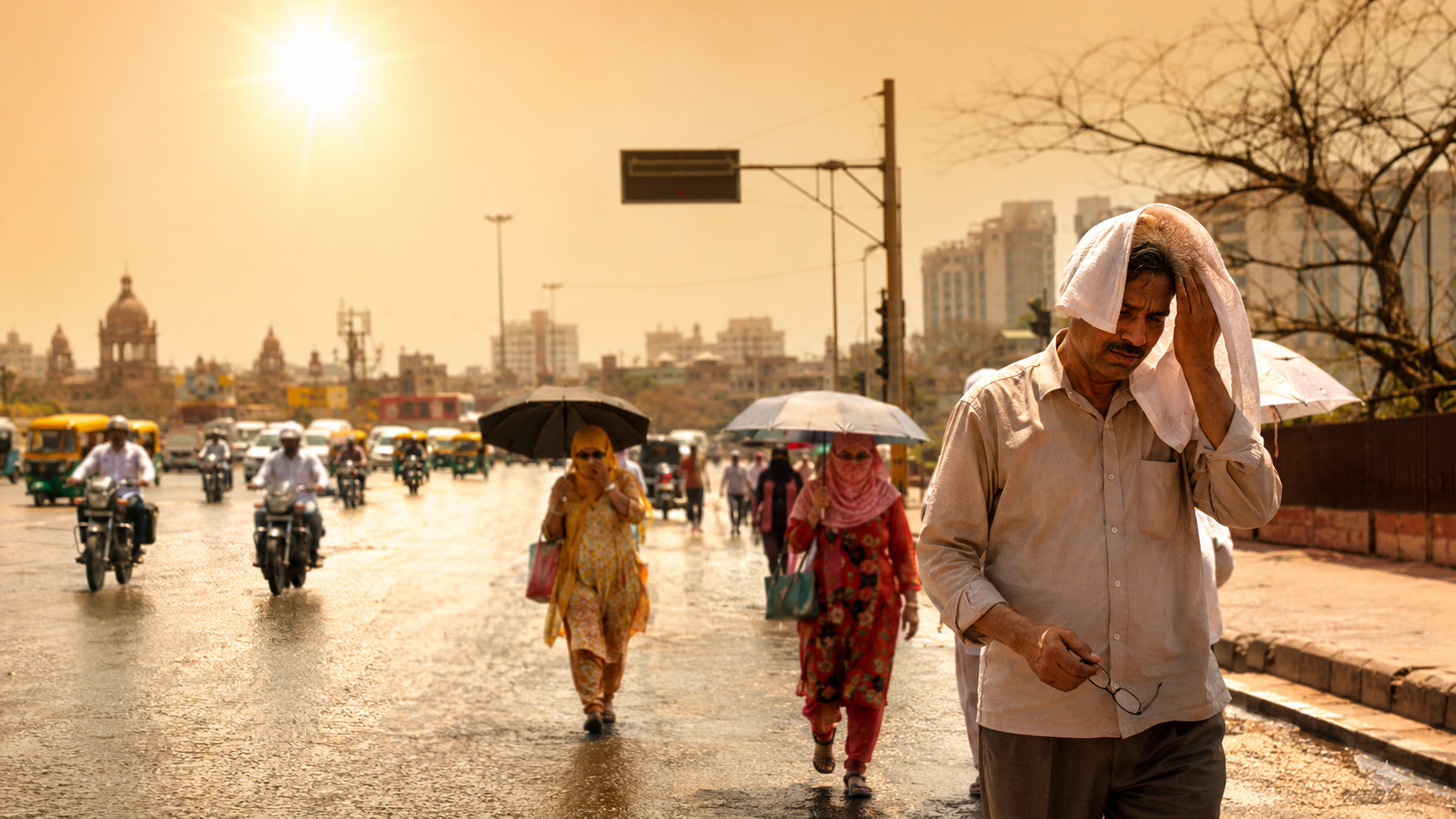
India’s intense summer heat is again becoming a major public concern as several regions face dangerously high temperatures.
Recent IMD updates show maximum temperatures crossing 43–47°C in parts of northwest, central and adjoining regions.
At the same time, global climate projections warn that the coming years may remain close to record heat levels.
For ordinary people, this is no longer just a weather story — it affects health, electricity demand, water stress, travel, work and daily life.
India’s Summer Heat Is Becoming Harder to Ignore
India’s summer season has always been intense, but the heatwave pattern seen in 2026 is again raising serious concerns. Large parts of the country have experienced extremely high temperatures, with the India Meteorological Department reporting maximum temperatures in the range of 43°C to 47°C over parts of northwest India, central India, adjoining Uttar Pradesh, east India and north peninsular India.
For millions of people, this kind of heat is not just uncomfortable. It affects how people travel, work, sleep, study and manage daily household routines. In cities, heat is often made worse by concrete surfaces, traffic, air pollution and limited green cover. In rural areas, farmers, labourers and outdoor workers face direct exposure for long hours. The result is a summer that feels more like a public health challenge than a seasonal inconvenience.
According to the India Meteorological Department heatwave bulletin on current temperature status and heat wave warning, very high maximum temperatures were observed across several regions during the latest heatwave period.
Why Heatwaves Are Becoming a Bigger Public Health Risk
Heatwaves can be dangerous because the human body has limits. When temperatures remain very high for long periods, the body struggles to cool itself. This can lead to dehydration, heat exhaustion and, in severe cases, heatstroke. Children, elderly people, pregnant women, people with existing health conditions and outdoor workers are especially vulnerable.
The danger increases when night temperatures also remain high. A hot night prevents the body from recovering after a long day of heat exposure. Many urban families depend on fans, coolers or air conditioners, but not everyone has equal access to reliable electricity or cooling devices. In lower-income households, heat stress can be far more serious because people may live in compact rooms with poor ventilation.
Schools, hospitals, transport systems and local administrations also face pressure during heatwave periods. Schools may need to change timings, hospitals may see more heat-related cases, and electricity demand can rise sharply as people use cooling appliances for longer hours.
Electricity, Water and Daily Life Under Pressure
A major heatwave does not affect only health. It also puts pressure on basic infrastructure. When temperatures rise, electricity demand increases because homes, offices, shops and public buildings use more fans, coolers and air conditioners. If the demand becomes too high, power cuts can make the situation worse, especially in smaller towns and semi-urban areas.
Water demand also increases. People need more drinking water, agriculture needs irrigation support, and cities may face pressure on water supply systems. In some areas, extreme heat can dry up ponds, reduce groundwater availability and increase stress on local ecosystems.
Transport is another affected area. Heat can make road travel uncomfortable, delay outdoor work and create problems for railway and airport operations when weather shifts suddenly from heatwaves to dust storms or thunderstorms. Recent weather updates also show that India is not only facing heat but also unstable weather patterns, including thunderstorms and strong winds in some regions.
This is why heatwaves must be treated as a serious planning issue. They are connected to health, water, power, agriculture, construction, public transport and urban design.
Climate Warnings Add a Larger Concern
The heatwave situation in India also comes at a time when global climate warnings are becoming sharper. Reuters reported that global temperatures are expected to remain near record highs over the next five years, based on findings from the World Meteorological Organization. The report highlighted the continuing risk of extreme climate conditions, even when year-to-year variations occur.
This does not mean every day will be hotter than the previous one. Weather naturally changes from week to week and region to region. But the long-term trend is worrying because warmer global conditions can increase the chances of extreme heat events, unpredictable rainfall, stronger storms and stress on food and water systems.
For India, the impact is especially important because the country has a large population, many outdoor workers, fast-growing cities and high dependence on seasonal weather patterns. Heatwaves can affect productivity, school attendance, farm activity, public health and energy consumption at the same time.
Why This Matters for Common People
For ordinary families, heatwave news is not just about temperature numbers. It is about whether children can safely go to school, whether elderly family members are comfortable, whether drinking water is available, whether electricity remains stable and whether people can continue working safely.
Daily precautions matter. People should avoid unnecessary outdoor activity during peak afternoon hours, drink enough water, wear light cotton clothing, use shade wherever possible and watch for warning signs such as dizziness, confusion, headache, heavy sweating or sudden weakness. Those symptoms should not be ignored during extreme heat.
Employers also need to think carefully about outdoor workers. Construction workers, delivery workers, traffic police, farmers and street vendors are among the most exposed groups. Providing shaded rest areas, drinking water and flexible work timing can reduce heat-related risks.
This issue also connects with India’s wider development future. As technology, cities and public systems evolve, weather resilience will become a key part of planning. Readers interested in how India’s next digital infrastructure shift may change everyday life can also read our related coverage on India preparing for the 6G era and how the next internet revolution could affect daily life.
At an individual level, mental and physical calmness also matters during stressful weather periods. Heat can disturb sleep, mood and concentration. For readers interested in stress control and breathing science, this related feature on how rhythmic breathing may help reduce anxiety and improve emotional balance may be useful.
India Needs Heat-Ready Cities and Communities
The bigger lesson from the 2026 heatwave is that India needs more heat-ready planning. Cities need more trees, shaded streets, reflective roofing, better ventilation in buildings and stronger public cooling spaces. Local authorities need clear heat action plans that are communicated in simple language to residents.
Public alerts should not remain limited to technical weather bulletins. They should reach people through mobile messages, local news, schools, resident groups and workplace announcements. People need to know not only that a heatwave is coming, but also what they should do differently.
Hospitals and clinics can prepare by monitoring heat-related illness. Schools can adjust timings when needed. Employers can protect outdoor workers. Families can check on elderly neighbours and relatives. Small actions can reduce risk when taken at the right time.
A Warning That Should Not Be Ignored
India’s heatwave story is no longer just about a few hot days in summer. It is becoming a reminder of how climate, public health and daily life are now deeply connected. When temperatures cross dangerous levels, the impact is felt in homes, hospitals, farms, streets, offices and schools.
The most important takeaway is simple: heatwaves should be treated seriously. They may not always look dramatic like floods or cyclones, but they can be equally dangerous because they affect people silently and widely.
As India moves deeper into an era of climate uncertainty, preparation will matter as much as prediction. Better public awareness, smarter city planning, reliable electricity, safe drinking water and community-level support can help reduce the damage. The 2026 heatwave is a warning, but it is also an opportunity to build stronger systems before future summers become even harder.
Source: India Meteorological Department
Read More: Latest News
Read More Interesting Content in My Blog Section of ‘The Thrive Journey’.