




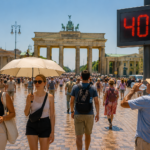

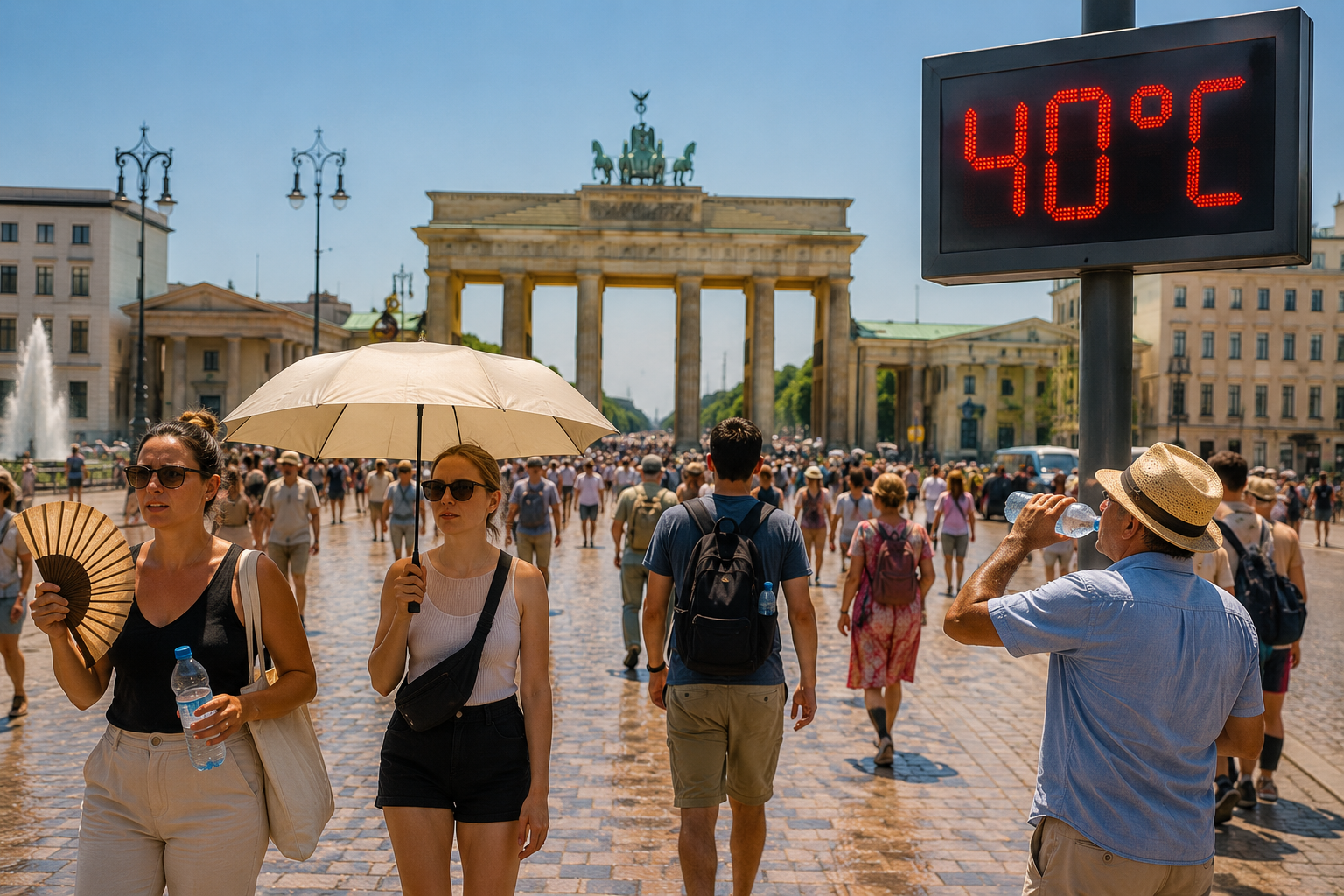
Europe is facing one of its most intense late-June heatwaves, with temperatures crossing 40°C in parts of the continent.
Germany and Denmark have reported record-breaking heat, while France, Italy, Switzerland and the UK have also faced serious disruption.
The heatwave has affected transport, power systems, public events, hospitals and daily life.
Experts say such extreme heat is becoming a bigger warning sign for climate, health and infrastructure planning.
Europe’s Summer Turns Dangerous
A severe heatwave is gripping large parts of Europe, pushing temperatures into record territory and forcing governments, transport operators and public health agencies to respond quickly. What began as a summer weather event has now become a wider warning about how extreme heat can disturb everyday life, even in countries that are usually known for milder climates.
According to Reuters, the latest heatwave has spread from Scandinavia to the Alps, with temperatures breaching 40°C in some places. Germany recorded a preliminary high of 41.3°C near Saarbrücken, while Denmark reported 37°C north of Aarhus, its highest temperature since measurements began in 1874.
The crisis is not limited to one country. Britain, France, Switzerland and Germany have all experienced record heat in June. Italy issued red alerts for several major cities, including Rome, Milan, Venice, Turin and Florence. France has also seen disruption in schools, rail travel, power generation and outdoor events as authorities tried to reduce public risk during the hottest hours.
Why This Heatwave Is Different
Heatwaves are not new, but this one is getting attention because of its intensity, timing and wide impact. The World Meteorological Organization said Europe’s late-June heatwave has shattered temperature records and affected human health, infrastructure, agriculture, ecosystems and labour productivity. WMO also noted that Europe is the world’s most rapidly warming continent.
The latest heat pattern has been linked to an “Omega block,” a weather setup that traps a large mass of hot air over an area for an extended period. When this happens, temperatures do not simply rise for a few hours; heat builds over days, including at night. That makes it harder for buildings, roads, rail tracks and the human body to cool down.
This is why the current heatwave has become more than a weather headline. Roads can buckle, railway tracks can expand, electricity demand can rise, hospitals can face more emergency cases, and elderly people, children and outdoor workers become more vulnerable.
Readers who followed India’s own extreme summer this year may notice a similar pattern. Our earlier report on India Heatwave 2026: Why Record Temperatures Are Becoming a Bigger Warning for Everyday Life explained how heat now affects electricity demand, water stress, public health and daily routines.
Daily Life, Travel and Health Under Pressure
The pressure on Europe’s public systems is becoming visible. In Germany, rail operators offered free cancellations for some long-distance travel to reduce pressure on the transport network. Some train services were suspended as a precaution, and part of a major motorway near Hamburg was affected after heat caused asphalt damage.
Hospitals and emergency services are also facing concern because heat-related illness can rise sharply during prolonged high temperatures. The World Health Organization says heatwaves can significantly affect society and increase heat-related deaths, while also placing strain on water, energy and transport systems. Older people, children and people with chronic illness are especially at risk.
For ordinary families, this means heat safety is not only about comfort. It is about planning the day wisely. People should avoid unnecessary outdoor movement during the hottest hours, drink water regularly, check on elderly relatives, keep rooms shaded during peak heat, and never leave children or pets in closed cars. UNICEF advises people to stay out of the hottest part of the day when possible, use shade, wear light clothing and stay hydrated.
In such extreme weather, even small habits matter. Readers looking for simple lifestyle routines that support balance and daily well-being can also explore 5 Daily Habits for a Balanced Life on The Thrive Journey.
A Climate Warning Europe Cannot Ignore
The biggest message from this heatwave is that Europe’s infrastructure was not fully designed for repeated 40°C days. Many homes do not have air conditioning. Older buildings trap heat. Roads and railways may not always be prepared for prolonged extreme temperatures. Public events, schools and workplaces also need better heat-response planning.
Reuters reported that scientists linked the severity of the heatwave to human-caused climate change, saying the extreme night-time temperatures seen this week have become far more likely than they were two decades ago.
The issue is not only Europe’s problem. Extreme heat is becoming a global public safety challenge. India, the US, the Middle East, Africa and parts of Asia are also facing stronger heat events, longer summers and higher pressure on electricity and water systems. When Europe, a region known for cooler climates, starts breaking heat records repeatedly, it becomes a warning for the rest of the world too.
The immediate forecast may bring some relief in parts of Europe as thunderstorms arrive, but the larger concern will remain. Governments will have to rethink city design, cooling centres, elderly care, outdoor work rules, school safety, transport systems and energy planning.
For readers, the lesson is simple: heatwaves are no longer just seasonal discomfort. They are climate, health, travel and infrastructure stories all at once. Europe’s record-breaking heat is another reminder that the world needs to prepare for hotter summers with the same seriousness that it prepares for floods, storms and other visible disasters.
Source: Reuters
Read More: Latest News
Read More Interesting Content in My Blog Section of ‘The Thrive Journey’.