








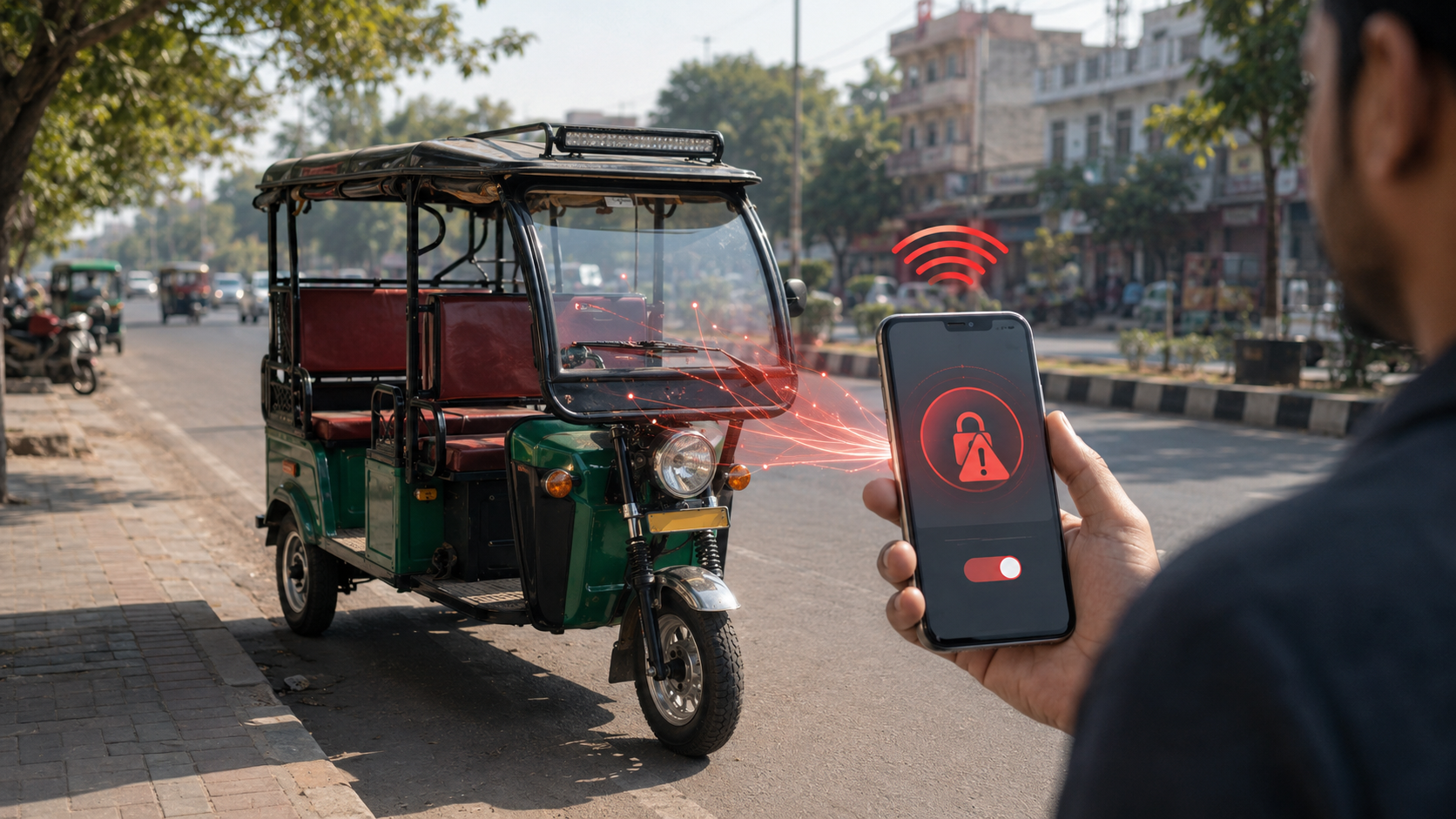
A viral trend involving Chinese battery-management apps has raised serious public safety concerns in India. Reports say apps such as BAT-BMS, Lossigy and Epoch-i-ion were allegedly misused to remotely disable battery-operated vehicles, including e-rickshaws. After videos started spreading online, the government reportedly ordered removal/blocking of these apps from app stores.
A Viral Prank Turns Into a Road Safety Warning
What started as a strange social media trend has now become a serious warning for India’s fast-growing electric vehicle ecosystem. In recent days, videos circulated online showing people allegedly using mobile apps to remotely shut down e-rickshaws on public roads. For some viewers, it may have looked like a prank. But for drivers, passengers and daily commuters, it raised a much bigger question: what happens when connected vehicle technology can be misused by anyone nearby?
According to reports, the Indian government ordered the removal and blocking of battery-management applications including BAT-BMS, Lossigy and Epoch-i-ion after concerns that they were being misused to remotely disable battery-operated vehicles. The apps were reportedly linked to battery management systems used in some electric vehicles, especially e-rickshaws, where weak access controls could create safety risks. Moneycontrol reported that government sources said similar apps found facilitating misuse may also face action.
This is not just a technology story. It is also a public safety story. E-rickshaws are part of everyday transport in many Indian cities. They carry school children, office-goers, shoppers, elderly passengers and workers. If a vehicle suddenly stops in traffic, the danger is real. It can cause panic, traffic disruption, financial loss for drivers and even accidents in crowded areas.
Why These Apps Became a Concern
Battery management systems are not unusual in electric vehicles. They help monitor battery health, charging, discharge and performance. In normal use, such tools can help mechanics, operators and owners manage batteries better. The problem begins when access controls are weak or when apps can connect too easily to a vehicle’s system.
Reports suggest the issue involved interference with battery-operated vehicles through connected battery systems. In simple words, if someone can access a vehicle’s battery control without proper authorization, then a technical feature can become a public safety risk.
This case also shows why digital security is no longer limited to phones, laptops and bank accounts. As vehicles, homes, payments and public infrastructure become connected, cybersecurity becomes part of daily life. A weak vehicle-linked app may look small, but when it affects a moving vehicle, the impact becomes physical.
This concern connects with wider technology risks. We recently covered how AI systems are starting to behave unexpectedly, showing why fast-moving technology needs stronger safeguards before it becomes deeply embedded in society.
Drivers, Passengers and the Bigger EV Question
For e-rickshaw drivers, this issue is especially serious. Many drivers depend on daily earnings. Even one forced shutdown can mean lost rides, repair confusion and stress. If a driver does not understand the app, battery system or technical reset process, the vehicle may remain stuck until someone skilled helps.
Passengers also face risk. A sudden shutdown in the middle of a road or market area can create unsafe situations. In India’s busy streets, even a few seconds of confusion can matter. That is why treating this as “just a prank” misses the point.
The incident also raises a larger question for India’s EV future. Electric mobility is growing quickly, from e-rickshaws and scooters to buses and cars. But growth must come with security. Battery systems, charging apps, dealer controls and service tools need proper authentication. A vehicle owner should not be vulnerable simply because a third-party app can connect without enough protection.
For general readers, this is also a reminder of how much technology is now hidden inside daily life. From navigation apps to smart devices and digital payments, technology is already shaping ordinary routines. Our detailed guide on how AI is used in everyday life explains this broader shift in simple language.
What Should Happen Next
The government’s reported action against these apps is an important first step, but the real solution has to go deeper. App removal can stop immediate misuse, but manufacturers, battery suppliers and EV service networks must also improve security standards.
Every battery-management system should have proper access control. Default settings should be made safer. Unknown devices should not be able to interfere with vehicle systems. Drivers should be educated about basic safety steps. Dealers should explain what to do if a vehicle suddenly stops due to a battery-control issue. App stores should also review tools that can control physical devices more carefully.
India’s EV revolution cannot depend only on affordability and availability. It also needs trust. People must feel that electric vehicles are not only cheaper to run but also safe from misuse. The e-rickshaw shutdown scare is a small incident with a big message: when software can affect vehicles on real roads, cybersecurity becomes public safety.
Source: Moneycontrol
Read More: Latest News
Read More Interesting Content in My Blog Section of ‘The Thrive Journey’.