








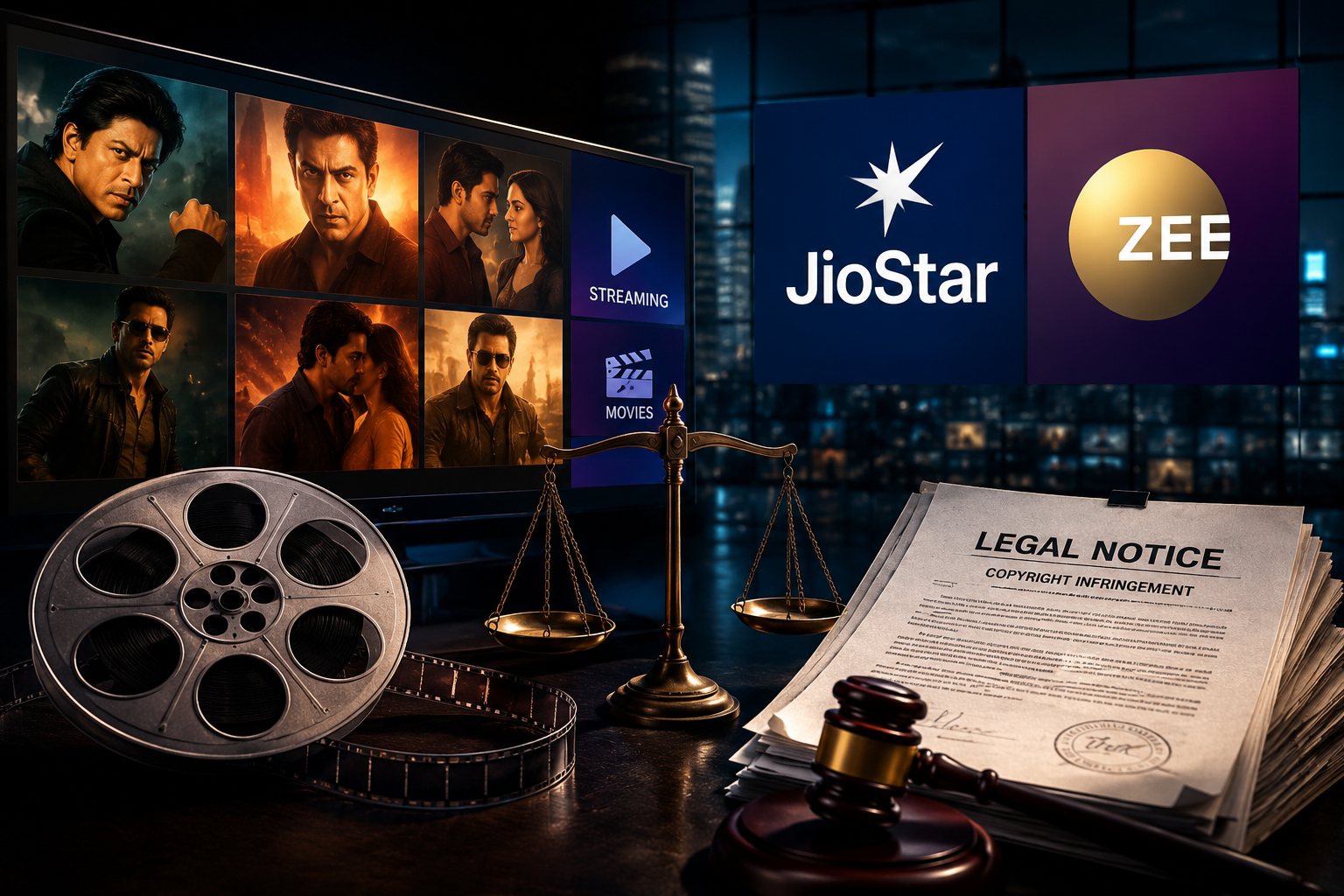
India’s entertainment industry is facing another major legal dispute as JioStar, the Reliance-Disney joint venture, has taken legal action against Zee Entertainment over Bollywood film broadcast rights.
The case reportedly involves 12 Bollywood films, including titles linked to major stars such as Shah Rukh Khan and Aamir Khan.
The dispute comes at a time when Indian media companies are fighting aggressively for film libraries, TV audiences and streaming dominance.
For viewers, it highlights how valuable Bollywood content has become in the digital entertainment economy.
A New Bollywood Rights Dispute Enters the Spotlight
India’s television and streaming market has become one of the most competitive entertainment battlegrounds in the world. The latest example is the legal dispute between JioStar, the media joint venture of Reliance and Walt Disney, and Zee Entertainment over the broadcast of Bollywood films.
According to a Reuters report on the Reliance-Disney and Zee Bollywood film rights dispute, JioStar has accused Zee of unauthorized broadcasts of 12 Bollywood films. The report says the films include titles featuring major stars such as Shah Rukh Khan and Aamir Khan, making the dispute significant not only from a legal point of view but also from a commercial entertainment perspective.
The case shows how valuable older and popular Bollywood film libraries have become. A film is no longer just a theatre product. Once its theatrical run ends, it continues to earn through satellite TV, streaming platforms, international syndication, music rights and digital licensing. That is why broadcast rights have become a major business asset for Indian media companies.
Why Bollywood Film Rights Matter So Much Now
For years, Indian households consumed Bollywood mainly through cinema halls and television premieres. Today, the same films are watched across multiple screens — TV channels, OTT apps, mobile phones, smart TVs and digital platforms. This shift has increased the value of film rights because every platform wants recognizable titles that can attract viewers quickly.
JioStar’s legal move reflects this changing market. After the Reliance-Disney media combination, JioStar has become one of the most powerful entertainment players in India. Reuters reported that JioStar holds a larger market share than Zee, which makes the dispute even more important in the larger competition between Indian media companies.
For Zee, Bollywood films have traditionally been a strong part of its television and entertainment identity. For JioStar, controlling premium film rights strengthens both its TV and streaming strategy. When two large players claim rights around high-value films, the matter can quickly become more than a simple content dispute. It becomes a signal of how aggressively companies are protecting their entertainment libraries.
The Larger Streaming War Behind the Case
The legal battle also points toward a bigger trend: content ownership is becoming as important as content creation. In the OTT era, platforms need more than new shows and films. They also need large libraries that keep audiences engaged every day.
Bollywood films are especially useful because they have repeat value. A blockbuster featuring a major star can continue pulling viewers years after release. Family dramas, action films, comedies and patriotic films often perform well on TV even after multiple telecasts. This is why broadcast and streaming rights remain valuable long after a film’s box office journey ends.
The Reuters report also noted that the Reliance-Disney and Zee dispute comes alongside other ongoing legal and commercial disagreements between the companies, including earlier issues connected to cricket licensing and music rights. This suggests that the fight between large Indian media houses is not limited to one film or one category of content. It is part of a broader struggle for control over premium entertainment.
What It Means for Viewers
For ordinary viewers, such disputes may seem distant. But they can affect where and how people watch films. If a company loses or restricts rights, a movie may disappear from one TV channel or streaming app and become available elsewhere. Viewers may need different subscriptions or may find that familiar films are no longer broadcast on the same platform.
This is why rights clarity matters. When media companies clearly own or license content, viewers get stable access. When rights are disputed, content availability can become uncertain. In a country like India, where Bollywood is deeply connected to family entertainment, television habits and weekend viewing, such disputes can have a wider impact.
This issue also connects with the future of digital entertainment and how technology is changing content distribution. Readers following the wider transformation of online platforms can also read our related coverage on India’s next internet revolution and how 6G could change everyday life.
For a broader look at how digital habits shape attention, creativity and media consumption, this related feature on the science of habit formation may also be useful.
Bollywood Is Now a High-Value Digital Asset
The legal dispute makes one thing clear: Bollywood films are no longer just artistic or cultural products. They are also high-value digital assets. A single film can support TV programming, OTT libraries, advertising packages and subscription strategies.
As India’s entertainment market grows, such rights disputes may become more common. Studios, broadcasters and streaming platforms will increasingly compete for ownership, licensing control and exclusive access. The companies that hold the strongest libraries may have a long-term advantage because audiences often return to familiar films.
For Bollywood, this could create both opportunity and pressure. Film producers may receive higher value for their content, but media companies may also become more cautious and legal-focused while acquiring titles. For viewers, the result may be a more fragmented entertainment landscape where different platforms compete for exclusive film access.
The Reliance-Disney and Zee case is therefore more than a legal disagreement. It is a sign of where Indian entertainment is heading — toward a future where Bollywood’s biggest stars, classic films and commercial hits are central to the streaming and television power game.
Source: Reuters report on the Reliance-Disney and Zee Bollywood film rights dispute
Read More: Latest News
Read More Interesting Content in My Blog Section of ‘The Thrive Journey’.