





A hazardous chemical leak at an aerospace facility in Garden Grove, Southern California, has forced around 40,000 residents to evacuate across parts of six Orange County cities. Officials said an overheated storage tank containing methyl methacrylate, a flammable chemical used in plastics manufacturing, created fears of rupture, spill, or explosion. Emergency crews are working to cool and stabilize the tank while evacuation centers remain open for affected families.
A major hazardous materials emergency in Southern California has forced around 40,000 people to leave their homes after a chemical storage tank began leaking toxic vapors at an aerospace facility in Garden Grove. The incident has created serious safety concerns across Orange County, with officials warning that the overheated tank could rupture, spill chemicals, or explode if the situation is not brought fully under control.
The leak is connected to a storage tank at a GKN Aerospace facility in Garden Grove, where officials said the tank contained about 6,000 to 7,000 gallons of methyl methacrylate. This chemical is commonly used in plastics manufacturing and industrial production, but it can become dangerous when overheated because it is flammable and can release harmful vapors. AP reported that evacuation orders affected Garden Grove and parts of Cypress, Stanton, Anaheim, Buena Park, and Westminster.
The emergency began after the tank overheated and started venting vapors. Authorities initially worked to stabilize the situation, but the risk grew serious enough for officials to issue wider evacuation orders. Schools in affected areas were also closed as emergency crews worked to prevent a larger disaster. AP reported that officials were concerned the tank could either rupture or explode, creating a much wider safety hazard for nearby residents.
Why the Chemical Leak Became So Serious
The biggest concern is the chemical inside the tank: methyl methacrylate. It is used in making plastics and other industrial materials, but when exposed to high heat or unstable conditions, it can create dangerous vapors and fire-related risks. Local health officials warned that exposure to vapors could cause symptoms such as respiratory irritation and eye irritation, making evacuation necessary for public safety.
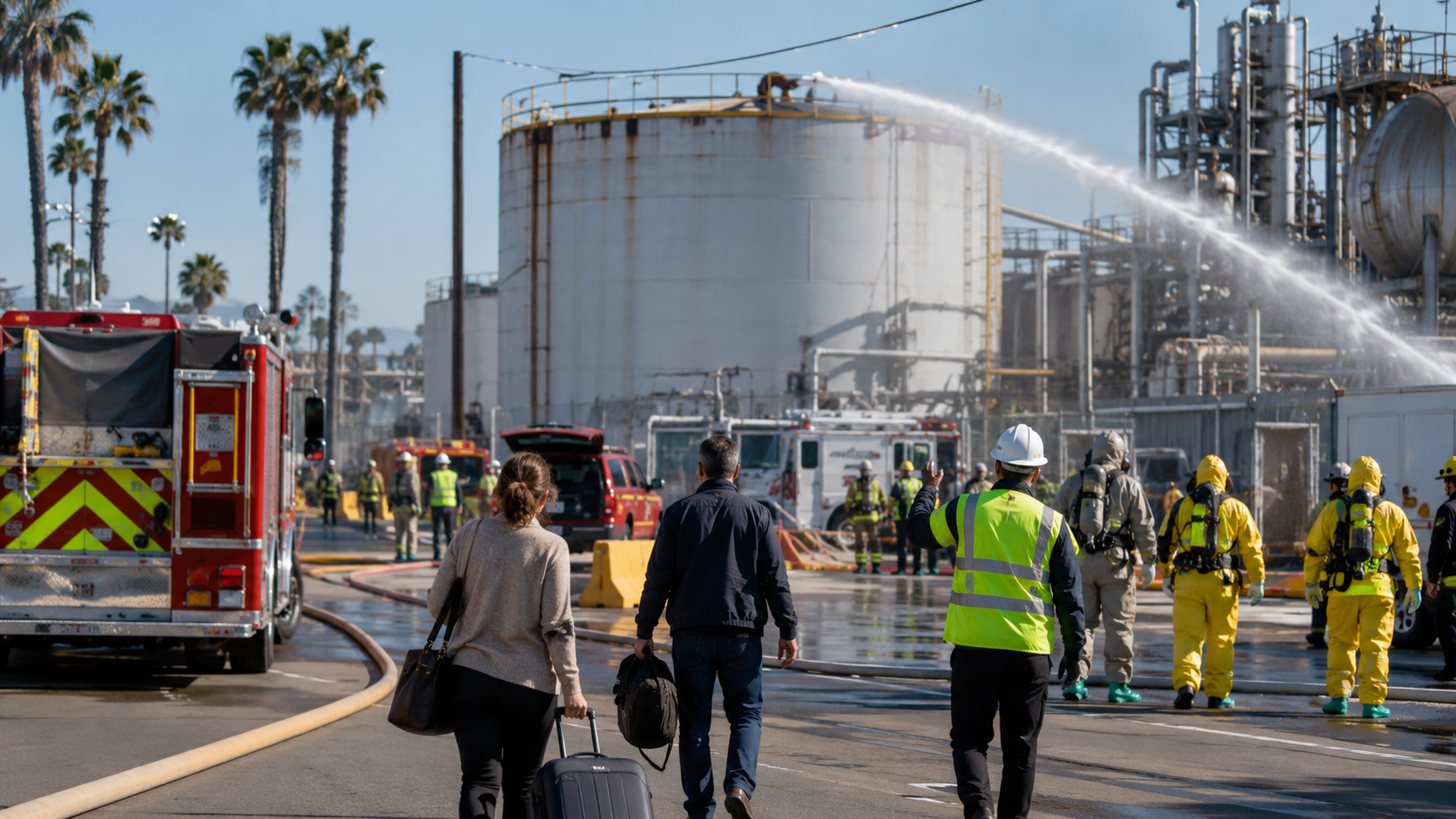
Emergency crews have been trying to cool the damaged tank and reduce the possibility of a catastrophic failure. AP reported that firefighters managed to lower the tank’s temperature by Friday, giving crews more time to work on repairs and stabilization. However, one of the damaged tanks remained a concern, and responders continued monitoring the situation with specialized equipment including drones.
The Guardian reported that the situation became more complicated after a damaged valve worsened the emergency, leading authorities to reinstate and expand evacuation orders. Officials also set up sandbag barriers around the site to reduce the risk of environmental contamination if chemicals escaped from the tank.
Which Areas Were Affected?
The evacuation orders covered around 40,000 residents across six Orange County cities: Garden Grove, Cypress, Stanton, Anaheim, Buena Park, and Westminster. Evacuation centers were opened for affected residents as families moved away from the danger zone. AP also noted that communication became a challenge in some communities, especially among non-English-speaking residents, including parts of the Vietnamese community. Emergency broadcasts and police door-to-door checks were used to help warn people.
This type of emergency is especially difficult because it affects homes, schools, workers, elderly residents, children, and local businesses at the same time. Unlike a normal fire or road accident, a chemical incident can create invisible risks through vapors, air quality concerns, and possible contamination. That is why authorities usually take a more cautious approach when ordering evacuations.
The location of the incident also drew attention because Garden Grove is in Orange County, not far from major Southern California destinations. However, reports said nearby Disneyland was not affected by the evacuation order.
What Emergency Crews Are Doing Now
Emergency teams are focused on three main priorities: keeping the tank cool, preventing a chemical spill, and protecting residents from vapor exposure. Firefighters and hazardous-materials teams have been working around the clock to reduce pressure and stabilize the tank. Drones are being used to monitor the tank’s temperature and help responders assess risk without sending people too close to the danger zone.
Containment barriers have also been placed around the facility to reduce the chance of chemical contamination spreading into nearby water systems or surrounding areas. This is important because a chemical spill can create long-term cleanup problems even after the immediate danger has passed.
GKN Aerospace said safety remained a priority as the company worked with emergency responders. For residents, however, the immediate concern is simple: when will it be safe to return home? Officials have urged people to follow evacuation instructions and avoid entering restricted areas until authorities confirm that the risk has passed.
Why This Story Matters for US Readers
This incident is not just a local California emergency. It raises a broader question about industrial safety, chemical storage, and emergency preparedness in populated urban areas. Many industrial facilities across the United States operate near homes, schools, roads, and commercial centers. When a chemical tank, fuel system, or manufacturing unit fails, the impact can quickly spread beyond the factory boundary.
For families, the Garden Grove evacuation is a reminder that emergency preparedness is not only about natural disasters like wildfires, earthquakes, or storms. Chemical emergencies can also force sudden evacuation, disrupt schools, and create health risks. Residents living near industrial zones may need to know local evacuation routes, emergency alert systems, and nearby shelter locations.
This also connects with the larger issue of infrastructure and public safety. In our earlier report on India’s chip ambition entering a new phase as semiconductor investments build momentum, we discussed how advanced manufacturing is becoming central to modern economies. But as industries grow, safety systems, environmental checks, and emergency planning must grow with them.
At a personal level, crises like this show why small preparedness habits matter. On The Thrive Journey, we have explained the power of repeated daily habits in The Science of Habit Formation. Keeping emergency contacts updated, knowing local alerts, and preparing a small evacuation kit are simple habits that can become important during sudden events.
What Happens Next?
The next major update will depend on whether emergency crews can fully stabilize the remaining damaged tank and confirm that surrounding areas are safe. Authorities will also need to assess whether any chemical contamination occurred and whether air quality remains within safe limits. Until then, evacuated residents may have to wait for official clearance before returning home.
So far, no injuries have been reported, which is a positive sign. But the scale of the evacuation shows how seriously officials are treating the risk. A tank containing thousands of gallons of flammable industrial chemical cannot be treated casually, especially in a densely populated area.
For now, the safest step for affected residents is to follow official local instructions, avoid the restricted zone, and rely on verified emergency updates instead of social media rumors. The Garden Grove chemical tank leak has already become one of the most closely watched US safety stories of the day, and further updates are expected as crews continue working to prevent a larger disaster.
Source: 40,000 people under evacuation orders for a chemical tank leak in Southern California
Read More: Latest News
Read More Interesting Content in My Blog Section of ‘The Thrive Journey’.