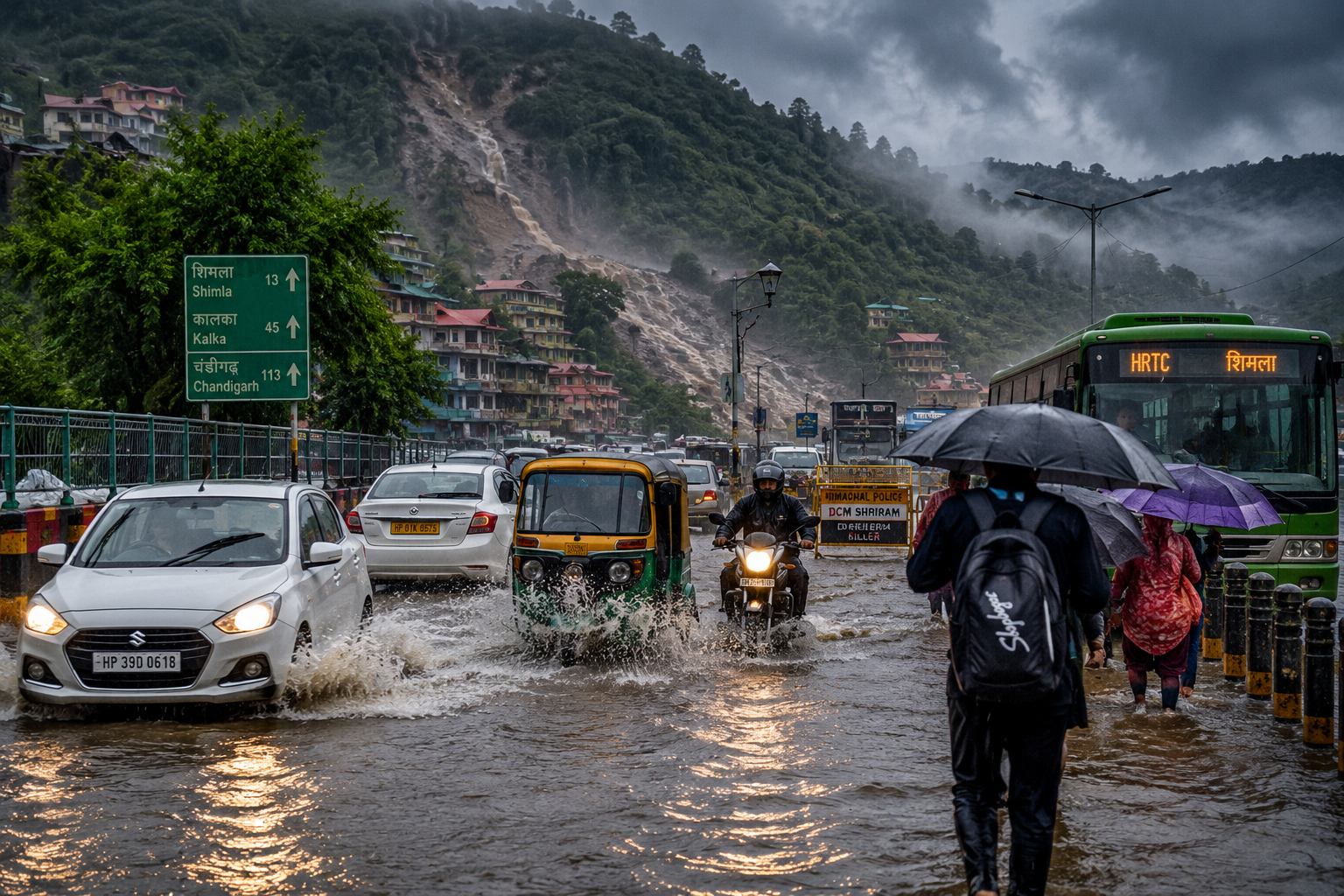









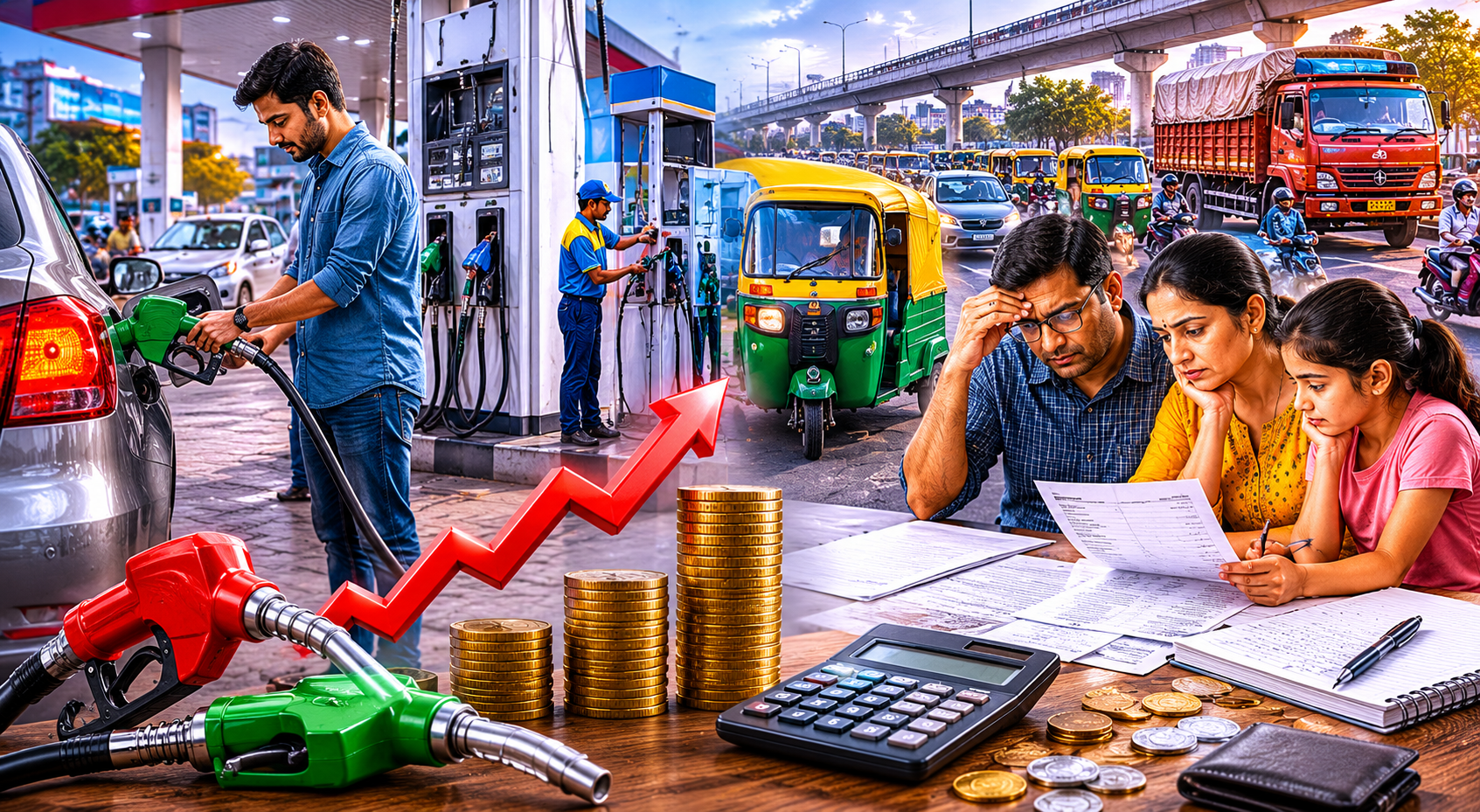
India’s fuel prices have increased again as petrol and diesel rates were raised for the third time in May 2026. CNG prices have also moved higher in Delhi, adding pressure on commuters, transport operators, delivery services, and household budgets. While the direct increase may look small per litre, the wider impact can slowly appear through transport costs, food prices, school travel, office commute, and daily essentials.
India’s latest fuel price hike has once again brought household budgeting, transport costs, and inflation concerns back into focus. Petrol and diesel prices were increased for the third time in May 2026, while CNG rates also rose in Delhi, creating fresh pressure on daily commuters and commercial vehicle operators.
According to Reuters, Indian state-run fuel retailers raised petrol and diesel prices again on May 23, 2026, as they tried to recover losses caused by elevated crude oil prices. The report said petrol in New Delhi rose by ₹0.87 per litre to ₹99.51 per litre, while diesel increased by ₹0.91 per litre to ₹92.49 per litre. Overall, petrol and diesel prices have increased by around ₹5 per litre this month after the first retail fuel price hike in four years on May 15.
This latest rise may look small if seen only as less than ₹1 per litre. But fuel price hikes do not affect only private car and bike owners. Petrol, diesel, and CNG are deeply connected to India’s daily economy. From office travel to school vans, from vegetable transport to e-commerce delivery, fuel prices influence many small costs that eventually reach ordinary families.
Why Fuel Prices Are Rising Again
The latest petrol and diesel hike is mainly linked to rising crude oil costs and global energy pressure. Reuters reported that Indian fuel retailers raised prices for the third time in May because of losses from sustained high crude oil prices, which were influenced by the ongoing conflict involving Iran and wider West Asia tensions.
The Times of India also reported that the latest hike was less than ₹1 per litre and came amid Middle East-related crude oil pressure. The report said state-run fuel retailers are trying to manage financial losses caused by elevated international oil rates.
India is highly dependent on imported crude oil, so international price movement directly affects the domestic fuel market. When global crude becomes costlier, oil marketing companies face pressure because they either increase retail prices or absorb losses. If prices remain unchanged for a long time during high crude periods, companies may accumulate large under-recoveries.
This is why fuel pricing becomes both an economic and political issue. A sudden large hike can hurt households immediately, while delaying price adjustments can create pressure on oil companies.
CNG Price Hike Adds More Pressure on Daily Commuters
CNG, which many people consider a cheaper and cleaner transport fuel, has also become costlier. The Economic Times reported that CNG prices in Delhi were increased by ₹1 per kg, marking the third hike in ten days. The increase was announced by Indraprastha Gas Limited, which supplies CNG in the capital.
This matters because CNG is widely used by taxis, auto-rickshaws, app-based cabs, private vehicles, and some commercial transport operators. When CNG becomes costlier, the first impact is felt by drivers who travel long distances every day. If fuel costs remain high, fares may eventually rise or drivers may earn less after fuel expenses.
For families, this can mean higher monthly spending on daily commuting. For students, school transport vans and coaching travel may also become costlier if operators pass on the increased fuel cost.
How This Can Affect Household Budgets
Fuel price hikes affect households in two ways: directly and indirectly.
The direct impact is easy to understand. If a person uses a bike, car, taxi, auto, or CNG vehicle regularly, monthly travel spending increases. Even a ₹5 per litre increase can matter for families who travel daily for work, school, college, business, or medical needs.
The indirect impact is more serious and often less visible. Diesel powers a large part of India’s road freight movement. Goods such as vegetables, fruits, milk, packaged food, medicines, construction material, and consumer products move through road transport. When diesel becomes costlier, transporters may increase freight charges. Over time, these higher transport costs can influence retail prices.
NDTV Profit explained this concern clearly, noting that India moves roughly 65% of its freight by road and almost all of it runs on diesel. This means a diesel hike is not just a transport issue; it can become a cost-of-living issue.
For middle-class families, the pressure may appear slowly. Grocery bills may rise slightly. Delivery charges may increase. Cab rides may become costlier. Monthly fuel spending may cross the usual budget. Even small increases across multiple categories can disturb household planning.
Will This Fuel Hike Create Big Inflation Pressure?
The full impact depends on how long fuel prices remain high and whether more hikes follow. A one-time small increase may not heavily damage household budgets, but repeated hikes can create cumulative pressure.
Business Standard reported that ICRA estimated India spent around ₹6 trillion on petrol and ₹10 trillion on diesel in FY2026, although much of diesel spending is by businesses. According to the report, a 3% retail selling price increase could translate into an incremental amount of around ₹0.5 trillion, with households likely adjusting their spending to absorb part of the rise.
This means the impact may not be sudden for every family, but it can still reduce disposable income. People may cut small discretionary spending, delay purchases, reduce unnecessary travel, or shift to public transport where possible.
For India’s economy, fuel prices are important because they influence transport, logistics, inflation expectations, consumer confidence, and business costs. If fuel remains expensive for a longer period, companies may pass costs to consumers, making daily goods and services costlier.
Why This Matters for India’s Wider Economy
Fuel prices are closely connected with India’s growth story. A country with rising manufacturing, e-commerce, construction, agriculture movement, and urban mobility needs stable transport costs. When fuel costs rise repeatedly, businesses have to recalculate their logistics expenses.
This connects with India’s broader manufacturing ambitions. In our earlier report on India’s chip ambition entering a new phase as semiconductor investments build momentum, we discussed how India is trying to strengthen advanced manufacturing and supply chains. Fuel and logistics stability will also matter for such industries because factories depend on smooth movement of raw materials, workers, equipment, and finished products.
For households, the lesson is also practical. Families may need to track monthly travel expenses more carefully, combine trips, avoid unnecessary vehicle use, compare public transport options, and review delivery spending. Small planning changes can reduce the impact of higher petrol, diesel, and CNG prices.
On The Thrive Journey, we have also discussed how small daily actions can shape long-term outcomes in The Science of Habit Formation. Budget control works in a similar way: small repeated habits like tracking fuel spending, planning travel, and avoiding wasteful trips can protect monthly savings over time.
What Consumers Should Watch Next
Consumers should watch three things in the coming days: crude oil prices, future retail fuel revisions, and CNG rate updates. If global crude prices remain elevated, more adjustments may follow. If the situation stabilizes, fuel retailers may slow or pause further hikes.
People should also avoid relying on random social media fuel price charts because prices can differ by city due to state taxes, dealer commission, freight charges, and local factors. The most reliable way is to check official oil company updates or trusted news sources.
The latest fuel price hike is not just a petrol pump story. It is a reminder that global tensions, crude oil markets, transport networks, and household budgets are deeply connected. A small rise at the pump can travel through the economy and eventually reach the kitchen, office commute, school van, delivery bill, and monthly savings plan.
For now, the increase may be manageable for many families, but repeated hikes can become painful. The real concern is not only today’s price change; it is whether fuel costs continue rising in the weeks ahead.
Source: Indian retailers raise fuel prices for a third time in May 2026
Read More: Latest News
Read More Interesting Content in My Blog Section of ‘The Thrive Journey’.