






The United States has temporarily expanded its Ebola-related travel restrictions to include green card holders who recently traveled to the Democratic Republic of Congo, Uganda, or South Sudan. The move comes amid concern over a rare Bundibugyo Ebola outbreak and rising pressure on public health screening systems. While US citizens and nationals remain exempt, the decision has triggered debate over public health protection, immigration rights, and airport safety measures.
The United States has expanded its Ebola-related travel restrictions in a move that could affect lawful permanent residents, commonly known as green card holders. Under the latest order, green card holders who have been in the Democratic Republic of Congo, Uganda, or South Sudan within the previous 21 days may be temporarily barred from entering the United States. The restriction is linked to growing concern over the spread of Ebola in parts of Africa and the need to prevent possible transmission inside the US.
The decision marks a major shift because green card holders are usually treated differently from temporary visa holders or foreign visitors. In many previous travel restrictions, lawful permanent residents were exempt. But in this case, the Centers for Disease Control and Prevention said the expanded restriction was necessary to protect public health and manage emergency response resources.
The order comes as health officials monitor a rare Bundibugyo strain of Ebola. Reuters reported that the World Health Organization raised the risk of the outbreak in the Democratic Republic of Congo to “very high” and declared the situation in DRC and Uganda an emergency of international concern.
What the New US Ebola Travel Ban Means
The temporary travel restriction applies to lawful permanent residents who have been in the Democratic Republic of Congo, Uganda, or South Sudan during the previous 21 days. The 21-day window is important because Ebola symptoms can appear within that incubation period after exposure.
Earlier restrictions had blocked certain travelers from affected countries, but green card holders were exempt along with US citizens and nationals. The latest update removes that exemption for lawful permanent residents, at least temporarily.
This does not mean every traveler from Africa is affected. The restriction is targeted at people who recently traveled through specific Ebola-affected countries. US citizens and US nationals are still exempt, but they may face enhanced health screening, monitoring, or public health instructions depending on their travel history.
For affected green card holders, the move could create serious personal and family disruption. A person who lives permanently in the US but traveled to one of the affected countries may suddenly face uncertainty about returning home. This is why the issue is gaining attention not only as a health story but also as an immigration and civil rights story.
Why Health Officials Are Taking This Step
Ebola is a serious viral disease that can spread through direct contact with bodily fluids of an infected person. It is not spread like common respiratory viruses, but outbreaks can become deadly when healthcare systems are overwhelmed, contact tracing becomes difficult, or treatment centers face community resistance.
The current concern is linked to the Bundibugyo Ebola strain, which has raised alarm among global health officials. Reports say the outbreak has affected parts of the Democratic Republic of Congo and Uganda, while South Sudan is also included in the US travel restriction because of regional risk and travel movement.
US officials appear to be taking a prevention-first approach. The logic is simple: if even one infected traveler enters without detection, authorities may have to track contacts, monitor exposed people, prepare hospitals, and use emergency resources quickly. By restricting entry from high-risk travel histories, the CDC is trying to reduce that possibility.
However, the decision is also controversial because green card holders are not ordinary visitors. They have permanent legal status in the US, and many have homes, jobs, families, and long-term lives in the country. That makes this restriction legally and emotionally more sensitive than a standard visitor ban.
Airport Screening Could Become More Important
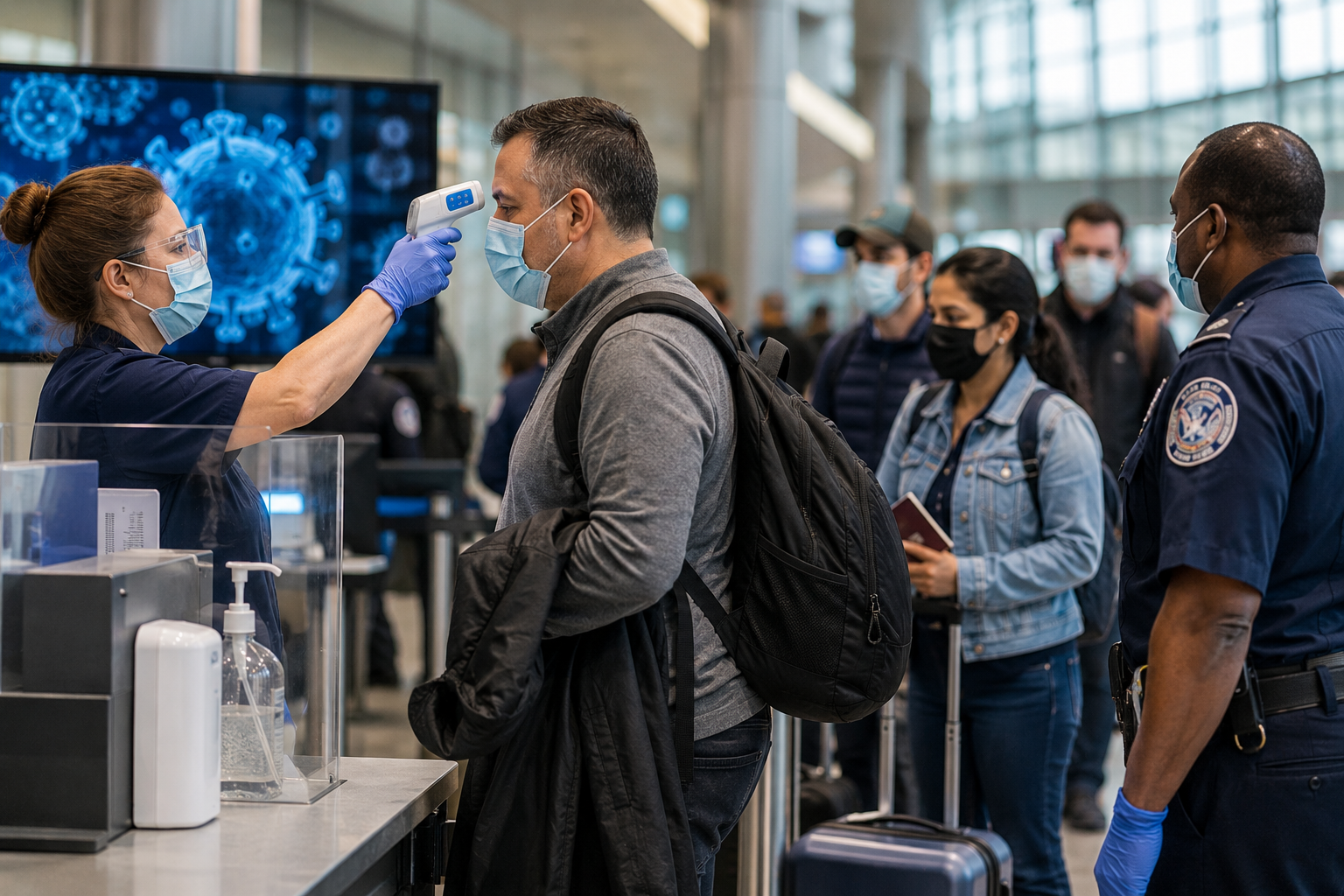
The travel ban is only one part of the response. Enhanced airport screening is also expected to become more important as the US tries to detect possible Ebola exposure before it becomes a domestic public health issue.
Screening may include travel-history checks, symptom questions, temperature checks, and instructions for monitoring health after arrival. In some cases, travelers may be directed to specific airports where health officials are better prepared to evaluate risk.
For ordinary Americans, the important point is that the risk of widespread Ebola transmission inside the US remains low when strong screening, hospital readiness, and contact tracing are in place. But public concern can rise quickly when the word “Ebola” appears in headlines, especially after memories of past outbreaks.
This is where clear communication becomes essential. Health authorities need to explain who is affected, why the restriction exists, how long it may last, and what protections are in place for the public.
Why This Could Become a Viral US News Story
This story has strong viral potential in the US because it combines three highly sensitive topics: public health, immigration, and airport travel. Each of these topics already attracts strong attention, but together they create a debate that can spread quickly across social media and news platforms.
Some readers may see the order as a necessary public health step. Others may question whether it goes too far by affecting lawful permanent residents. Immigration lawyers and rights groups may raise concerns about due process, family separation, and the precedent of blocking green card holders from returning.
The Washington Post reported that health officials cited public health and “resource constraints” as reasons for expanding the restriction to green card holders. That phrase matters because it suggests the government is not only worried about disease transmission but also about whether the response system can handle a larger monitoring burden.
For readers following global technology and public safety developments, this also connects with wider questions about how countries prepare for fast-moving risks. Our earlier report on Google Search’s strange AI result and the future of online information showed how trust and accuracy matter in digital systems. In a health emergency, the same principle applies: people need accurate, verified information instead of panic-driven rumors.
What Travelers Should Know Now
Travelers should not rely on social media posts, WhatsApp forwards, or unofficial travel advice for this issue. Ebola-related travel rules can change quickly depending on outbreak conditions, government assessment, and airport screening capacity.
People who recently traveled to the Democratic Republic of Congo, Uganda, or South Sudan should check official US government and airline guidance before planning travel to the United States. Green card holders may need to seek updated legal or consular guidance if they are outside the US and affected by the order.
For people already in the US, the key concern is not panic but awareness. Anyone with recent travel to an affected area should follow public health instructions and seek medical guidance if symptoms appear. Ebola symptoms can include fever, weakness, vomiting, diarrhea, and unexplained bleeding, but only a qualified health professional can assess risk properly.
On The Thrive Journey, we have discussed how modern life is increasingly shaped by science, technology, and decision-making in All About AI: What It Is, How It Works, and Why It Matters. Public health systems are also becoming more data-driven, using travel history, outbreak monitoring, and risk modeling to make faster decisions during emergencies.
The Bigger Question: Public Health vs Immigration Rights
The biggest debate around this order is not whether Ebola is dangerous. It clearly is. The bigger question is how far a government should go when public health concerns affect people with permanent legal status.
Supporters of the move may argue that a temporary restriction is justified because Ebola has a high fatality risk and the US must prevent imported cases. Critics may argue that lawful permanent residents should not be blocked from returning home and that stronger quarantine or monitoring systems could protect public health without denying entry.
This debate could grow if the restriction remains in place longer than expected or if more countries are added. It could also become a political issue because immigration and public health have both become deeply debated topics in the US.
For now, the order is temporary, but its impact is serious. It affects real families, travelers, airport operations, and public health planning. The next few days will be important as officials clarify how the rule will be enforced, whether exemptions will exist, and how affected green card holders can receive guidance.
The Ebola travel ban expansion shows how quickly a health outbreak outside the US can become a domestic policy issue. It also reminds readers that in a connected world, diseases, travel systems, immigration rules, and public trust are deeply linked.
Source: US extends Ebola travel ban to green card holders
Read More: Latest News
Read More Interesting Content in My Blog Section of ‘The Thrive Journey’.