









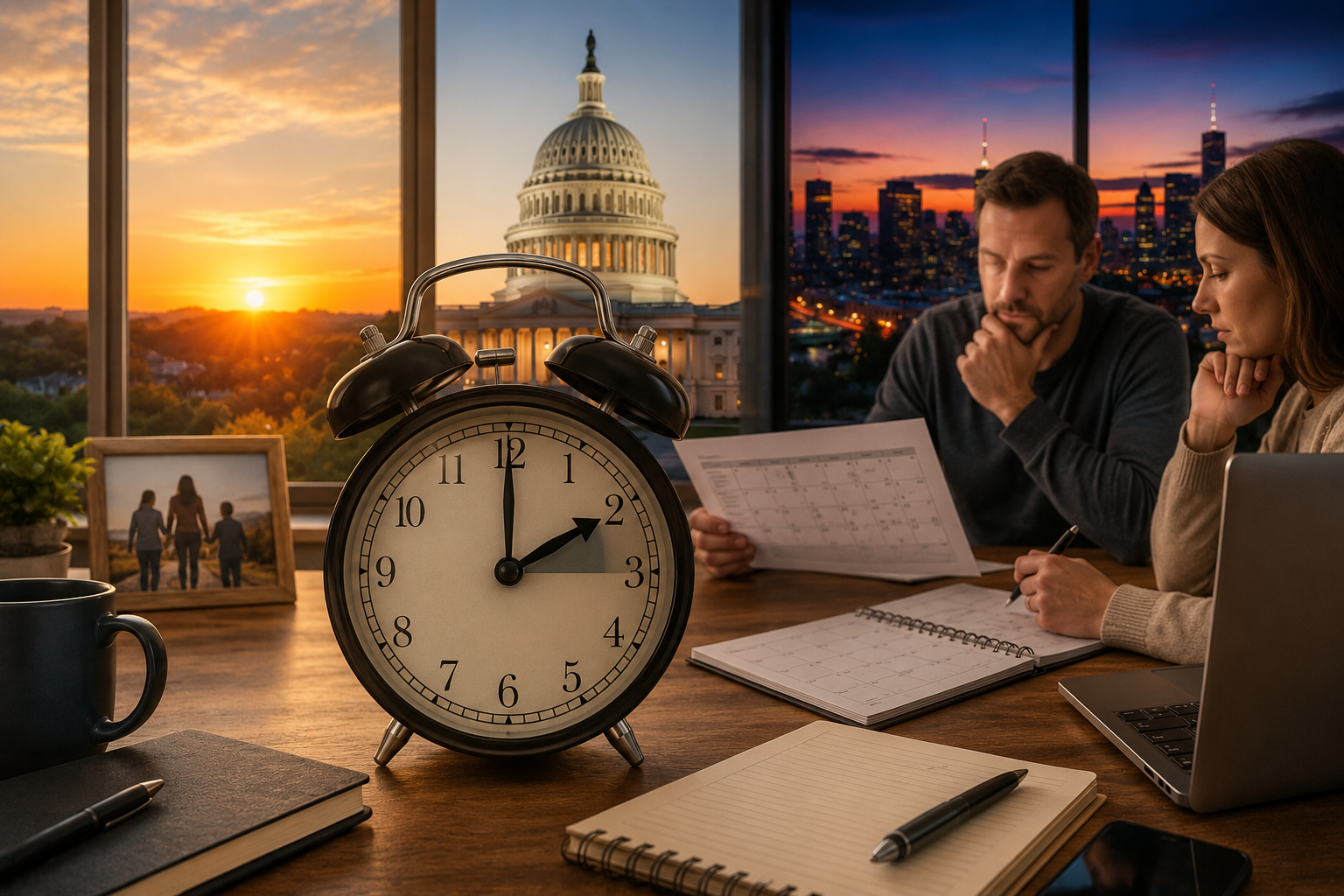
US lawmakers are again trying to make daylight saving time permanent, reviving a debate that affects sleep, school mornings, work schedules, traffic safety, travel, and evening business activity. The latest push comes through the Sunshine Protection Act, which recently advanced in the House Energy and Commerce Committee with a 48-1 vote. Supporters say ending the twice-yearly clock change would reduce disruption, while critics warn that permanent daylight saving time could create very late winter sunrises in some states.
The United States may be moving closer to ending one of its most debated yearly routines: changing clocks twice a year. Lawmakers have once again pushed forward a proposal to make daylight saving time permanent, a change that would stop the familiar spring-forward and fall-back cycle followed by most Americans.
The latest effort is tied to the Sunshine Protection Act, a bill that would keep daylight saving time in place year-round. According to Reuters, the proposal recently advanced in the House Energy and Commerce Committee with a 48-1 vote and could become part of a larger five-year transportation bill. The renewed push has gained attention because it affects everyday life for millions of people, from morning school schedules to evening shopping, commuting, outdoor activities, and sleep routines.
Supporters argue that the current system is outdated, disruptive, and costly. They say changing clocks twice a year can affect sleep, increase fatigue, disturb routines, and contribute to workplace accidents and traffic crashes. Critics, however, warn that permanent daylight saving time may create dark winter mornings, especially in northern states, making school commutes and early work travel more difficult.
What Is the Sunshine Protection Act?
The Sunshine Protection Act is a proposal to make daylight saving time permanent across most of the United States. In simple terms, Americans would no longer move clocks forward in March and backward in November. Instead, the country would remain on daylight saving time throughout the year.
This would mean more daylight in the evening during winter months, but less daylight in the morning. That is the core trade-off in the debate. People who prefer evening daylight often support permanent daylight saving time because it gives more usable daylight after work or school. People who worry about morning darkness often oppose it because sunrise could be very late in some places during winter.
The latest proposal has fresh momentum because it passed out of the House Energy and Commerce Committee with strong support. Reuters reported that the measure was advanced with a 48-1 vote and was being attached to a broader transportation bill.
However, the bill is not law yet. It still needs approval from the full House and Senate. A similar proposal passed the Senate in 2022 but failed to move forward in the House, showing that support in one chamber does not guarantee final passage.
Why Many Americans Want Clock Changes to End
For many people, the main frustration is not daylight saving time itself but the clock change. Moving clocks forward in spring can disturb sleep and daily rhythm. Even a one-hour shift can affect children, workers, drivers, elderly people, and people with strict schedules.
Supporters of permanent daylight saving time argue that a fixed schedule would make life simpler. They say people would not need to adjust sleep patterns twice a year, businesses would not need to manage schedule confusion, and commuters would enjoy more evening light.
There is also an economic argument. More evening daylight can support restaurants, shopping, tourism, recreation, outdoor sports, and local businesses. Lawmakers from sunny or tourism-heavy states have often supported permanent daylight saving time because longer evening daylight can encourage people to stay active outside the home.
Representative Vern Buchanan of Florida has been one of the major supporters of the idea. Time reported that Buchanan’s bill advanced to the House floor for consideration as part of the Motor Vehicle Modernization Act, and he described ending clock changes as a common-sense reform that would improve everyday life for millions of Americans.
Why Critics Are Worried About Dark Winter Mornings
The strongest argument against permanent daylight saving time is winter morning darkness. If daylight saving time becomes permanent, sunrise would come one hour later during winter than under standard time.
For some parts of the country, that could mean children waiting for school buses in darkness and workers commuting before sunrise for longer parts of the year. Critics also argue that morning sunlight is important for the body’s internal clock and sleep health.
This is why some sleep experts and health groups prefer permanent standard time instead of permanent daylight saving time. They argue that standard time better matches natural morning light and human circadian rhythms. The public debate is therefore not simply “clock change or no clock change.” It is also about which permanent time system the country should choose.
The US has tried permanent daylight saving time before. Reuters noted that the country experimented with permanent daylight saving time in 1974, but it became unpopular and was quickly repealed. That history is often cited by critics who warn that Americans may like the idea until dark winter mornings arrive.
Why This Topic Could Become Viral in the US
This story has strong viral potential because almost every American has an opinion about clock changes. It affects people across politics, age groups, jobs, states, and lifestyles. Parents worry about school mornings. Workers care about commute times. Businesses care about evening spending. Health experts care about sleep. Travelers care about schedule confusion.
That makes the topic highly clickable and easy for people to discuss on social media. Some people strongly support the idea because they hate changing clocks. Others oppose it because they remember dark winter mornings or worry about children’s safety.
The issue also has political momentum now because President Donald Trump has supported ending the clock-changing process. Reuters reported that Trump endorsed the proposal, calling the current system outdated and costly. But opposition still exists, including concerns from lawmakers such as Senator Tom Cotton, who has warned about the impact of late winter sunrises.
For readers following US policy and public safety issues, this connects with our recent report on US Ebola travel restrictions and airport screening concerns, where travel rules and public policy also directly affected ordinary people’s daily movement.
What States Are Doing About Daylight Saving Time
States have also been active in the daylight saving debate. According to the National Conference of State Legislatures, 16 states introduced 23 bills in 2026 related to daylight saving time or standard time. Some proposals support permanent daylight saving time, while others support permanent standard time.
This shows that the issue is not only a federal debate. States are also trying to respond to public frustration over clock changes. However, federal law limits what states can do. States can generally choose to stay on standard time year-round, like Hawaii and most of Arizona, but making daylight saving time permanent nationally requires action from Congress.
That is why the Sunshine Protection Act matters. Without federal approval, states that want permanent daylight saving time cannot simply adopt it on their own in the same way. This has created years of repeated proposals, public surveys, state bills, and congressional debate.
How Permanent Daylight Saving Time Could Affect Everyday Life
If daylight saving time becomes permanent, the most obvious change would be no more clock adjustments in March and November. Phones and devices would no longer need to shift automatically twice a year, and people would not lose or gain an hour of sleep due to seasonal time changes.
Evening life could feel brighter in winter. People may have more daylight after work, which could help outdoor exercise, shopping, family activities, and local businesses. In some areas, restaurants and recreational businesses could benefit from later daylight.
But mornings would become darker in winter. Schoolchildren, early-shift workers, delivery drivers, and commuters could face darker conditions for longer periods. The impact would vary by location. Northern and western parts of time zones could feel the effect more strongly than southern or eastern regions.
For readers trying to understand how daily schedules shape health and productivity, our main blog guide Best Study Plan for Students: Science-Backed Methods to Study Less, Remember More, and Avoid Burnout explains why sleep, routine, and consistent planning matter. The daylight saving debate connects with the same idea: even small schedule changes can affect focus, energy, and daily performance.
What Happens Next?
The Sunshine Protection Act has gained attention again, but it still faces a difficult path. The proposal must pass the full House and Senate before it can become law. Even with strong committee support, the final debate could bring disagreements over school safety, health effects, state flexibility, and whether permanent daylight saving time is better than permanent standard time.
The bill also allows states to opt out, according to Reuters, which could create another layer of complexity if different states choose different approaches.
For now, Americans should not assume clock changes are over. The current system remains in place unless Congress passes a final law and the president signs it. But the latest vote shows that the issue has returned with serious momentum.
The daylight saving time debate may sound simple, but it touches almost every part of daily life: sleep, work, school, travel, health, safety, business, and family routines. That is why this issue keeps coming back year after year — and why the latest push could become one of the most widely discussed US policy stories in the coming weeks.
Source: US lawmakers propose making daylight saving time permanent
Read More: Latest News
Read More Interesting Content in My Blog Section of ‘The Thrive Journey’.