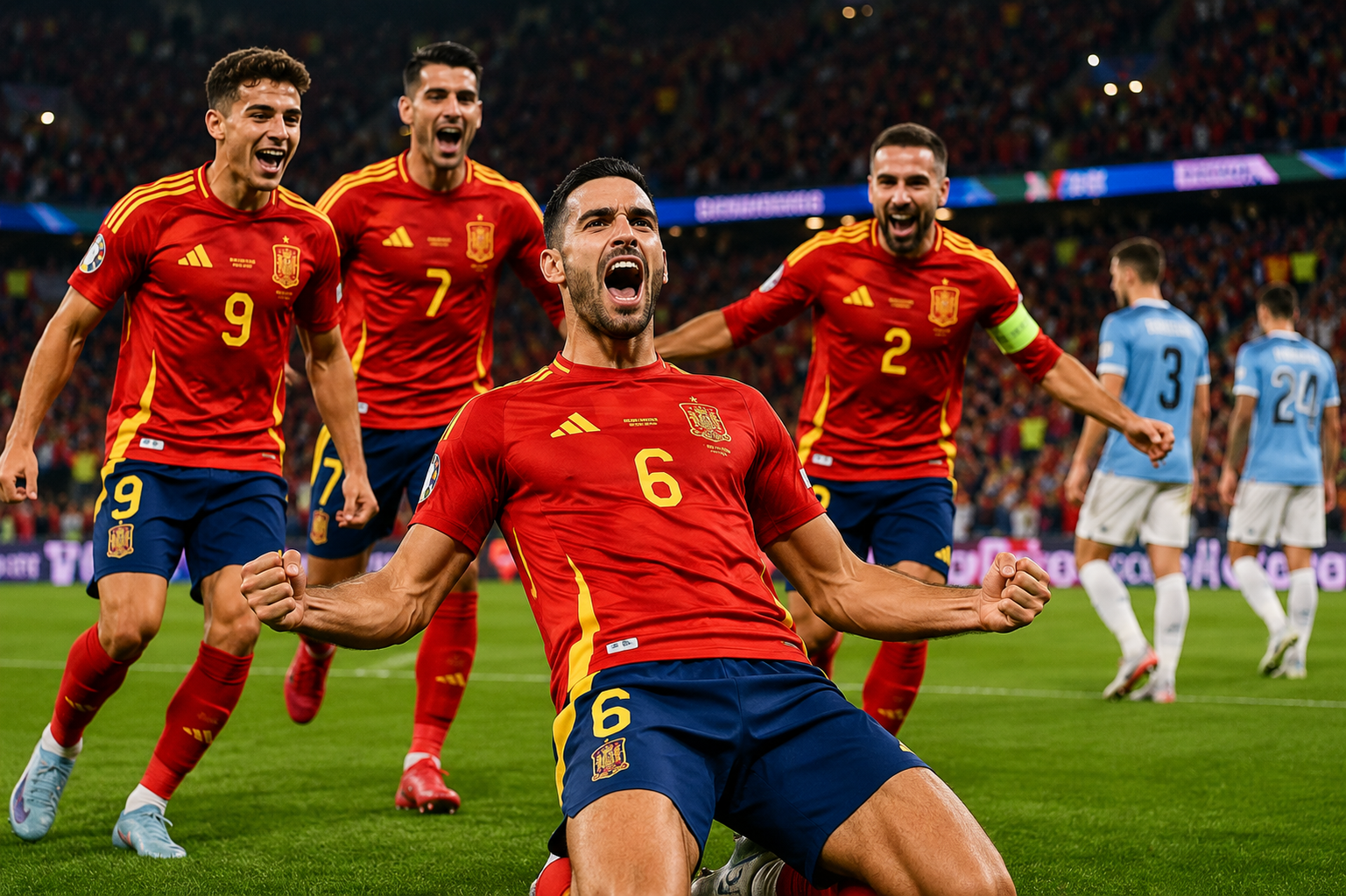







FIFA World Cup 2026 has introduced mandatory hydration breaks in every match.
These three-minute pauses are not only about drinking water — they may affect tactics, pressing, substitutions and momentum.
With matches being played across the United States, Canada and Mexico, player safety has become a major talking point.
Here is why these breaks could quietly change the way World Cup 2026 is played.
FIFA World Cup 2026 is already making history with its 48-team format, 104 matches and three host nations. But apart from goals, tickets and superstar storylines, another important change is shaping the tournament from inside the pitch: mandatory hydration breaks.
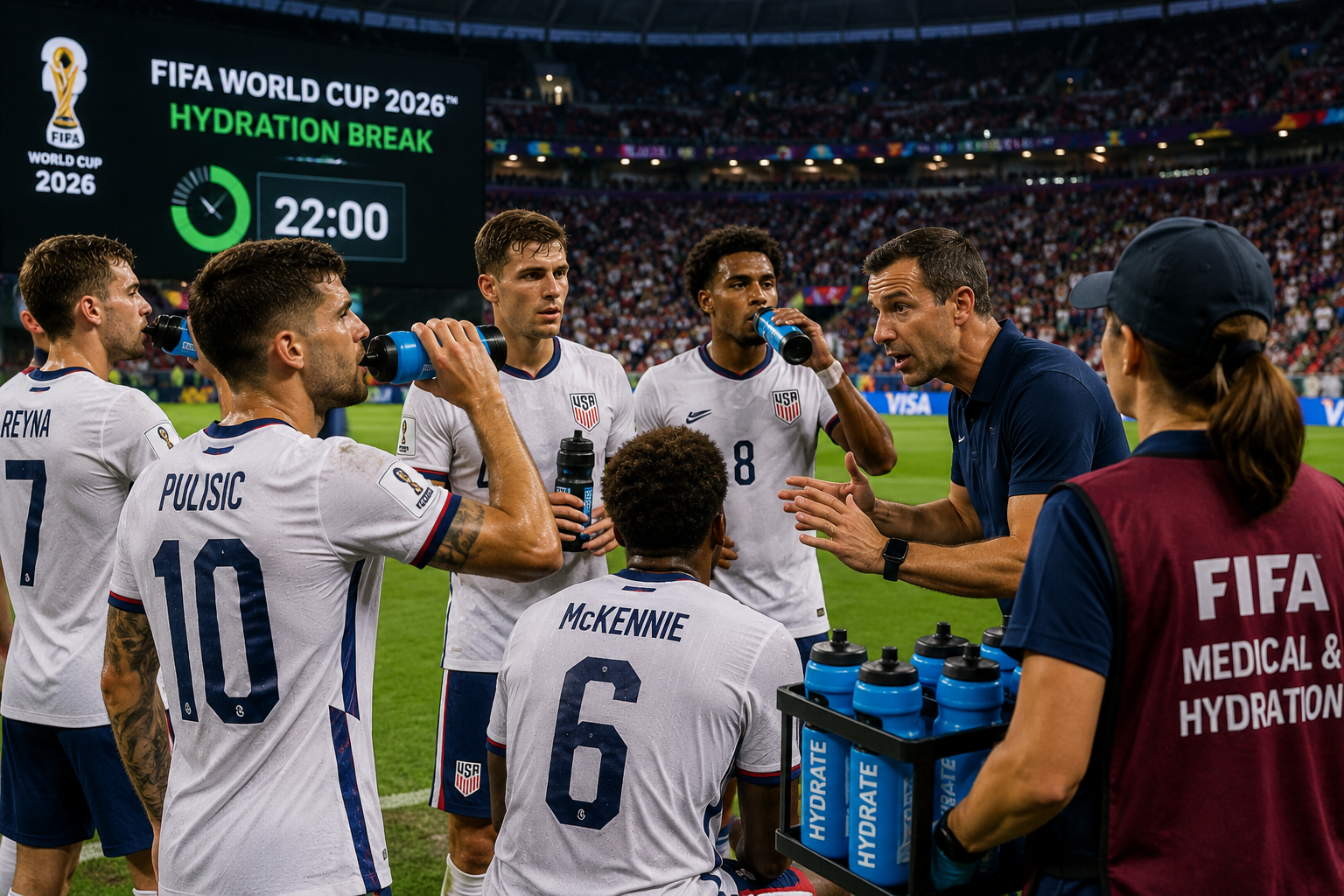
For the first time, FIFA has made hydration breaks compulsory in every World Cup 2026 match, regardless of weather conditions. FIFA’s official player-welfare update says these breaks last three minutes and take place midway through each half, around the 22nd minute and 67th minute.
At first, this may look like a simple health decision. Players drink water, take a quick rest and return to the match. But in reality, these short breaks can affect tactics, rhythm, team communication and even match results.
Why FIFA Introduced Mandatory Hydration Breaks
World Cup 2026 is being played across North America, with matches in the United States, Canada and Mexico. Some venues can experience high summer temperatures, while others may have different weather conditions or covered stadiums. To avoid confusion and protect player welfare, FIFA has applied the rule across all matches instead of using it only when temperatures cross a specific limit.
FIFA’s approach means every team gets the same planned pause in each half. Players can rehydrate, cool down and receive quick medical attention if needed. This is especially important because World Cup football is physically intense. Players run, press, sprint, jump, tackle and recover repeatedly in front of massive crowds.
A normal football match flows continuously, but heat can slowly reduce performance. Dehydration can affect decision-making, passing accuracy, sprint recovery and concentration. That is why these breaks are not just a comfort measure — they are a safety measure.
According to reports, hydration breaks at World Cup 2026 are also creating debate because they divide each half into smaller phases, almost like four tactical quarters. Reuters reported that players and coaches are split on the new rule because it can protect players but also interrupt natural match rhythm.
How Drinks Breaks Can Change Football Tactics
The most interesting part is tactical. A three-minute break may not sound long, but in elite football it is enough for a coach to change the shape of the team.
A team under pressure can use the break to calm players down. A team leading by one goal can slow the tempo and reorganize defensively. A coach can ask full-backs to stay deeper, midfielders to press differently or forwards to attack a weak defender. This is why hydration breaks may become hidden turning points in several matches.
For example, if a team starts strongly for the first 20 minutes, the break can kill its momentum. On the other hand, if a team is struggling, the break can become a mini team talk. It gives coaches a rare chance to communicate directly without waiting for half-time.
This may also affect pressing football. Teams that press aggressively usually spend huge energy in the first phase of each half. Knowing that a hydration break is coming around the 22nd minute may encourage teams to press harder early, then recover during the pause. In simple words, World Cup 2026 may see more planned bursts of intensity.
Fans who are following the wider excitement of the tournament can also read our earlier coverage on FIFA World Cup 2026 Fever Takes Over the Globe as Fans Prepare for Football’s Biggest Festival, where we explained how the tournament has become a global celebration across countries and fan communities.
World Cup 2026 Match Tracker: Results and Upcoming Fixtures
Here is a useful one-place tracker for readers who want to quickly understand which major teams have played, who won, who lost and what comes next. Final scores and fixtures should be checked with FIFA’s live fixtures page before publishing because World Cup updates move quickly during the tournament.
| Team / Match | Result / Status | Winner / Loser / Draw | What Comes Next |
|---|---|---|---|
| Mexico vs South Africa | Mexico 2–0 South Africa | Mexico won, South Africa lost | Mexico plays Czechia on June 24 |
| South Korea vs Czechia | South Korea 2–1 Czechia | South Korea won, Czechia lost | South Korea plays South Africa on June 24 |
| Canada vs Bosnia & Herzegovina | 1–1 draw | Both teams shared points | Canada later beat Qatar and plays Switzerland |
| Canada vs Qatar | Canada 6–0 Qatar | Canada won, Qatar lost | Canada plays Switzerland on June 24 |
| USA vs Paraguay | USA 4–1 Paraguay | USA won, Paraguay lost | USA later beat Australia |
| USA vs Australia | USA 2–0 Australia | USA won, Australia lost | USA plays Turkey on June 25 |
| Brazil vs Morocco | 1–1 draw | Both teams shared points | Brazil later beat Haiti |
| Brazil vs Haiti | Brazil 3–0 Haiti | Brazil won, Haiti lost | Brazil plays Scotland on June 24 |
| Morocco vs Scotland | Morocco 1–0 Scotland | Morocco won, Scotland lost | Morocco plays Haiti on June 24 |
| Paraguay vs Turkey | Paraguay 1–0 Turkey | Paraguay won, Turkey lost | Turkey’s tournament hopes suffered badly |
| Germany vs Curaçao | Germany 7–1 Curaçao | Germany won, Curaçao lost | Germany plays Ivory Coast |
| Netherlands vs Japan | 2–2 draw | Both teams shared points | Netherlands plays Sweden; Japan plays Tunisia |
| Spain vs Cape Verde | 0–0 draw | Both teams shared points | Spain plays Saudi Arabia on June 21 |
| Argentina vs Algeria | Argentina 3–0 Algeria | Argentina won, Algeria lost | Argentina plays Austria on June 22 |
| Portugal vs DR Congo | 1–1 draw | Both teams shared points | Portugal plays Uzbekistan on June 23 |
| England vs Croatia | England 4–2 Croatia | England won, Croatia lost | England plays Ghana on June 23 |
Why Indian Fans Should Care About This Rule
For Indian viewers, hydration breaks may make the tournament easier to understand tactically. Instead of watching the match as one long flow, fans can observe four phases: start of first half, after first hydration break, start of second half and after second hydration break.
This helps viewers notice how coaches react. Did a team improve after the break? Did a player look tired before the pause? Did the coach change pressing or defensive structure? These small details can make football more interesting for casual fans.
It also makes the World Cup useful for young athletes and students. The rule teaches an important lesson: performance is not only about talent; it is also about recovery, hydration, planning and energy management. We have discussed similar ideas of routine and recovery in Best Study Plan for Students, where staying mentally fresh is treated as a key part of long-term performance.
Will Hydration Breaks Become a Permanent Football Feature?
World Cup 2026 may become a test case for future football tournaments. If the breaks protect players without damaging the quality of matches, more competitions may consider using similar rules in hot-weather conditions.
However, not everyone will love the change. Traditional football fans may feel that frequent pauses reduce the natural flow of the game. Broadcasters may see them differently because a fixed break creates a clear pause in live coverage. Coaches may welcome them because they get extra tactical communication time.
For players, the priority is simple: safety. Football has become faster and more physically demanding than ever. When matches are played in summer heat across different climate zones, planned hydration can reduce risk and improve performance.
In the end, World Cup 2026’s hydration-break rule may look small on paper, but it could become one of the most important hidden factors of the tournament. A goal may come after a tactical reset. A tired team may survive because of a cooling pause. A coach may fix a broken shape in three minutes.
Football is still about skill, passion and goals. But in 2026, it is also about managing heat, energy and recovery at the right time.
Source: FIFA’s official update on World Cup 2026 hydration breaks
Read More: Latest News
Read More Interesting Content in My Blog Section of ‘The Thrive Journey’.