





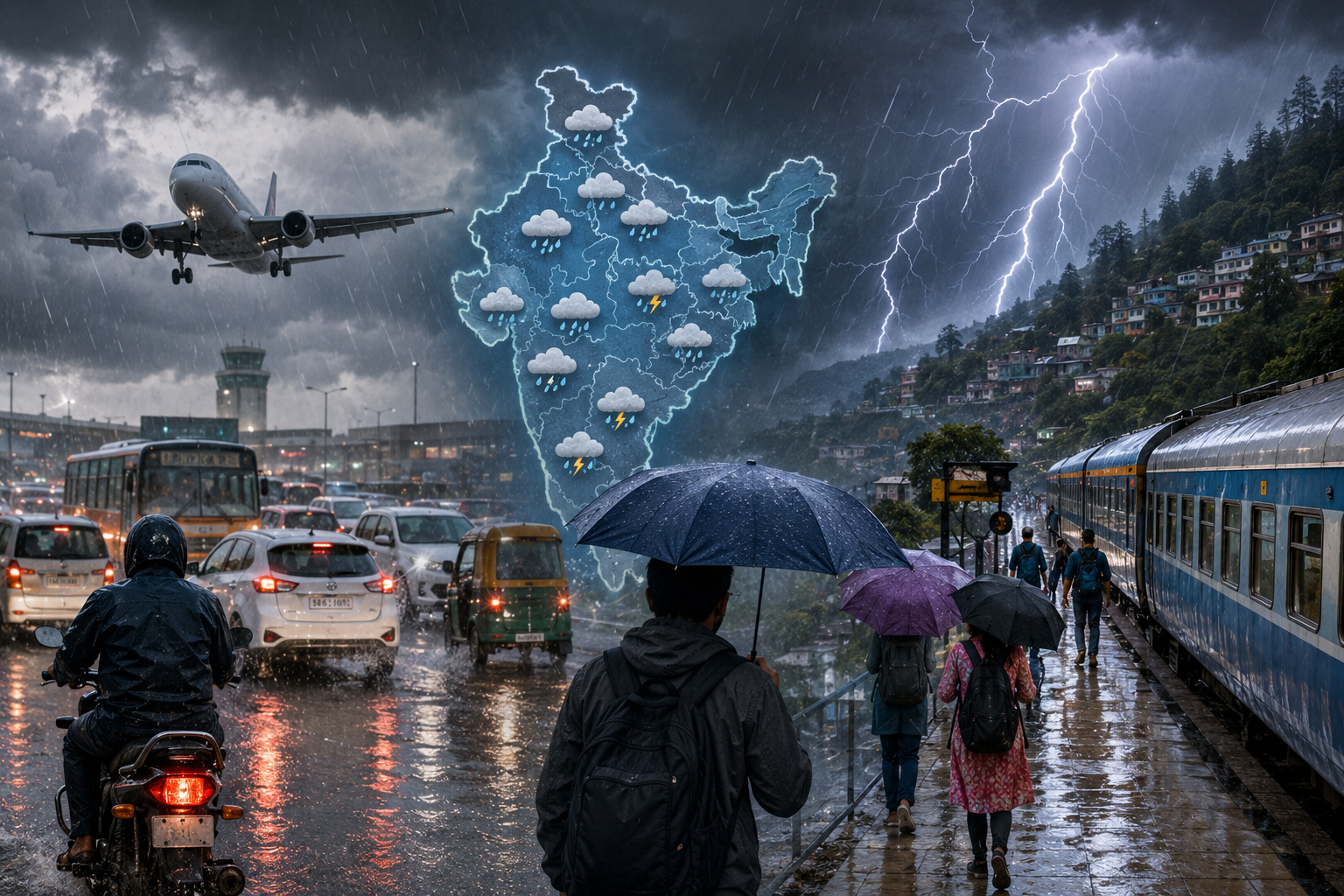
India is facing another round of unstable weather as IMD-linked alerts point to rain, thunderstorms, lightning and gusty winds across several regions.
The warning is important for travellers, students, office-goers, hill tourists, road trippers and families planning weekend movement.
Northern, eastern and northeastern India may see disruptions, while the monsoon is expected to advance into more parts of central and eastern India around June 23.
Here is a simple state-wise and travel-wise guide to understand what this weather alert means.
India’s weather has entered a tricky phase where heat, humidity, monsoon movement, thunderstorms and sudden rainfall are all happening together. For many people, this may look like a normal seasonal change, but for travellers and daily commuters, it can quickly become a serious problem.
The India Meteorological Department’s recent updates and related travel alerts point to rain, thunderstorms, lightning, gusty winds and heavy rainfall risks across multiple parts of the country. The alert is especially important because it comes at a time when many people are travelling for weekend breaks, hill trips, family visits, school routines, office work and religious or tourist plans.
In simple words, this is not only a weather story. It is a travel-safety story.
Why This Weather Alert Matters Right Now
A rain alert may sound ordinary during the monsoon season, but this warning is different because it covers several types of weather risks at the same time. Some areas may receive rain and thunderstorms. Some may face lightning. Some regions may see gusty winds. Hill areas may face slippery roads and visibility problems. Desert regions may see dust-storm conditions.
This combination can create sudden disruption even if the rainfall is not very heavy everywhere.
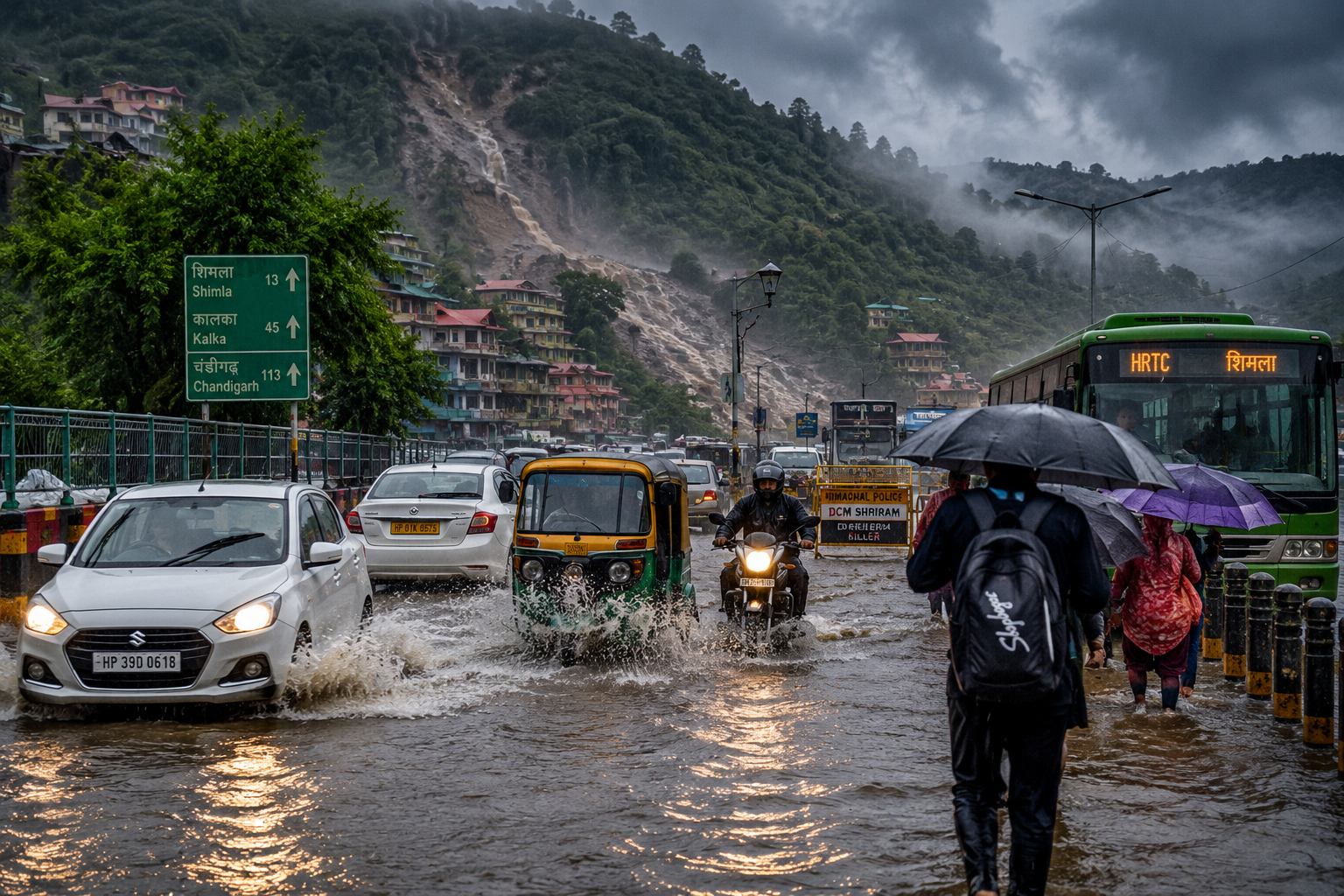
For example, a traveller leaving Delhi-NCR for a short road trip may face intermittent rain and traffic delays. Someone planning a hill journey in Himachal Pradesh or Uttarakhand may face reduced visibility, slippery roads and possible hailstorms. A family travelling through Bihar, Jharkhand or Odisha may face thunderstorm-related disruption. Northeast India may face heavier rainfall risks.
The biggest mistake people make during such weather is assuming that light rain means low risk. In reality, thunderstorms and lightning can be dangerous even when rainfall is short-lived.
Readers who are following weather-related risks can also read our earlier coverage on India Heatwave 2026: Why Record Temperatures Are Becoming a Bigger Warning for Everyday Life, where we explained how extreme weather is now affecting daily routines, health and travel planning.
17-State Weather Alert: What Travellers Should Watch
Here is a useful one-place tracker for readers. Weather conditions can change quickly, so travellers should check the latest IMD update before leaving.
| Region / State Group | Main Weather Risk | Who Should Be Careful | Travel Impact |
|---|---|---|---|
| Delhi-NCR | Rain, thunderstorm, gusty winds | Office-goers, airport travellers, road commuters | Traffic jams, flight delays, waterlogging in pockets |
| Uttar Pradesh | Rain and thunderstorm risk | Tourists, students, highway travellers | Slower road travel, local disruption |
| Bihar | Rain, thunderstorm, lightning | Families, students, rural commuters | Outdoor movement may become risky during lightning |
| Jharkhand | Thunderstorm and rain | Road travellers, forest/wildlife visitors | Reduced visibility and slippery roads |
| Odisha | Rain and thunderstorm | Coastal and road travellers | Local travel delays possible |
| Rajasthan | Dust storm and sudden weather change | Desert tourists, road travellers | Low visibility, safari/outdoor disruption |
| Madhya Pradesh | Rain and thunderstorm risk | Highway travellers, farmers, commuters | Slippery roads and local delays |
| Punjab | Rain and thunderstorm | Road travellers, city commuters | Traffic slowdown and reduced visibility |
| Haryana | Rain and gusty winds | NCR-linked travellers | Road and local traffic disruption |
| Himachal Pradesh | Thunderstorm, hail risk in some areas | Hill tourists, trekkers, drivers | Avoid night driving and risky mountain roads |
| Uttarakhand | Rain, thunderstorm, hail risk | Pilgrims, trekkers, tourists | Landslide-prone and hilly routes need caution |
| Jammu & Kashmir | Thunderstorm/rain risk in some areas | Tourists, mountain travellers | Weather can change suddenly in higher areas |
| West Bengal | Heavy rain risk in northern/sub-Himalayan areas | Train travellers, hill tourists | Disruption possible in hilly and low-lying zones |
| Sikkim | Heavy to very heavy rain risk | Hill tourists, road travellers | Landslide-prone routes need extra caution |
| Arunachal Pradesh | Heavy rainfall risk | Local travellers and tourists | Road and hill-route disruption |
| Assam & Meghalaya | Heavy to very heavy rain risk | Families, road travellers, tourists | Flooding and traffic disruption possible |
| Nagaland, Manipur, Mizoram & Tripura | Rain and thunderstorm risk | Local commuters and travellers | Slower movement and outdoor caution needed |
What This Means for Flights, Roads and Train Travel
Weather disruption does not always mean cancellation. Sometimes it means delay, slow movement or sudden route changes.
Air travellers should check flight status before leaving home. Thunderstorms and strong winds can affect airport operations, especially during take-off and landing windows. Even if the destination city looks fine, bad weather at the origin or connecting airport can affect timing.
Road travellers should be even more careful. Sudden rain can create slippery roads, especially on highways and hill routes. Dust storms can reduce visibility in Rajasthan and nearby regions. In mountain states, rain can increase the risk of landslides, falling stones and dangerous curves.
Train travellers should also remain alert because heavy rainfall can sometimes affect railway operations, platform crowding and local transport around stations.
Here is a quick safety checklist:
| Traveller Type | What To Do |
| Flight passengers | Check airline status before leaving, keep extra buffer time |
| Road travellers | Avoid night driving in hills, carry rain gear, keep fuel backup |
| Hill tourists | Avoid trekking, boating and risky viewpoints during thunderstorms |
| Students | Carry umbrella/raincoat, avoid standing under trees during lightning |
| Office commuters | Start early, avoid waterlogged routes, keep phone charged |
| Families with children | Keep dry clothes, snacks, medicines and drinking water |
| Two-wheeler riders | Avoid riding during lightning, strong winds or heavy showers |
| Pilgrims | Follow local police and district administration advisories |
Why Lightning and Gusty Winds Are Often Underestimated
Many people take rain seriously but ignore lightning. That can be dangerous.
During thunderstorms, standing under trees, near open fields, water bodies, metal poles or exposed hill areas can increase risk. Two-wheeler riders and pedestrians are especially vulnerable when lightning and strong winds occur together.
Gusty winds can also create sudden hazards. Loose hoardings, tree branches, power lines and temporary structures can become risky during strong wind events. This is why people should avoid unnecessary outdoor movement during thunderstorm alerts.
The weather alert also matters for students and exam-going candidates. If school, college, coaching or exam travel is required, leaving early and carrying basic protection can reduce stress. On The Thrive Journey, we have discussed planning and routine management in Best Study Plan for Students, and the same idea applies during bad weather: preparation reduces panic.
Monsoon Movement: What Comes Next
IMD updates indicate favourable conditions for the southwest monsoon to advance into more parts of Maharashtra, Telangana, Odisha, Jharkhand, Bihar and parts of Chhattisgarh around June 23. This means many areas that were waiting for stronger monsoon activity may soon see more rain.
That is good news for agriculture and water availability, but it also means travel and city management need attention. Early monsoon showers often expose weak drainage, road potholes, traffic bottlenecks and local flooding points.
For farmers, monsoon progress matters deeply. But premature sowing before stable rainfall can be risky in some areas. For cities, the first heavy spells can create waterlogging. For travellers, the safest approach is to check local forecasts daily instead of assuming the weather will remain the same for the entire week.
Source: IMD rain and thunderstorm alert across 17 states travel update
Read More: Latest News
Read More Interesting Content in My Blog Section of ‘The Thrive Journey’.