





FIFA World Cup 2026 is not only changing football in North America — it is changing how many international fans see the United States.
Visitors arrived with concerns about cost, visas, heat, safety and whether America truly loves football.
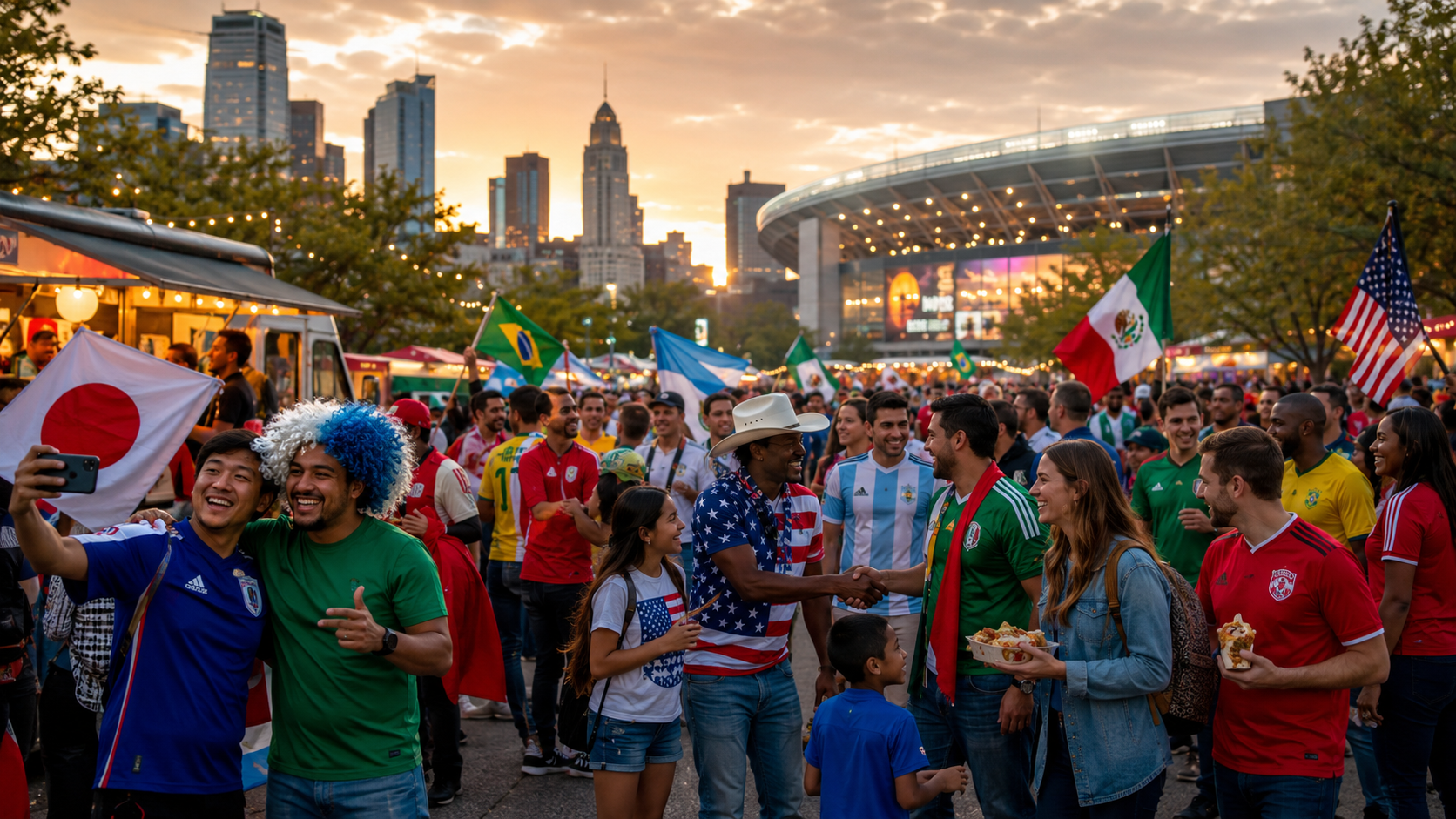
But warm local hospitality, packed fan zones, American food culture and emotional stadium atmospheres are creating viral fan stories.
For the U.S., this World Cup is becoming more than a sports event — it is becoming a global image moment.
FIFA World Cup 2026 was expected to bring football’s biggest stage to North America. But something more interesting is happening beyond the pitch. International fans are not only watching matches — they are discovering America in a new way.
Before the tournament, many visitors had doubts. Some worried about visa access, high travel costs, gun violence, summer heat and whether the United States would feel like a true football country. But as the tournament has moved forward, many fans have shared surprisingly warm experiences from American cities, restaurants, streets, fan zones and stadiums.
Reuters reported that international fans have been discovering a different side of the U.S., including friendly local interactions, 24-hour retail culture, free soda refills, barbecue, ranch dressing, helpful strangers and welcoming city experiences. These small everyday moments are now becoming part of the World Cup story.
America’s Football Test Is Bigger Than the Scoreboard
For the United States, World Cup 2026 is not only about whether the national team wins matches. It is also about whether the country can prove that football has truly found a home there.
Soccer has long been considered a growing but still secondary sport in the U.S. compared with American football, basketball and baseball. Reuters noted before the U.S. opening match that soccer remained a minority sport in America, though global fans were already pouring in and creating color across major cities.
But the atmosphere has started changing the conversation. Seattle became one of the strongest examples when the U.S. beat Australia 2-0 and secured a Round of 32 place. U.S. midfielder Weston McKennie praised the home fans, while chants continued after the match and coach Mauricio Pochettino said the connection between the team and the crowd felt emotional.
That matters because World Cup energy is not created by stadium design alone. It comes from the feeling that people in the stands care deeply. In 2026, many American host cities are trying to show that football can feel loud, emotional and personal in the U.S. too.
Fans who want the wider tournament background can also read our earlier coverage on FIFA World Cup 2026 Fever Takes Over the Globe as Fans Prepare for Football’s Biggest Festival, where we explained how the tournament has become a global celebration across countries and fan communities.
Why Fan Stories Are Going Viral
The most powerful part of this World Cup is not always the big stadium moment. Sometimes it is a small human moment.
A Scottish fan being welcomed in a Boston pub. Argentine fans trying Kansas City barbecue. German supporters enjoying Texas culture. Visitors getting directions from strangers in Seattle or Dallas. These stories may look simple, but they create a softer image of America for people watching from abroad.
Reuters described this as a kind of informal “Brand USA” effect, where local warmth and everyday hospitality can reshape how visitors remember a country.
FIFA’s official fan festival page also describes fan festivals as central gathering points where local communities and global fans come together with football, music, culture and entertainment. That is important because many visitors cannot attend every match. Fan festivals give them a lower-cost way to feel the World Cup atmosphere beyond the stadium.
This is why the tournament has strong viral potential. Fans are not only posting match goals. They are posting hotel experiences, food reactions, cultural surprises, public transport stories, city walks, fan chants and moments with locals. For a news website, this is a great angle because it combines football, travel, culture, emotion and human connection.
North America’s football audience was already growing before the tournament. Reuters cited a Nielsen report saying the North American soccer fan base grew 10.9% to more than 136 million people over five years, while the United States had 62.5 million soccer followers.
World Cup 2026 Match Tracker: Results So Far and Upcoming Fixtures
Here is a useful one-place tracker for readers who want to quickly understand what has happened so far and what is coming next. Match results and fixtures should be checked with FIFA’s official live fixtures page before final publishing because World Cup updates move quickly.
Results So Far
| Date | Match | Result | Winner / Outcome |
|---|---|---|---|
| June 11 | Mexico vs South Africa | 2–0 | Mexico won |
| June 11 | South Korea vs Czechia | 2–1 | South Korea won |
| June 12 | Canada vs Bosnia & Herzegovina | 1–1 | Draw |
| June 12 | USA vs Paraguay | 4–1 | USA won |
| June 13 | Qatar vs Switzerland | 1–1 | Draw |
| June 13 | Brazil vs Morocco | 1–1 | Draw |
| June 13 | Haiti vs Scotland | 0–1 | Scotland won |
| June 14 | Australia vs Turkey | 2–0 | Australia won |
| June 14 | Germany vs Curaçao | 7–1 | Germany won |
| June 14 | Netherlands vs Japan | 2–2 | Draw |
| June 14 | Ivory Coast vs Ecuador | 1–0 | Ivory Coast won |
| June 14 | Sweden vs Tunisia | 5–1 | Sweden won |
| June 15 | Spain vs Cape Verde | 0–0 | Draw |
| June 15 | Belgium vs Egypt | 1–1 | Draw |
| June 15 | Saudi Arabia vs Uruguay | 1–1 | Draw |
| June 15 | Iran vs New Zealand | 2–2 | Draw |
| June 16 | France vs Senegal | 3–1 | France won |
| June 16 | Iraq vs Norway | 1–4 | Norway won |
| June 16 | Argentina vs Algeria | 3–0 | Argentina won |
| June 17 | Austria vs Jordan | 3–1 | Austria won |
| June 17 | Portugal vs DR Congo | 1–1 | Draw |
| June 17 | England vs Croatia | 4–2 | England won |
| June 17 | Ghana vs Panama | 1–0 | Ghana won |
| June 17 | Uzbekistan vs Colombia | 1–3 | Colombia won |
| June 18 | Czechia vs South Africa | 1–1 | Draw |
| June 18 | Switzerland vs Bosnia & Herzegovina | 4–1 | Switzerland won |
| June 18 | Canada vs Qatar | 6–0 | Canada won |
| June 18 | Mexico vs South Korea | 1–0 | Mexico won |
| June 19 | USA vs Australia | 2–0 | USA won |
| June 19 | Scotland vs Morocco | 0–1 | Morocco won |
| June 19 | Brazil vs Haiti | 3–0 | Brazil won |
| June 19 | Turkey vs Paraguay | 0–1 | Paraguay won |
Upcoming Key Fixtures
| Date | Match | Status | Why It Matters |
|---|---|---|---|
| June 20 | Netherlands vs Sweden | Scheduled | Strong Group F clash after Sweden’s big opening win |
| June 20 | Germany vs Ivory Coast | Scheduled | Germany’s attack faces a tougher test |
| June 20 | Ecuador vs Curaçao | Scheduled | Both need points after opening setbacks |
| June 21 | Tunisia vs Japan | Scheduled | Japan need a strong result after drawing Netherlands |
| June 21 | Spain vs Saudi Arabia | Scheduled | Spain need goals after opening 0–0 draw |
| June 21 | Belgium vs Iran | Scheduled | Both started with draws and need separation |
| June 21 | Uruguay vs Cape Verde | Scheduled | Uruguay must push after drawing Saudi Arabia |
| June 21 | New Zealand vs Egypt | Scheduled | Both teams are still chasing a first win |
| June 22 | Argentina vs Austria | Scheduled | Messi’s Argentina face a serious group-stage test |
| June 23 | Portugal vs Uzbekistan | Scheduled | Ronaldo’s Portugal need a win after opening draw |
What This Means for America’s Global Image
Major sports events often become cultural mirrors. Visitors do not judge a host country only by stadiums. They remember whether people helped them, whether streets felt alive, whether food surprised them, whether public spaces felt welcoming and whether the experience felt safe and memorable.
That is why World Cup 2026 may help the United States in a way advertising cannot. A fan posting a genuine happy experience can be more powerful than a tourism campaign. A viral video of foreign supporters enjoying American hospitality can travel quickly across social media and reshape opinions.
At the same time, challenges remain. High ticket prices, travel costs, heat and visa restrictions are still real concerns. Reuters reported that some fans have been discouraged by expensive ticket and travel costs, while visa barriers have affected visitors from some participating countries.
Still, the early fan culture story is positive enough to matter. The World Cup is showing America through thousands of small human experiences. For some visitors, this may be their first real connection with the country beyond politics, movies or headlines.
For young readers, this tournament also shows how global events can change perception through culture, planning and communication. Students interested in future global careers can learn from this kind of soft-power moment, and our guide on STEM Careers in 2026 explains how young people can prepare for a future shaped by global industries, technology and international opportunities.
World Cup 2026 is still about football first. But in the United States, it is also becoming a story about welcome, identity and perception. If the fan stories continue, America may not just host the biggest World Cup ever — it may also leave many visitors with a warmer memory than they expected.
Source: Reuters report on World Cup fans discovering America’s warm welcome
Read More: Latest News
Read More Interesting Content in My Blog Section of ‘The Thrive Journey’.