









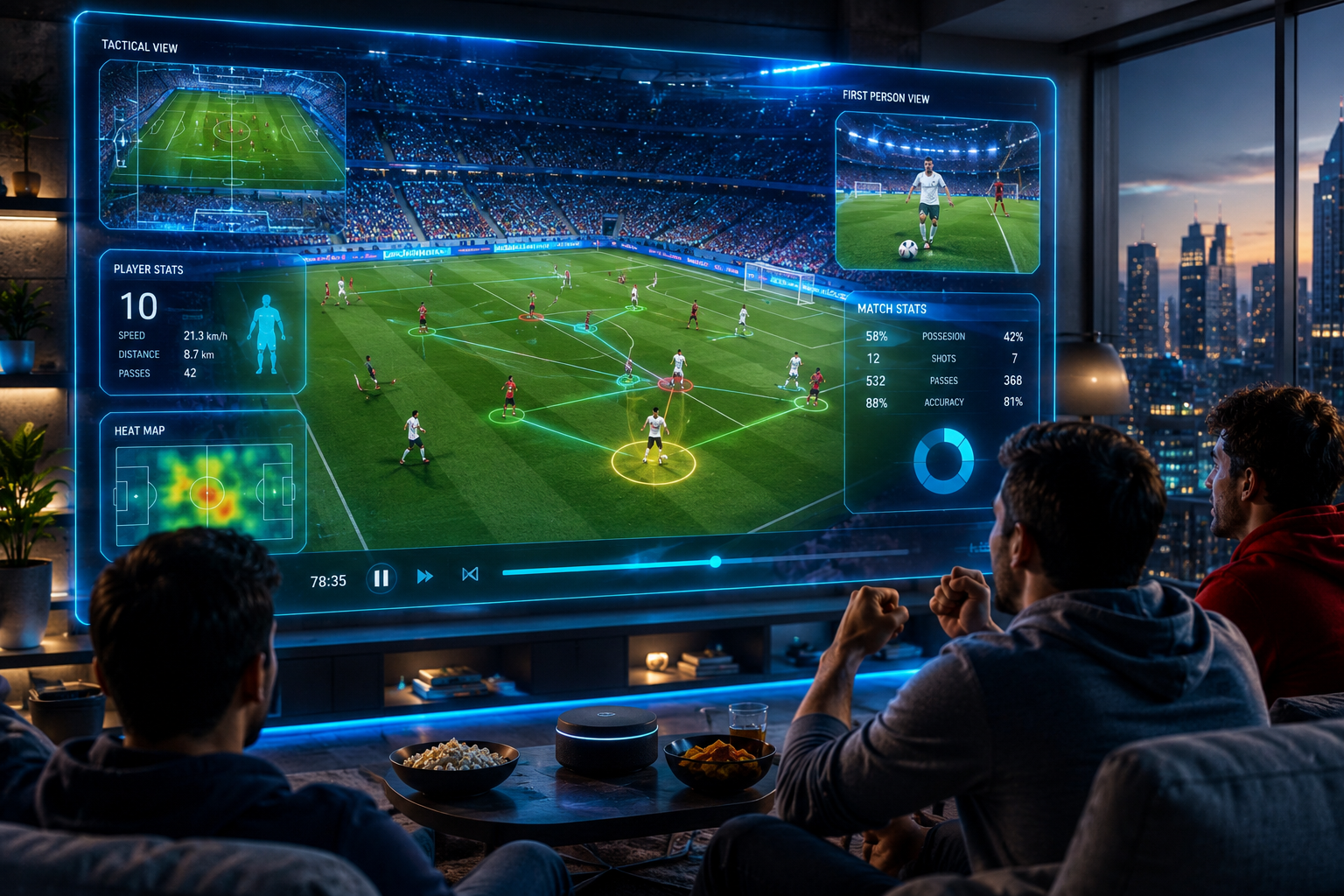
BBC Sport’s new FIFA World Cup 3D Experience is turning live football coverage into something closer to a video game, tactical board and replay room combined.
The feature allows fans to explore matches from different angles, follow player-style views and watch tactical movement using live match data.
Launched during FIFA World Cup 2026 coverage, it shows how broadcasters are experimenting with immersive sports technology.
For football fans, this could be an early glimpse of how live matches may be watched in the future.
A New Way to Watch the World Cup
BBC Sport has introduced a new FIFA World Cup 3D Experience for its World Cup 2026 coverage, giving fans a different way to follow selected matches beyond the traditional TV broadcast. According to BBC Sport’s syndicated article, the 3D Experience is available for games shown on BBC TV and uses match data to recreate the action in an interactive 3D format.
This is not just a normal highlights feature. It allows fans to view the match from multiple angles, explore tactical movement, watch replays and experience the game in a style that feels closer to a football video game than a standard broadcast. The idea is simple but powerful: instead of only watching what the camera director shows, fans can interact with the match in a more personal way.
The development comes at a time when FIFA World Cup 2026 fever is already spreading across the world. We recently covered how the tournament has become a global celebration of sport, culture and fan emotion in our post on World Cup 2026 Fever Begins Worldwide. Now, BBC’s new 3D feature adds another layer to that excitement — technology.
How the 3D Experience Works
The BBC’s new feature has been built with Immersiv.io and is described as using skeletal data to recreate the live game in 3D. That means the real movement of players on the field can be converted into a digital match view, allowing fans to see positioning, runs, passing shapes and tactical patterns in a more visual way.
For viewers, this could mean several useful experiences. A fan may want to see how a striker made a run behind the defence, how a midfielder opened space, or how a team’s defensive line shifted before a goal. A normal TV replay may show only one or two camera angles, but a 3D recreation can make these movements easier to understand.
Reports also mention that the experience includes options such as tactical views, first-person-style views and third-person-style views. This makes the feature especially interesting for fans who enjoy football analysis, fantasy football, coaching, gaming or tactical breakdowns.
In many ways, this feels like the natural next step in sports broadcasting. Viewers are no longer satisfied with simply watching the match. They want stats, live reactions, heat maps, player tracking, replay control and deeper analysis. BBC’s 3D Experience brings many of these ideas into one interactive layer.
Why This Matters for the Future of Sports
The World Cup has always been a testing ground for new media technology. Earlier generations saw the rise of color TV, HD broadcasts, 4K streaming, VAR graphics and real-time match statistics. FIFA World Cup 2026 may now be remembered as the tournament where immersive viewing started moving closer to mainstream fans.
This matters because younger audiences already spend a lot of time inside interactive digital environments. They play football video games, watch short-form clips, follow live stats and consume sports through multiple screens. A 3D match experience speaks directly to this generation.
Technology like this also connects with the wider rise of artificial intelligence, data visualization and immersive media. Readers who want to understand how such technologies are becoming part of daily life can also explore our guide on Artificial Intelligence Basics Everyone Should Know, where we explain how AI and digital systems are quietly shaping modern experiences.
However, the feature is still new, and early reactions have been mixed. Some fans praised the concept as exciting and futuristic, while others questioned the visual quality and compared the graphics to older video games. That mixed response is normal for early-stage technology. The first version may not be perfect, but it shows the direction in which sports broadcasting is moving.
Could This Become the New Normal?
The biggest question is whether immersive 3D match viewing can become a regular part of football coverage. Right now, most fans still prefer the simplicity of live TV, especially for emotional moments like goals, penalties and last-minute drama. But 3D viewing may become powerful as a second-screen experience.
A fan could watch the live match on TV while using the 3D Experience on a phone, tablet or laptop to check tactical movement and replay moments from different angles. Coaches, analysts and serious football followers may find this especially useful.
There is also a strong possibility that this kind of technology will become more advanced over time. Better graphics, smoother data processing, VR headset support, AI-powered tactical explanations and personalized camera angles could make future sports viewing far more interactive than it is today.
For broadcasters, the opportunity is huge. If fans can control parts of their viewing experience, they may spend more time inside official platforms instead of relying only on social media clips. For football, it could make tactical understanding more accessible to casual viewers.
BBC’s FIFA World Cup 3D Experience may not replace traditional broadcasting immediately. But it clearly signals a major shift. The future of live sports may not be only about watching a match — it may be about stepping inside the match.
Source: BBC Sport via Yahoo Sports
Read More: Latest News
Read More Interesting Content in My Blog Section of ‘The Thrive Journey’.