



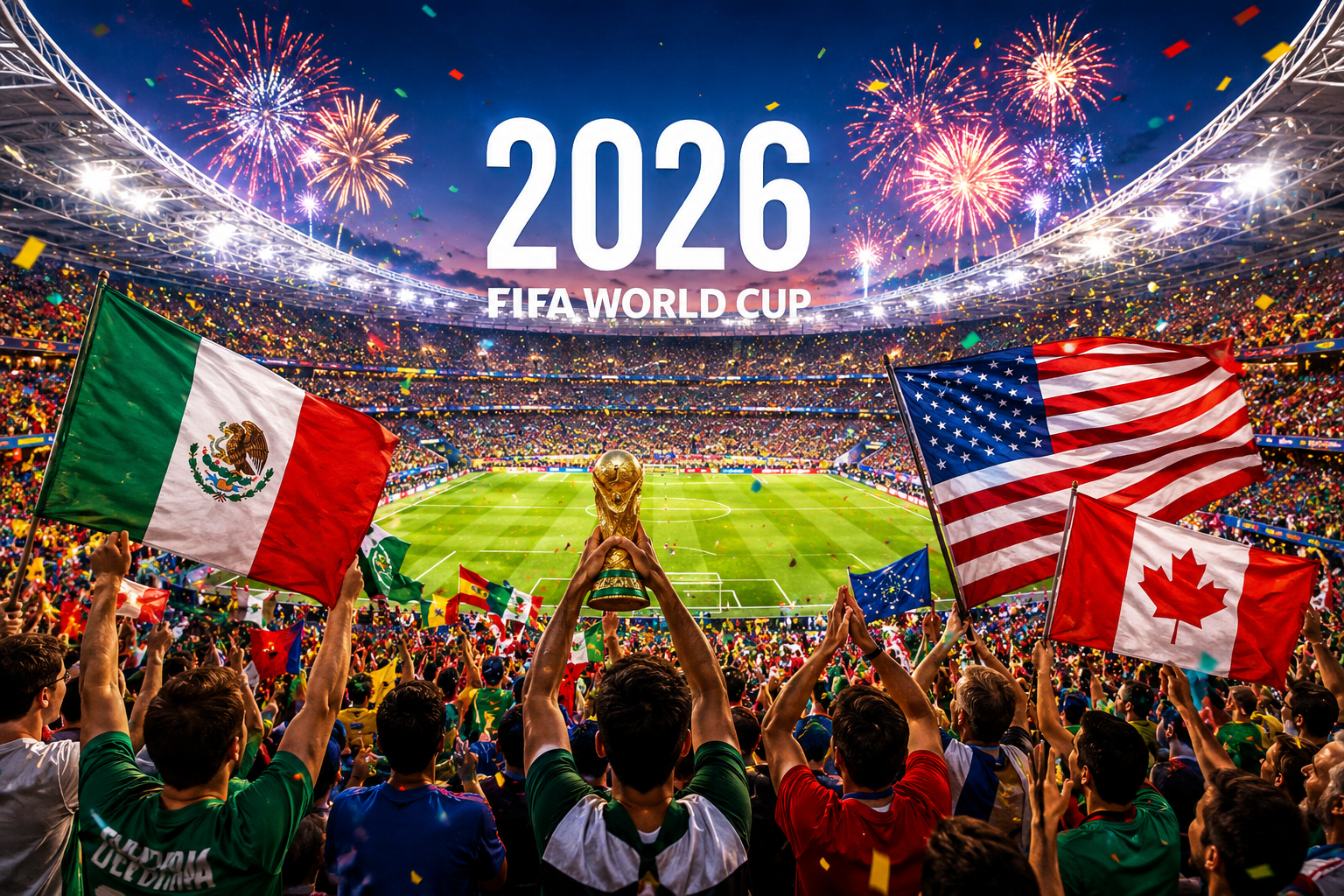
The FIFA World Cup 2026 is turning into a worldwide celebration even before the first whistle.
With 48 teams, 104 matches and three host nations, this will be the biggest edition in tournament history.
Fans are excited, but ticket prices, travel costs, security concerns and city-level preparations are also becoming major talking points.
From stadiums to fan zones, the world is already entering World Cup mode.
The FIFA World Cup 2026 fever is no longer just building slowly — it is spreading across countries, cities, social media platforms and fan communities around the world. The tournament will be hosted by the United States, Canada and Mexico, making it the first men’s World Cup to be played across three host nations. FIFA has confirmed that the 2026 edition will feature 48 teams and 104 matches, making it the largest FIFA World Cup in history.
For football fans, this is more than a tournament. It is a global festival that mixes sport, travel, national pride, culture, music, food, tourism and emotion. The tournament is scheduled to run from June 11 to July 19, 2026, across North America, according to the UK government’s official travel guidance for World Cup visitors.
The biggest World Cup ever is already creating global emotion
The scale of the 2026 World Cup is the main reason behind the excitement. In earlier editions, the tournament included 32 teams. This time, 48 countries will participate, giving more nations a chance to appear on football’s biggest stage. For many fans, this means their country may have a stronger chance of qualification, and for neutral viewers, it means more stories, more underdogs and more emotional matches.
This expanded format has also changed the way fans are planning the tournament. People are not only looking at their own national team’s matches; many are planning full travel routes across host cities. Families, football clubs, student groups and fan communities are already discussing ticket availability, accommodation, stadium travel and match-day experiences.
Readers who followed our earlier coverage can also read our related news post on World Cup 2026 Fever Begins Worldwide as Fans Turn Football’s Biggest Tournament Into a Global Festival, where we explained how the tournament is becoming a worldwide cultural celebration even before kick-off.
Ticket demand shows the emotional power of football
One of the clearest signs of World Cup fever is ticket demand. FIFA announced in December 2025 that more than 150 million ticket requests had already been submitted during the random selection draw phase, calling it the highest demand in FIFA World Cup history.
That number shows how emotionally powerful the World Cup remains. Even though fans continue to complain about high prices, long travel distances and expensive hotels, the dream of watching a World Cup match inside the stadium is still incredibly strong. For many people, it is not just a sports event; it is a lifetime memory.
At the same time, the ticketing process has also created controversy. Reuters reported that FIFA cancelled some tickets mistakenly sold for free after a website checkout error, and the incident added more attention to ticketing concerns ahead of the tournament.
This is where the excitement becomes mixed with frustration. Fans want to be part of history, but many also feel that football’s biggest tournament is becoming too expensive for ordinary supporters.
Host cities are preparing for massive crowds
The 2026 World Cup will not only test football teams; it will also test cities. Sixteen host cities across the United States, Canada and Mexico are preparing for huge crowds, international visitors, packed public spaces and major security planning. The Guardian reported that fans across host cities are showing a mix of excitement and concern, with ticket prices, transport pressure, local planning and accessibility among the major talking points.
Mexico City is already preparing for large fan gatherings, with authorities increasing security around major fan-zone areas. The Guardian reported that Mexico’s Zócalo fan zone could attract crowds of up to 100,000 when Mexico opens against South Africa.
In the United States, some host venues are also facing off-field pressure. Reuters reported that more than 2,000 SoFi Stadium workers authorized a strike shortly before the venue’s first World Cup match, raising concerns around stadium operations and fan services.
These developments show that a tournament of this size is not just about football. It involves workers, transport systems, hotels, police, immigration authorities, food services, broadcasters and millions of fans moving across multiple countries.
Why this World Cup feels different
The 2026 edition feels different because it comes at a time when global football has become deeply connected with digital culture. Fans are not waiting for television coverage alone. They are following team news on social media, watching player training clips, tracking ticket resale prices, sharing travel plans and creating viral football content months before the tournament begins.
For young readers and students, the World Cup is also a powerful example of how global events create career opportunities beyond the field. Sports management, data analytics, broadcasting, tourism, content creation, event operations and digital marketing are all connected to major tournaments like this. Students interested in building future-ready skills can also read our guide on AI Tools Every Student Must Use in 2026, because modern sports, media and global events are increasingly shaped by technology and digital tools.
The World Cup is no longer only about what happens in 90 minutes. It is about the entire ecosystem around the game.
The world is entering football festival mode
Despite concerns around cost, ticketing and logistics, the emotional pull of the FIFA World Cup remains unmatched. Fans may complain about prices, but they still want to watch. Cities may worry about pressure, but they still want the global spotlight. Teams may face expectations, but they know that one great tournament can change football history forever.
The 2026 World Cup is expected to be more than the biggest edition by numbers. It could become one of the most watched and discussed sporting events of the decade. From North America’s stadiums to living rooms in India, Europe, Africa, South America and Asia, football fever is already spreading.
As the countdown continues, one thing is clear: the FIFA World Cup 2026 is not waiting for kick-off to become global. It has already begun in the minds of fans.
Source: FIFA World Cup 2026 official tournament guide
Read More: Latest News
Read More Interesting Content in My Blog Section of ‘The Thrive Journey’.