







NASA is testing a powerful next-generation space processor that could help future spacecraft make faster decisions on their own. The new technology, known as High Performance Spaceflight Computing, is designed to support artificial intelligence, autonomous operations, and real-time decision-making in extreme space environments.
The processor is being developed with Microchip Technology Inc. and NASA’s Jet Propulsion Laboratory. It is expected to deliver more than 100 times the computing capability of current space processors, making it important for future missions to the Moon, Mars, deep space, and advanced robotic exploration.
Space exploration is entering a new age where spacecraft may no longer wait for every instruction from Earth. NASA is now testing a next-generation space processor that could allow future spacecraft to think, react, and adapt more intelligently during missions far away from our planet.
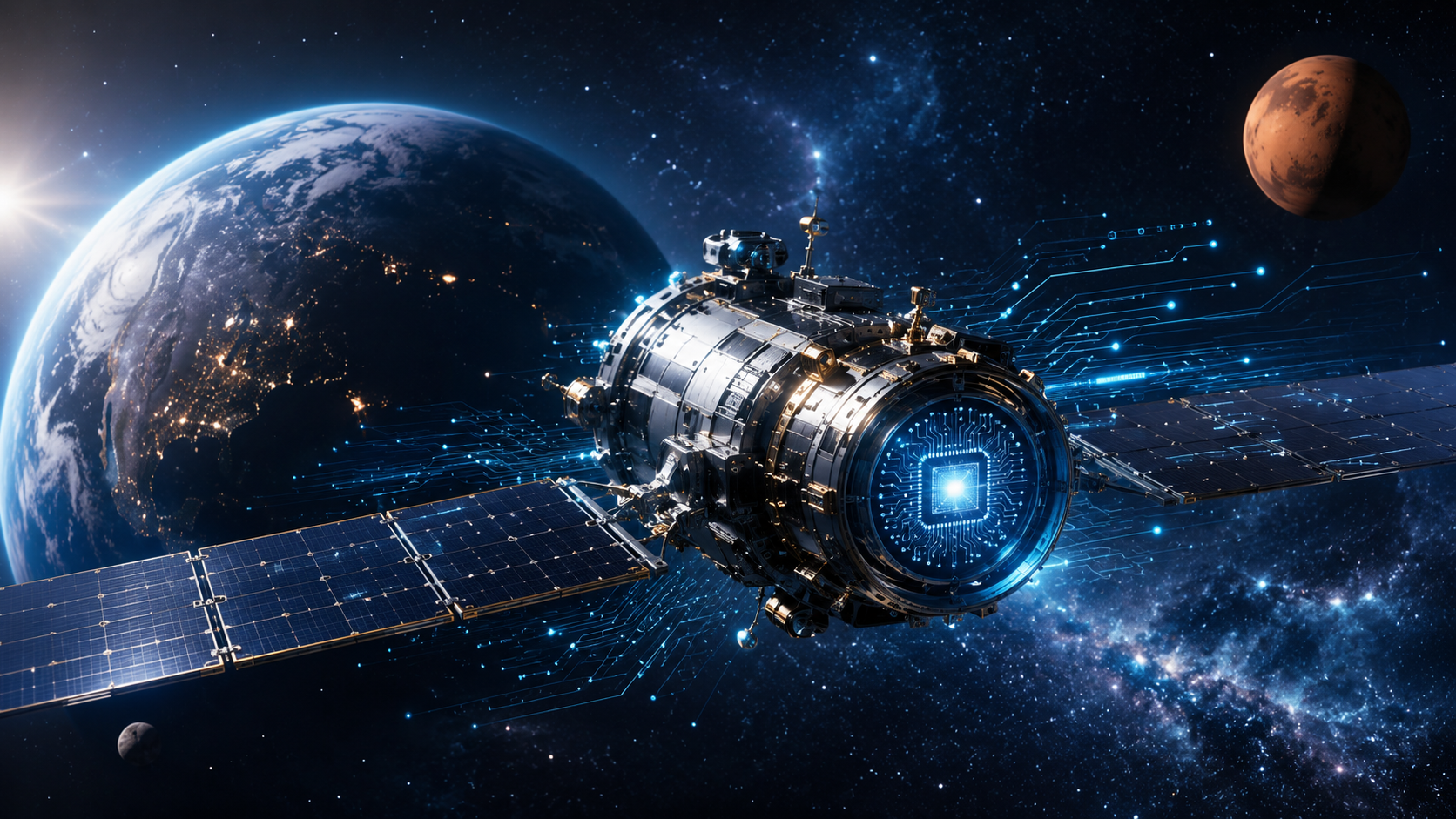
The technology is called High Performance Spaceflight Computing, or HPSC. It is not just another computer chip. It is being designed as a powerful space-grade processor that can survive harsh radiation, extreme temperatures, launch vibrations, and long-duration missions where repair is almost impossible.
NASA says the processor is being developed by Microchip Technology Inc. in partnership with NASA’s Jet Propulsion Laboratory. Samples have already been provided to early access partners in the defense and commercial aerospace industry, showing that the technology is moving from concept toward real testing and future use.
Why Spacecraft Need Smarter Computers
Most people imagine spacecraft as highly advanced machines, but the reality is more complex. Spacecraft computers must be extremely reliable, which often means they are not as powerful as modern commercial computers on Earth. A chip used in a deep-space mission has to survive radiation, temperature changes, and years of operation without failure.
This creates a big challenge. Future missions to the Moon, Mars, asteroids, and outer planets will require spacecraft to process huge amounts of data. Rovers may need to study terrain, avoid danger, analyze images, and decide where to move next. Satellites may need to detect unusual weather patterns, observe Earth, or track objects in space without waiting for human commands.
Communication delay is another major problem. A spacecraft near Mars cannot always receive instant instructions from Earth. Signals can take several minutes to travel between planets. For missions even farther away, the delay becomes much longer. That is why autonomous decision-making is becoming essential.
NASA’s HPSC processor is designed to support exactly this future. According to NASA, the technology could enable autonomous spacecraft to use artificial intelligence and respond in real time to complex environments where human input may not be possible.
A Big Jump in Space Computing Power
The HPSC project is expected to provide more than 100 times the computing capability of current space processors. This is a major leap because space computers have traditionally lagged behind Earth-based systems due to the difficulty of building hardware that can survive deep space.
NASA describes HPSC as a next-generation system-on-a-chip with high-performance AI dataflow processing and scalable vector computing capabilities. In simple words, this means the processor can handle advanced calculations, image analysis, scientific data processing, and AI-driven tasks more efficiently than older spaceflight computers.
The processor family is also being designed for different mission needs. NASA has highlighted a radiation-hardened version for geosynchronous, deep-space, and long-duration missions to the Moon, Mars, and beyond. Such missions need hardware that can operate reliably for years in difficult conditions.
This could become extremely useful for future robotic missions. A rover on Mars, for example, may be able to identify interesting rocks, detect unsafe paths, and adjust its movement without waiting for step-by-step instructions from Earth. A spacecraft exploring an asteroid could process images, identify surface features, and prioritize important scientific observations automatically.
AI in Space Could Change Mission Design
Artificial intelligence is already becoming important in many areas of NASA’s work, including mission planning, autonomous systems, aircraft, weather research, and data analysis. NASA notes that AI helps reveal trends and patterns from large datasets and supports systems capable of operating with greater independence.
The new processor could take this further by allowing AI to work directly onboard spacecraft instead of depending heavily on Earth-based computers. This matters because future missions will generate massive amounts of data. Sending everything back to Earth is not always practical because bandwidth is limited.
With stronger onboard computing, spacecraft could filter data before transmission. They could send only the most valuable observations, reducing delays and improving mission efficiency. This could be especially useful for missions to Mars, icy moons, asteroids, and deep-space regions where communication is difficult.
For readers following the rapid rise of intelligent machines, this development connects strongly with the bigger question of how far AI can go. In our detailed blog on Artificial General Intelligence and the future of machine intelligence, we explored how advanced AI could transform science, research, and decision-making across industries.
Why This Matters Beyond NASA
Although HPSC is being built for space, technologies developed for space missions often influence life on Earth. NASA’s research has historically contributed to improvements in computing, materials, communication, sensors, imaging, and navigation.
A reliable AI-capable processor designed for extreme environments could eventually support defense systems, disaster monitoring, autonomous vehicles, aviation, energy systems, remote medical devices, and critical infrastructure. NASA’s work often begins with space needs but later inspires broader technological applications.
This also shows how space exploration is no longer only about rockets and astronauts. The next phase may depend equally on computing power, AI systems, semiconductor design, robotics, and autonomous decision-making.
For readers interested in how artificial intelligence is already affecting human behavior and society, our earlier news report on AI’s growing psychological impact explains why this technology is becoming more than just a software trend.
A Step Toward More Independent Spacecraft
NASA’s new space processor does not mean spacecraft will become fully independent like science-fiction robots. Human scientists, engineers, and mission controllers will still play the central role in planning and guiding missions. But the processor could give spacecraft more ability to handle urgent situations, analyze complex data, and make limited decisions safely.
This is important because future missions will be more ambitious. Space agencies and private companies are planning lunar bases, Mars exploration, asteroid missions, commercial satellites, and deep-space observatories. All of these will need stronger onboard intelligence.
The HPSC processor could become one of the invisible but powerful technologies behind that future. It may not make headlines like a rocket launch, but it could shape how spacecraft explore the solar system for decades.
As NASA continues testing this next-generation processor, one thing is becoming clear: the future of space exploration will not depend only on how far spacecraft can travel, but also on how smart they can become once they get there.
Source: NASA
Read More: Latest News
Read More Interesting Content in My Blog Section of ‘The Thrive Journey’.