









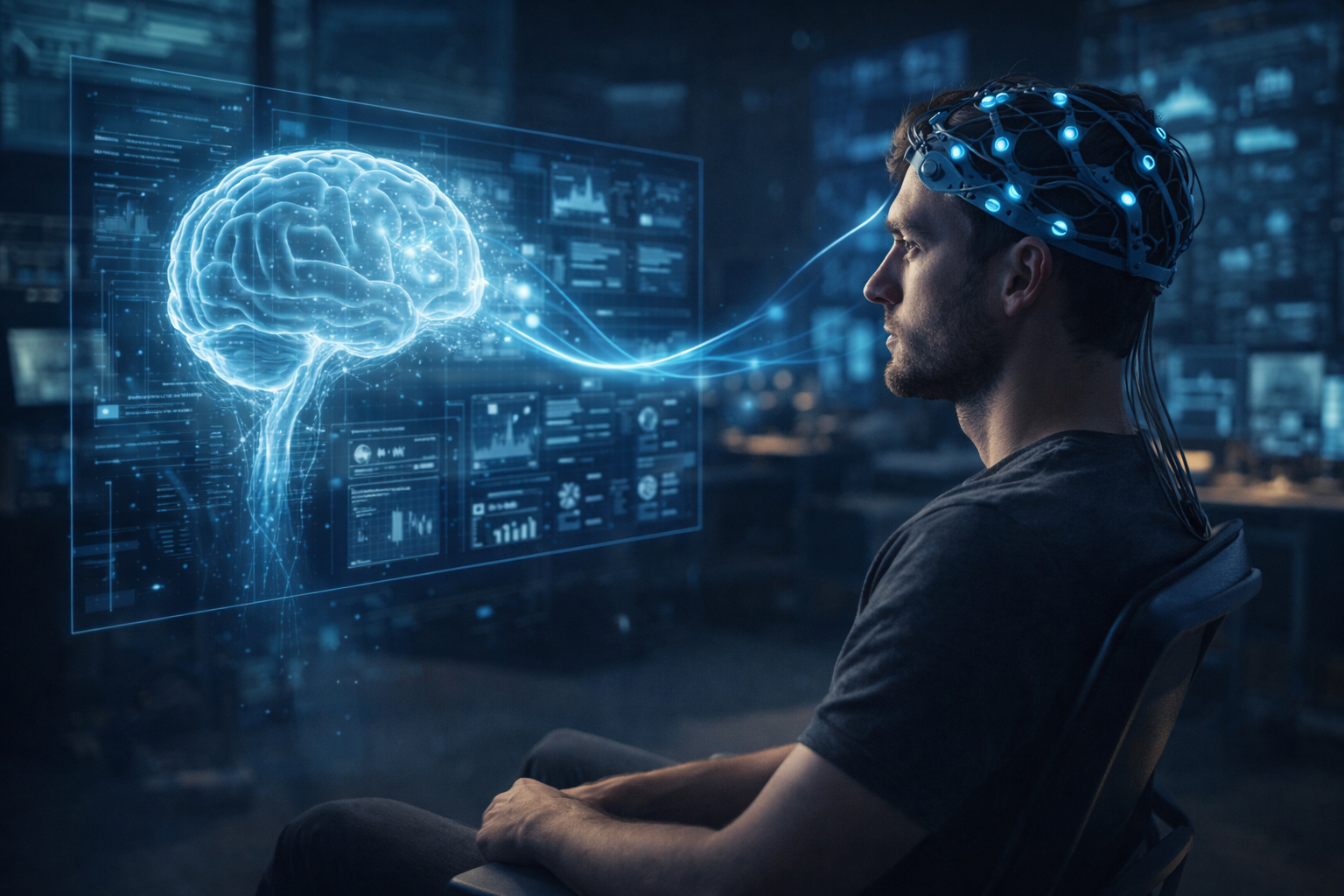
The line between human intelligence and machines is beginning to blur in a way that once belonged only to science fiction.
Brain-Computer Interface (BCI) technology is rapidly advancing, allowing direct communication between the human brain and external devices. What was once imagined in futuristic movies is now becoming a serious area of scientific research, with companies and research institutions pushing the boundaries of how humans interact with technology.
A New Era of Human-Machine Interaction
BCI technology works by capturing brain signals and translating them into commands that machines can understand. This means that, in the near future, people may be able to control computers, prosthetic limbs, or even communicate—using only their thoughts.
This breakthrough has already shown promising results in medical applications. Patients with paralysis have been able to move robotic arms and type messages using neural signals alone. Such developments are not just technological achievements—they are life-changing innovations.
Beyond Medicine: Expanding Human Capabilities
While healthcare remains the primary focus, experts believe BCI technology could soon expand into everyday life. Imagine controlling your smartphone, writing emails, or interacting with digital systems without touching a screen.
However, this advancement raises deeper questions about how technology may influence human identity and independence.
Interestingly, this shift connects closely with broader technological transformations discussed in our analysis on how artificial intelligence is reshaping human behavior and decision-making.
As machines become more integrated into our mental processes, the boundary between assistance and dependency becomes increasingly unclear.
According to recent research and expert insights on brain-computer interfaces, scientists are making steady progress in improving signal accuracy and usability.
Ethical and Psychological Concerns
With great power comes significant responsibility. Scientists and ethicists are raising concerns about privacy, data security, and mental autonomy.
If thoughts can be decoded, how can they be protected?
There is also concern about the psychological effects of merging human cognition with machine intelligence. Could constant connectivity to digital systems alter human emotions, decision-making patterns, or even personality?
These concerns are not entirely new. In fact, the growing influence of AI on human thinking has already been explored in our recent report on how artificial intelligence is impacting mental health globally.
BCI may take that impact to an entirely new level.
The Race to Build the Future
Several companies, including leading neurotechnology firms, are investing heavily in BCI development. Governments and research organizations are also funding projects aimed at understanding the brain at a deeper level.
According to recent research and expert insights on brain-computer interfaces, scientists are making steady progress in improving signal accuracy, reducing invasiveness, and enhancing real-time processing capabilities.
While widespread adoption may still take years, the pace of innovation suggests that BCI technology could become a part of daily life sooner than expected.
Update (April 2026)
Recent advancements indicate that non-invasive BCI systems are improving significantly, making the technology safer and more accessible. Experts believe that early consumer-level applications could emerge within the next decade.
As machines become more integrated into our mental processes, the boundary between assistance and dependency becomes increasingly unclear, something we explored in our analysis on how artificial intelligence is reshaping human behavior and decision-making.
These concerns are not entirely new, as we recently highlighted in our report on how artificial intelligence is impacting mental health globally.
Source: Nature
Read More: Latest News
Read More Interesting Content in My Blog Section of ‘The Thrive Journey’.