









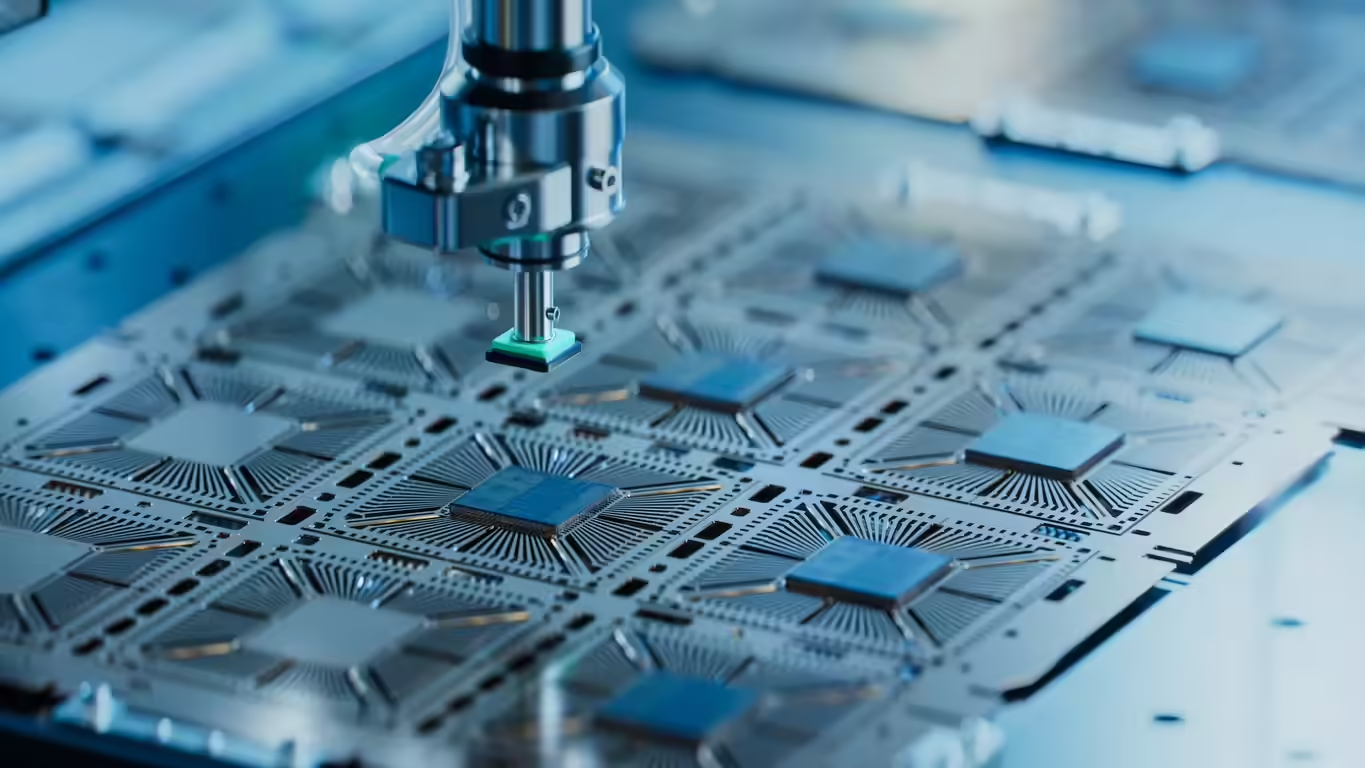
India is taking a decisive step toward strengthening its technological independence and global manufacturing presence with the accelerated rollout of Semiconductor Mission 2.0. The ambitious initiative aims to transform the country into a major global hub for semiconductor manufacturing, a sector that plays a crucial role in powering modern technology ranging from smartphones and automobiles to artificial intelligence systems and defense equipment.
The semiconductor industry has become one of the most strategically important sectors worldwide. Nations across the globe are investing heavily in chip manufacturing to reduce dependence on foreign suppliers and secure their technology ecosystems. Recognizing this shift, India has expanded its semiconductor strategy with significant financial incentives and policy support under Semiconductor Mission 2.0.
Massive Investment to Build Domestic Chip Ecosystem
Under the new phase of the mission, the Indian government is expected to support semiconductor manufacturing projects with investments estimated at ₹1.25 lakh crore (approximately $15 billion). The goal is not only to build semiconductor fabrication plants (fabs) but also to create a comprehensive ecosystem that includes chip design, testing facilities, packaging units, and supply chain infrastructure.
The semiconductor ecosystem requires advanced technology, skilled labor, and high capital investment. Building such an ecosystem in India could significantly reduce reliance on chip imports and strengthen domestic electronics manufacturing.
Industry experts believe the initiative could also attract global semiconductor giants to set up production facilities in India. Companies from the United States, Taiwan, Japan, and South Korea are already exploring opportunities to collaborate with Indian partners.
Why Semiconductors Matter for the Future
Semiconductors are essential components used in nearly every modern electronic device. From smartphones and laptops to electric vehicles and satellites, semiconductor chips power the digital economy.
The global chip shortage experienced during the COVID-19 pandemic exposed vulnerabilities in supply chains. Many countries realized that overdependence on a few semiconductor-producing regions could disrupt industries worldwide.
India’s Semiconductor Mission is therefore not just an industrial policy but also a strategic move to strengthen national resilience in the technology sector.
According to recent reports, global semiconductor demand is expected to grow significantly over the next decade, driven by emerging technologies such as artificial intelligence, quantum computing, 5G networks, and autonomous vehicles.
India hopes to capture a share of this rapidly expanding market by establishing domestic manufacturing capabilities.
For additional context on the global semiconductor industry, you can read this report on global semiconductor manufacturing expansion
Boost to Jobs and Innovation
One of the most promising aspects of Semiconductor Mission 2.0 is its potential to generate high-skill employment. Semiconductor manufacturing requires engineers, researchers, technicians, and specialized professionals.
Experts estimate that the semiconductor ecosystem could create tens of thousands of direct jobs and hundreds of thousands of indirect jobs across the electronics and manufacturing sectors.
Indian engineering institutions are also expected to benefit as demand for semiconductor design and chip engineering skills increases.
Additionally, India already has a strong presence in semiconductor design services. Many global technology companies run large chip design centers in cities such as Bengaluru, Hyderabad, and Noida. With manufacturing capabilities added to the equation, India could become a complete semiconductor powerhouse.
Strengthening India’s Position in Global Technology
Semiconductor Mission 2.0 is also aligned with India’s broader goal of becoming a global leader in electronics manufacturing. Programs such as Make in India and the Production Linked Incentive (PLI) scheme have already helped attract investment in smartphone manufacturing and electronics assembly.
By integrating semiconductor production with these initiatives, India aims to build a resilient technology ecosystem capable of competing with major global manufacturing hubs.
Technology analysts believe the next decade will be critical for countries seeking to establish leadership in the semiconductor industry. If the mission succeeds, India could emerge as a key player in the global chip supply chain.
The development is expected to strengthen India’s technological sovereignty while supporting innovation across sectors including telecommunications, defense, healthcare, and artificial intelligence.
India’s rapid technological expansion is also visible in other sectors, including social initiatives highlighted during the International Women’s Day event in Buxar highlighting women’s role in society.
Source: Reuters
Read More: Latest News
Read More Interesting Content in My Blog Section of ‘The Thrive Journey’.