







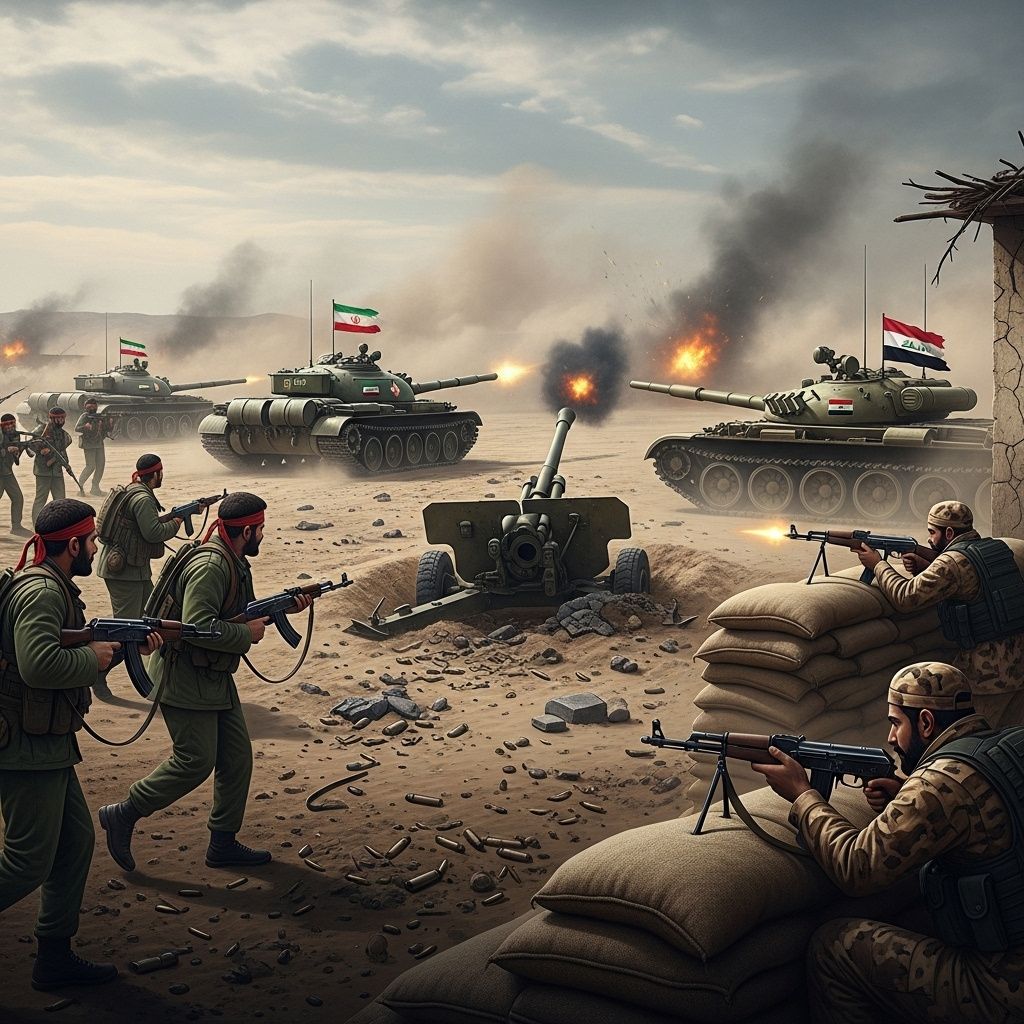
Tensions across the Middle East have intensified dramatically after Iran-backed militias launched a series of attacks inside Iraq, raising fears that the ongoing regional conflict could spread into a wider war. Security analysts warn that Iraq may increasingly become a key battleground as rival powers compete for influence and military advantage in the region.
The escalation follows months of rising hostilities between Iran, Israel, and allied forces. While the conflict initially appeared limited to targeted military strikes and proxy confrontations, the latest developments suggest that the situation could be entering a far more dangerous phase.
Several rocket and drone attacks have reportedly targeted military facilities used by coalition forces in Iraq. Although damage assessments are still ongoing, regional governments and international observers are closely monitoring the situation due to the potential for rapid escalation.
Iraq Emerging as a New Frontline
Iraq has long been a strategic location in Middle Eastern geopolitics due to its geographic position and political alliances. The country shares a long border with Iran and hosts several armed groups that maintain close ties with Iranian military and political institutions.
Recent incidents suggest that some of these militias are increasingly active in response to developments in the wider regional conflict. Analysts say that these groups may attempt to pressure foreign forces operating in Iraq while signaling support for Iran’s strategic objectives.
If attacks continue, Iraq could become a central theater in the broader confrontation between regional powers and their allies.
Attacks Target Strategic Military Facilities
Reports indicate that several rockets and drones were launched toward military bases used by coalition forces. Security officials stated that air defense systems intercepted some of the projectiles, but the attacks still raised serious concerns about the safety of military personnel stationed in the region.
Military commanders have warned that repeated strikes on strategic installations could trigger retaliatory responses, potentially escalating the conflict further.
Defense experts believe that drone warfare and long-range rocket systems have significantly changed the nature of modern regional conflicts. These weapons allow armed groups to strike high-value targets while maintaining relative mobility and concealment.
Regional Powers Closely Watching the Situation
Governments across the Middle East and beyond are closely observing the developments in Iraq. The possibility that the conflict could spill into multiple countries has raised alarm among international diplomatic circles.
Several governments have called for restraint and renewed diplomatic engagement to prevent a broader regional war. However, the rapidly evolving security situation makes it difficult to predict how the conflict may unfold in the coming weeks.
Experts say that miscalculations by any party involved could quickly transform the current tensions into a larger confrontation.
Energy Markets and Global Trade at Risk
The Middle East remains one of the most important regions for global energy production. Any escalation of conflict involving Iran and neighboring countries could affect oil supply routes and international energy markets.
Investors and economic analysts are particularly concerned about potential disruptions to shipping routes in the Persian Gulf and nearby maritime corridors. These routes are responsible for transporting a large portion of the world’s oil exports.
Even small disruptions in the region can cause fluctuations in global energy prices, affecting economies far beyond the Middle East.
Proxy Warfare Increasing Regional Instability
One of the defining features of the current crisis is the increasing role of proxy groups operating across several Middle Eastern countries. These militias often maintain ideological or strategic alliances with larger regional powers, allowing conflicts to expand without direct state-to-state warfare.
In Iraq, these groups have historically played influential roles in domestic politics and regional security dynamics. Their involvement in the current conflict highlights how proxy warfare can rapidly complicate geopolitical situations.
Security experts warn that proxy conflicts are often unpredictable and difficult to control once they escalate.
Diplomatic Efforts Attempt to Prevent Wider War
Despite rising tensions, diplomatic efforts are continuing behind the scenes. International organizations and several global powers are urging dialogue and restraint in order to avoid a broader regional conflict.
Some diplomats believe that mediation efforts could still help reduce tensions if all sides are willing to engage in negotiations.
However, the success of these initiatives remains uncertain as military activities continue in multiple areas across the region.
Uncertain Future for Regional Stability
The latest attacks in Iraq underline the fragile nature of Middle Eastern security dynamics. With multiple countries and armed groups involved in overlapping conflicts, the situation remains extremely volatile.
Analysts believe the coming weeks will be critical in determining whether the crisis stabilizes or expands into a larger regional confrontation.
For now, Iraq’s role in the unfolding conflict will remain under intense global scrutiny as governments assess the potential consequences for regional and international security.
Rising tensions in Iraq are also influencing maritime security concerns discussed in our report Red Sea Military Tensions Escalate as Global Powers Increase Naval Presence, highlighting how conflicts across the region are increasingly interconnected.
Source: Reuters
Read More: Latest News
Read More Interesting Content in My Blog Section of ‘The Thrive Journey’.