








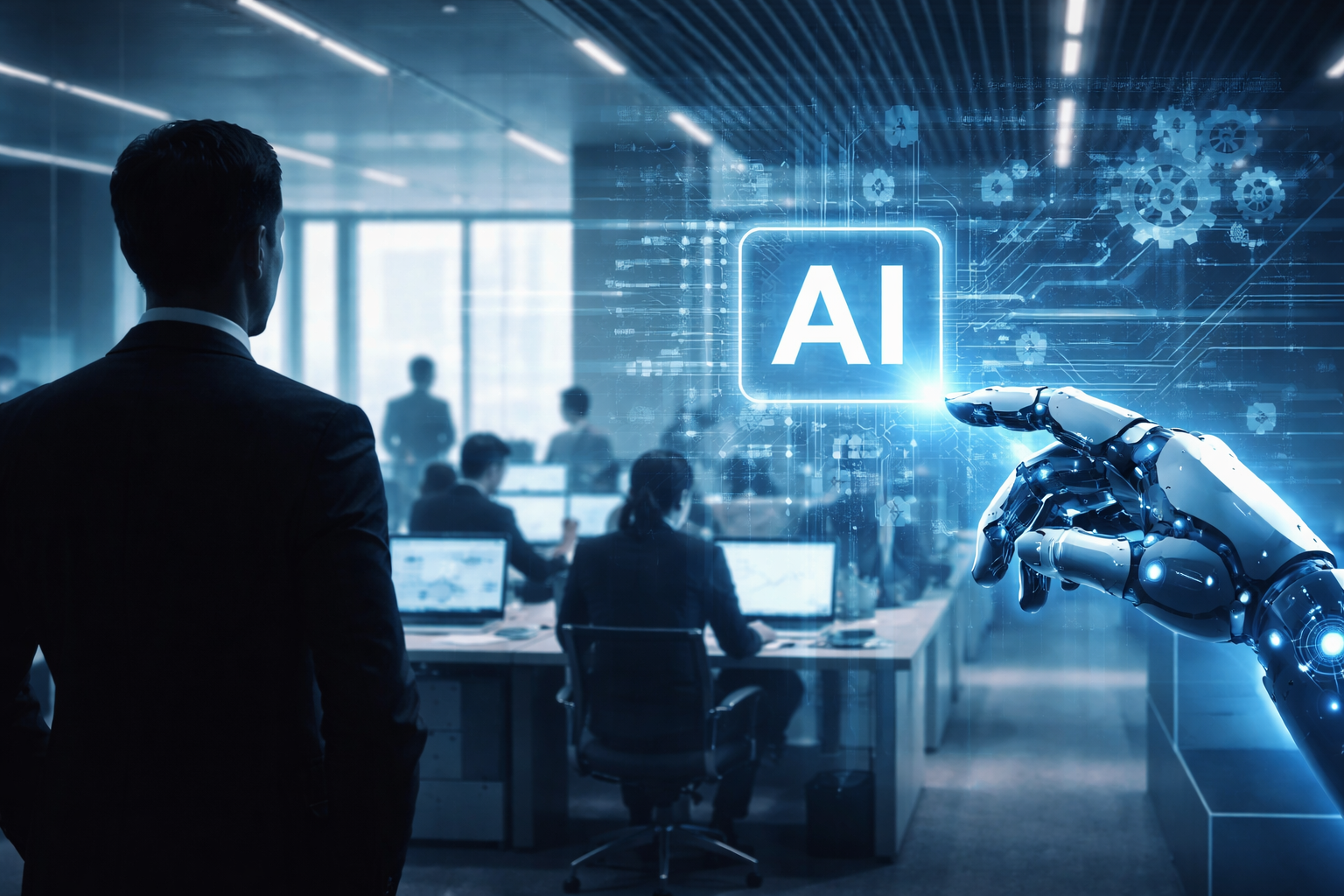
Artificial intelligence is no longer just a futuristic concept — it is now reshaping industries at an unprecedented pace. In 2026, concerns over job displacement have intensified as companies across technology, finance, and customer service sectors expand AI integration into core operations.
Several global firms have announced restructuring strategies that prioritize automation and machine learning tools to streamline processes, reduce operational costs, and improve efficiency. While executives describe these changes as productivity enhancements, workers are increasingly worried about long-term job security.
Growing Corporate Shift Toward Automation
Major corporations have accelerated investment in generative AI systems capable of handling data analysis, customer interactions, coding assistance, and content creation. Analysts note that AI tools are now performing tasks once considered exclusively human — especially in white-collar roles.
According to recent industry reports, companies are focusing heavily on:
Automated customer support systems
AI-assisted financial analysis
Predictive supply chain management
AI-driven software development
This shift is not limited to the tech sector. Retail, healthcare, and education industries are also testing AI tools to reduce manual workloads.
“According to recent industry coverage by Reuters, companies are accelerating AI integration to improve efficiency”.
Are Layoffs Directly Linked to AI?
While not all layoffs can be attributed solely to artificial intelligence, experts suggest automation is becoming a contributing factor. Economic uncertainty, cost optimization strategies, and AI-driven efficiency gains together are reshaping workforce requirements.
However, specialists emphasize that AI also creates new job categories. Demand is rising for:
AI system trainers
Data analysts
AI ethics specialists
Cybersecurity professionals
This indicates that while certain repetitive roles may decline, new skill-based opportunities are emerging.
The Skills Shift
Career advisors are urging professionals to adapt rather than panic. The job market is evolving toward hybrid skillsets — combining domain knowledge with technological literacy.
Students and working professionals are increasingly encouraged to learn:
Basic AI concepts
Data interpretation
Automation tools
Digital communication skills
Industry leaders argue that human creativity, strategic thinking, and emotional intelligence remain difficult to replicate fully through machines.
Global Policy Discussions Begin
Governments worldwide are now examining regulatory frameworks for AI deployment. Policymakers are debating how to balance innovation with employment stability.
Discussions include:
AI taxation models
Workforce retraining programs
Ethical AI deployment standards
Some economists believe this transition mirrors past technological revolutions — such as the industrial era — which disrupted short-term employment but created long-term economic growth.
What This Means for Individuals
For individuals, the message is clear: adaptability is becoming the most valuable skill. Continuous learning and flexibility may determine career resilience in the coming decade.
Artificial intelligence is not simply eliminating jobs — it is transforming them.
The critical question is not whether AI will reshape the workforce — it already is. The real question is how individuals and institutions will respond to this transformation.
As automation accelerates in 2026, the global workforce stands at a pivotal crossroads.
“Professionals are now focusing on building strong daily habits for long-term adaptability.”
Source: Reuters
Read More: Latest News
Do you believe AI will replace more jobs or create new opportunities? Share your thoughts below in the comment box.