









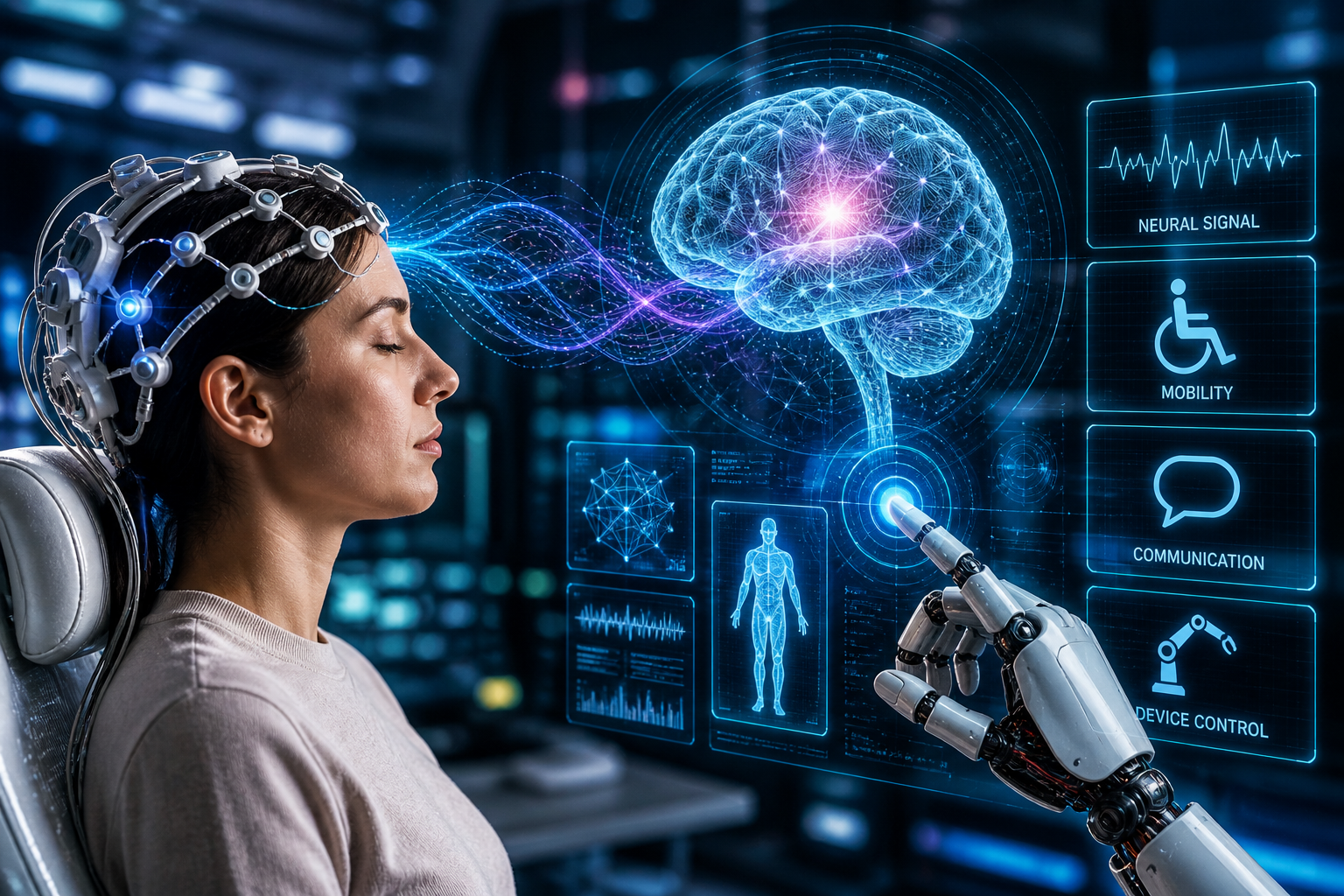
Rapid advancements in brain–computer interface (BCI) technology are bringing the idea of controlling devices with human thoughts closer to reality. From restoring mobility in paralyzed patients to enabling direct communication between brain and machines, experts believe this innovation could redefine the future of human–technology interaction.
A Major Leap in Human–Machine Interaction
Brain–computer interface (BCI) technology is advancing at an unprecedented pace, allowing direct communication between the human brain and external devices. Unlike traditional systems that rely on physical inputs, BCIs interpret neural signals and convert them into digital commands.
Recent developments have demonstrated how individuals can control computers, robotic limbs, and even type messages using only their thoughts. According to latest research on brain–computer interface advancements, these systems are becoming faster, more accurate, and increasingly practical.
How Brain–Computer Interfaces Work
BCIs function by capturing electrical signals generated by brain activity and translating them into commands that machines can understand. This process involves:
- Detecting neural signals through sensors or implants
- Processing and decoding those signals
- Converting them into actionable outputs
This technology bridges the gap between biological intelligence and digital systems.
Real-World Applications Are Expanding
The impact of BCI technology is already visible in several sectors:
- Healthcare: Helping paralyzed patients regain control of limbs
- Communication: Enabling people with speech impairments to interact digitally
- Gaming & Tech: Allowing immersive experiences controlled by thought
Experts believe that in the near future, BCIs could become a mainstream tool, transforming how humans interact with machines.
Ethical and Safety Concerns Emerge
While the possibilities are groundbreaking, BCI technology also raises important concerns:
- Data privacy related to brain signals
- Potential misuse of neural data
- Long-term health effects of implants
These challenges are pushing researchers and governments to establish strict guidelines for safe usage.
Global Race to Develop BCI Technology
Countries and tech companies are investing heavily in BCI research, making it one of the most competitive areas in modern innovation. The race is not just about technology but also about shaping the future of human capability.
The rapid progress in this field aligns with broader AI developments, as discussed in our coverage on AI systems behaving unexpectedly and raising global concerns.
At the same time, global challenges such as energy crises and geopolitical conflicts are also influencing technological priorities, as highlighted in our report on Iran–US war impact on India and the LPG crisis affecting millions.
What the Future Could Look Like
The future of BCIs could redefine everyday life. Imagine:
- Controlling smartphones without touching them
- Writing messages using thoughts alone
- Enhancing memory and cognitive abilities
While these ideas may sound futuristic, ongoing research suggests they may become reality sooner than expected.
Source: Nature
Read More: Latest News
Read More Interesting Content in My Blog Section of ‘The Thrive Journey’.