




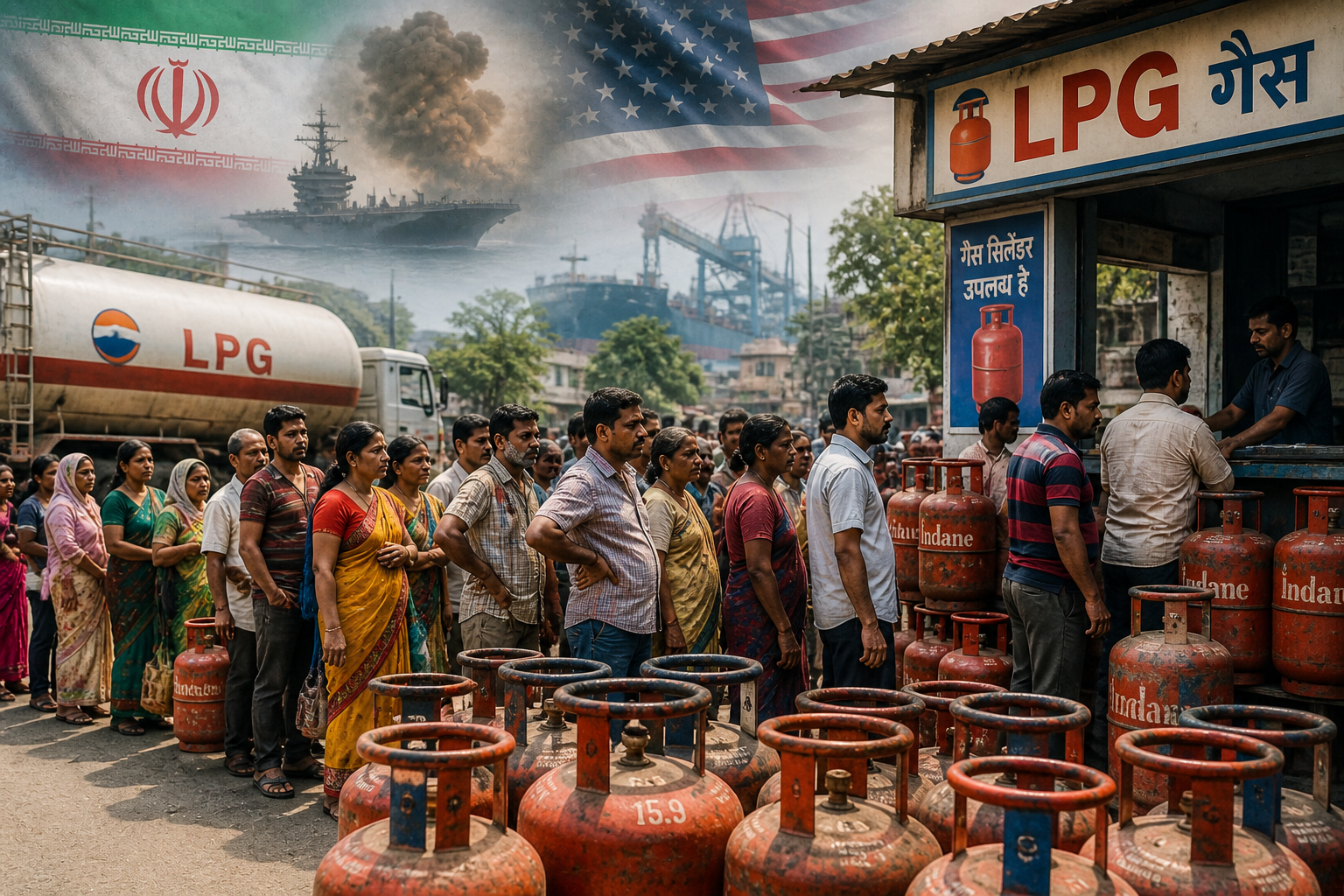
The ongoing Iran–US conflict is now directly impacting India, triggering a severe LPG crisis across multiple states. Supply disruptions, rising prices, and long waiting periods for cylinders are creating major challenges for households and businesses. The situation highlights India’s heavy dependence on global energy routes and raises concerns about long-term fuel security.
LPG Crisis Deepens as Iran–US Conflict Escalates
India is facing a growing LPG crisis as the ongoing Iran–US war disrupts global energy supply chains. A significant portion of India’s cooking gas imports passes through the Strait of Hormuz — a region now severely affected by the conflict.
With tensions escalating, delays in shipments and reduced supply have started affecting availability across the country.
Reports indicate that long queues outside LPG distribution centers and delayed cylinder deliveries are becoming increasingly common, especially in urban and semi-urban areas.
Why India Is Highly Vulnerable
India’s dependence on imported LPG has made the country particularly vulnerable to global disruptions. Nearly 60–90% of LPG imports rely on routes passing through the Gulf region, making any geopolitical instability a direct threat to domestic supply.
The closure or disruption of key shipping routes has slowed down supply chains, creating shortages and uncertainty in the market.
Prices Surge, Black Market Emerges
The crisis has already started impacting prices. In some regions, LPG cylinder prices have surged significantly, with reports of cylinders being sold at extremely high rates in the black market.
At the same time, rising global oil prices are putting pressure on India’s oil marketing companies, forcing them to consider price hikes to manage losses.
Households and Businesses Struggle
The shortage is not just affecting households but also small businesses, restaurants, and industries that rely heavily on LPG.
Many restaurants have started shifting to alternative fuels like wood and coal, which may increase food prices and create additional environmental concerns.
In some areas, people are even turning to induction stoves and other alternatives, showing how deeply the crisis is impacting everyday life.
Economic Impact Goes Beyond Fuel
The LPG crisis is part of a larger economic ripple effect caused by the Iran–US war. Rising fuel prices are expected to impact transportation, manufacturing, and overall inflation in India.
The weakening of the rupee and increasing import costs are adding further pressure on the economy, making this not just an energy issue but a broader economic concern.
National and Global Implications
This crisis highlights how global conflicts can directly affect everyday life in India. The situation also raises important questions about energy security and the need for alternative fuel strategies.
For broader political developments shaping India’s future, you can also explore our coverage on West Bengal Election 2026 shock result and changing political dynamics.
Additionally, the political landscape across India is evolving rapidly, as seen in our detailed analysis of Assam Election 2026 exit poll trends and BJP’s projected return to power:
What Lies Ahead?
The coming weeks will be crucial as India attempts to stabilize fuel supplies and manage rising demand. Government interventions, alternative sourcing strategies, and global diplomatic developments will play a key role in determining how long the crisis lasts.
For now, the Iran–US war has clearly shown how interconnected global events and domestic life have become.
Source: Times of India
Read More: Latest News
Read More Interesting Content in My Blog Section of ‘The Thrive Journey’.