









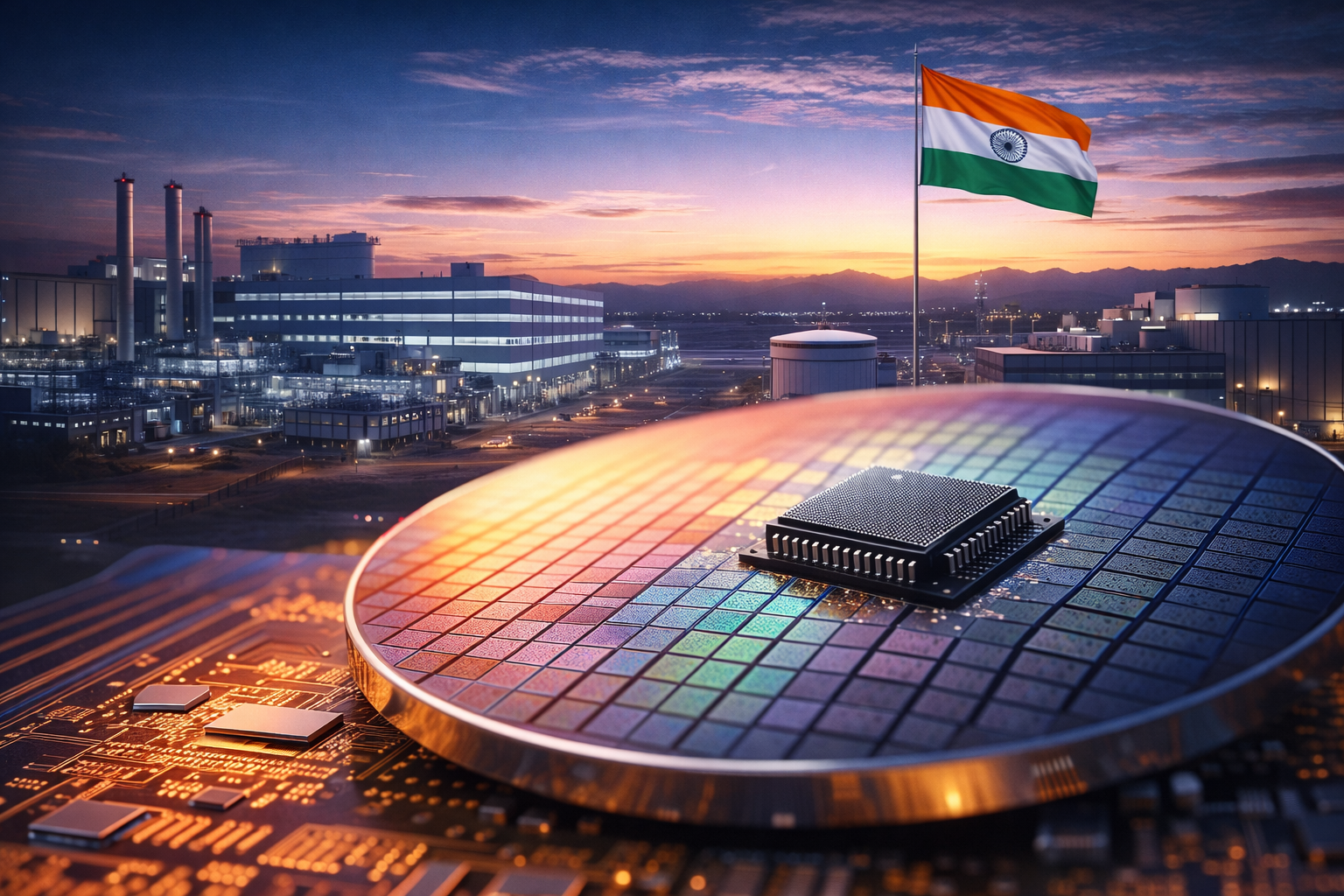
Gujarat is fast emerging as the centerpiece of India’s semiconductor ambitions, with large-scale chip manufacturing projects positioning West India as a critical node in global electronics supply chains.
West India’s industrial identity is undergoing a quiet but decisive transformation. While the region has long been associated with petrochemicals, ports, and heavy manufacturing, semiconductors are now redefining its future trajectory. Gujarat, in particular, is becoming the focal point of India’s attempt to enter one of the world’s most strategic and complex industries.
Unlike traditional manufacturing, semiconductor fabrication requires long-term commitment, stable policy, massive capital, and ecosystem depth. The fact that multiple projects are progressing in Gujarat suggests that this push is no longer aspirational—it is structural.
Why Semiconductors Matter More Than Any Other Industry
Semiconductors sit at the heart of modern economies. From smartphones and electric vehicles to defence systems and data centres, chips determine technological competitiveness. Global supply disruptions in recent years exposed how concentrated chip manufacturing had become, pushing countries to rethink their dependence on a handful of regions.
India’s response has been to build domestic capacity, and Gujarat’s selection as a hub reflects its infrastructure readiness, land availability, power reliability, and industrial governance model. For West India, this represents a move up the industrial value chain—away from volume-led production toward strategic manufacturing.
Gujarat’s Advantage: Infrastructure Before Incentives
What sets Gujarat apart is not incentives alone, but execution capability. Semiconductor fabs demand uninterrupted power, ultra-pure water, advanced logistics, and predictable regulation. Gujarat’s industrial zones, particularly emerging clusters, were already aligned with these requirements before chip projects were announced.
This readiness reduces execution risk—one of the biggest deterrents in semiconductor investment globally. As a result, investors view Gujarat not just as an India bet, but as a long-term manufacturing base within Asia.
Jobs, Skills, and Ecosystem Creation
Semiconductor manufacturing does not create mass employment in the traditional sense, but it generates high-quality, high-skill jobs. Engineers, materials scientists, process specialists, and precision technicians form the core workforce, while a broader ecosystem of suppliers, logistics firms, and service providers grows around them.
For West India, this is significant. It encourages talent retention and attracts global expertise, gradually reshaping the region’s skill profile. Educational institutions and training programs are expected to adapt as demand for chip-related skills rises.
Strategic Implications for India and West India
Gujarat’s semiconductor momentum strengthens India’s strategic autonomy in technology. Even partial domestic chip capacity can reduce vulnerability to global shocks and improve negotiating power in international supply chains.
For West India, the implications go beyond economics. Semiconductor hubs tend to anchor innovation clusters—spawning R&D, design services, and advanced manufacturing over time. This can permanently elevate the region’s industrial complexity.
What Will Decide Success
The real test will be execution discipline over the next few years. Semiconductor projects have long gestation periods, and delays can be costly. Water management, supply-chain localization, and global demand cycles will all influence outcomes.
However, if timelines are maintained and ecosystem development keeps pace, Gujarat’s chip push could mark one of the most important industrial pivots in West India’s modern history.
Source: Reuters – India’s Gujarat gets first semiconductor plant
Read More: Latest News