









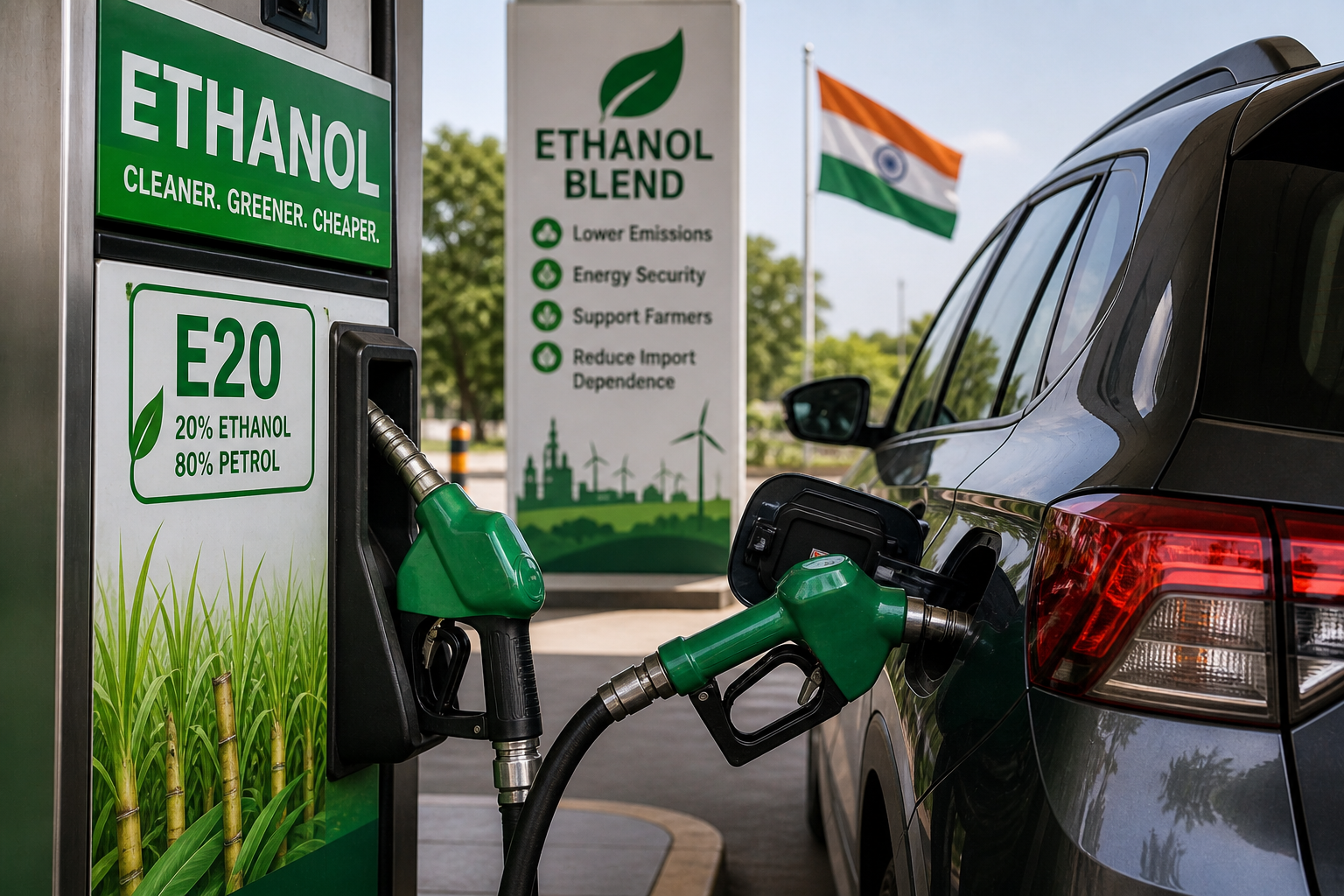
India is rapidly accelerating its push toward ethanol-blended fuel as an alternative to petrol, aiming to reduce import dependency and fuel costs. With government targets becoming more ambitious and automakers adapting to new fuel standards, ethanol is emerging as a key player in the country’s energy transition. But can it truly replace petrol for everyday drivers?
India’s Shift Toward Ethanol-Based Fuel
India is taking a major step toward energy independence by promoting ethanol as an alternative fuel for vehicles. The government has already achieved significant milestones in ethanol blending, with plans to reach higher blending targets in the coming years.
Ethanol, produced primarily from sugarcane and agricultural waste, is being seen as a cleaner and more sustainable alternative to petrol. According to India’s ethanol blending program progress and targets, the country is moving aggressively toward increasing ethanol usage in fuel.
Why Ethanol Is Gaining Popularity
There are several reasons why ethanol is becoming a preferred choice:
- Reduced dependence on crude oil imports
- Lower carbon emissions compared to petrol
- Potential cost savings for consumers
India imports a large portion of its crude oil, making it vulnerable to global price fluctuations. Ethanol offers a domestic alternative that can stabilize fuel prices over time.
Impact on Vehicle Owners
For everyday drivers, ethanol-blended fuel can bring both benefits and challenges.
Benefits:
- Slightly lower fuel costs in some regions
- Cleaner combustion, leading to reduced emissions
Challenges:
- Compatibility issues with older vehicles
- Slight reduction in fuel efficiency in higher blends
Automobile manufacturers are now developing flex-fuel vehicles that can run on higher ethanol blends, making the transition smoother.
Government Push and Policy Support
The Indian government has introduced multiple policies to support ethanol adoption, including incentives for ethanol production and infrastructure development.
The long-term goal is to reduce the country’s oil import bill and promote a more sustainable fuel ecosystem. This move also supports farmers by creating additional demand for agricultural produce.
Economic and Environmental Impact
Ethanol adoption is expected to have a dual impact:
- Economic: Reduced fuel imports and improved rural income
- Environmental: Lower greenhouse gas emissions
However, experts also caution about potential issues such as water usage in ethanol production and the balance between food and fuel crops.
How Global Factors Are Driving This Shift
Global events, including energy crises and geopolitical tensions, are accelerating India’s move toward alternative fuels. For instance, disruptions in global oil supply, as highlighted in our coverage on Iran–US war impact on India and the LPG crisis affecting millions, have exposed the risks of relying heavily on imported fuel.
At the same time, technological advancements are reshaping the future of energy and transportation, as discussed in our report on AI systems behaving unexpectedly and influencing future innovation trends.
Can Ethanol Replace Petrol Completely?
While ethanol shows great promise, a complete replacement of petrol is unlikely in the near future. Instead, a hybrid fuel ecosystem combining petrol, ethanol, electric vehicles, and other alternatives is expected to dominate.
The transition will depend on:
- Infrastructure readiness
- Vehicle compatibility
- Policy support
- Consumer adoption
Source: PIB
Read More: Latest News
Read More Interesting Content in My Blog Section of ‘The Thrive Journey’.