









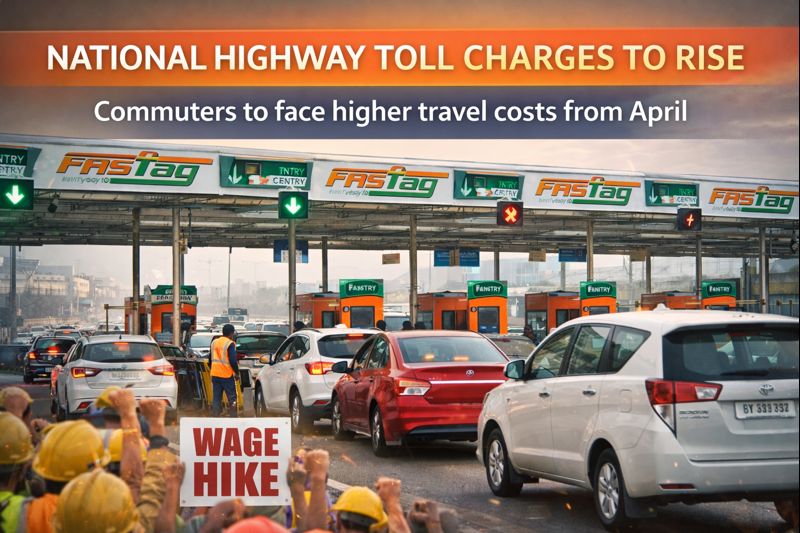
Daily commuters and long-distance travellers across India are set to face higher travel expenses as toll charges on several national highways are scheduled to increase from April, following the annual revision mechanism linked to inflation. The hike, which affects highways operated under the National Highways Authority of India (NHAI), will impact private vehicle owners, commercial transporters, and logistics operators nationwide.
Toll rates on national highways are revised every year based on changes in the Wholesale Price Index (WPI), a system designed to adjust infrastructure user fees in line with inflation. With prices of fuel, vehicle maintenance, and logistics already elevated, the upcoming toll hike is expected to add further pressure on household budgets and transportation costs.
Why Toll Rates Are Being Increased
According to officials familiar with the process, toll revisions are carried out annually on April 1, in line with contractual provisions for highway projects. The adjustment reflects inflation over the past year and applies to both public–private partnership (PPP) highways and those directly operated by NHAI.
Authorities argue that toll revenue is essential for:
Maintenance and expansion of highway infrastructure
Repayment of project loans
Funding new road and expressway projects
India has rapidly expanded its highway network in recent years, with thousands of kilometres added annually under flagship infrastructure programmes.
Impact on Daily Commuters and Transporters
For daily commuters who rely on highways for work travel, even small increases in toll fees can significantly raise monthly expenses. Commercial vehicle operators warn that cumulative toll hikes across multiple routes will increase freight costs, which may eventually be passed on to consumers.
Logistics firms say toll expenses already account for a substantial portion of operating costs, alongside fuel prices and driver wages. Industry bodies have urged authorities to balance infrastructure funding needs with affordability, especially for essential goods transport.
FASTag Users Will Also Pay More
The toll hike will apply to FASTag-based electronic toll collection, which is now mandatory across national highways. While FASTag has reduced congestion and waiting times, the revised rates mean users will see higher deductions per trip once the new prices come into effect.
Officials have advised motorists to maintain sufficient FASTag balance to avoid penalties or delays at toll plazas following the rate revision.
Infrastructure Push Continues Despite Higher Costs
The government has consistently defended toll revisions, pointing to improved road quality, reduced travel time, and enhanced safety on modern highways and expressways. Massive investments are ongoing in projects such as:
Expressways connecting major cities
Freight corridors
Border and coastal road networks
Experts note that while toll hikes are unpopular, they are a key part of funding India’s infrastructure-led growth strategy.
Public Reaction and Outlook
Public reaction to toll increases remains mixed. While many acknowledge better road infrastructure, commuters frequently raise concerns about affordability, especially when toll hikes coincide with rising fuel prices and general inflation.
Transport analysts suggest that future policy discussions may increasingly focus on rationalising toll structures, introducing distance-based pricing, or offering relief for frequent local commuters.
As the new toll rates come into effect from April, motorists are advised to plan travel budgets accordingly and stay updated on revised charges for specific routes.
Source: Reuters – India Section
Read More: Latest News