










Tamil Nadu is reinforcing its position as India’s electronics manufacturing powerhouse in 2026, as global and domestic companies expand capacity, deepen supplier ecosystems, and shift more high-value production to South India.
South India’s manufacturing story is entering a new phase, and Tamil Nadu is at the center of it. While the state has long been associated with automobiles and heavy engineering, electronics manufacturing is now emerging as its most strategic growth pillar. In 2026, the momentum is no longer about announcements—it is about execution, scale, and ecosystem maturity.
Industry trackers and government officials indicate that electronics production in Tamil Nadu continues to rise steadily, supported by a combination of policy clarity, infrastructure readiness, and global supply-chain realignments. As companies seek alternatives and diversification beyond traditional manufacturing bases, Tamil Nadu is increasingly viewed as a reliable long-term destination rather than a short-term cost play.
Why Electronics Manufacturing Is Expanding in Tamil Nadu
One of the biggest reasons behind the sustained expansion is ecosystem depth. Electronics manufacturing does not thrive on factories alone—it requires suppliers, skilled labor, logistics efficiency, and policy stability. Tamil Nadu has spent years building these layers, and the results are now visible.
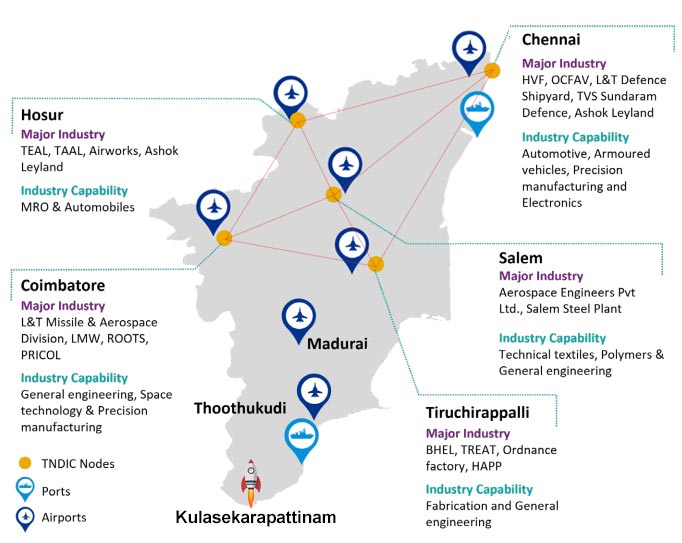
Global electronics players have steadily expanded operations in the state, particularly around Chennai and other industrial corridors. These clusters now support not just assembly but also testing, packaging, and component sourcing—moving India up the value chain.
This transition is critical. As manufacturing shifts from low-margin assembly toward higher-value processes, states that can support advanced operations are the ones that retain investment long-term.
Jobs, Skills, and the South India Advantage
Electronics manufacturing growth is translating into employment, but not only in traditional shop-floor roles. Demand is rising for technicians, quality engineers, supply-chain planners, and automation specialists—roles that align well with South India’s education and training strengths.
Tamil Nadu’s focus on skilling programs, in partnership with industry, is helping reduce onboarding friction for new facilities. This is especially important in electronics, where yield, precision, and compliance standards are unforgiving.
For South India, this shift is also reshaping migration patterns. Instead of talent moving exclusively toward IT services, manufacturing-linked careers are becoming a parallel growth path—creating a more balanced employment ecosystem.
Infrastructure and Policy: The Quiet Enablers
Manufacturing scale depends heavily on logistics. Tamil Nadu’s port connectivity, industrial corridors, and power reliability continue to give it an edge over competing locations. Investors consistently cite predictability—both in infrastructure delivery and regulatory processes—as a deciding factor.
Policy incentives, while important, are increasingly seen as secondary to execution capability. Companies prefer environments where timelines are met and expansions can happen without prolonged uncertainty. Tamil Nadu’s recent track record has reinforced confidence on this front.
This reliability matters not just to multinational firms but also to domestic component suppliers, many of whom are now expanding capacity alongside larger anchor clients.
What This Means for India’s Manufacturing Ambitions
Tamil Nadu’s electronics push fits into India’s broader goal of becoming a global manufacturing hub. While national policies provide direction, it is state-level execution that ultimately determines outcomes. South India’s experience shows that sustained results come from consistency rather than one-off incentives.
As electronics demand grows globally—driven by consumer devices, EVs, and industrial automation—states that can support scale, quality, and speed will capture a disproportionate share of investment.
For India, the lesson is clear: manufacturing leadership will belong to regions that treat industrial development as a long-term system, not a headline cycle.
Looking Ahead: From Volume to Value
The next phase for Tamil Nadu will be about moving from volume to value. Industry observers expect greater focus on design support, advanced components, and integration with emerging sectors like electric mobility and renewable-energy electronics.
If this transition succeeds, Tamil Nadu’s role in South India’s economy will deepen further—anchoring not just factories, but innovation-linked manufacturing that can withstand global market swings.
Source: electronics manufacturing in Tamil Nadu
Read more updates in South India industrial and technology news
Read More: Latest News