








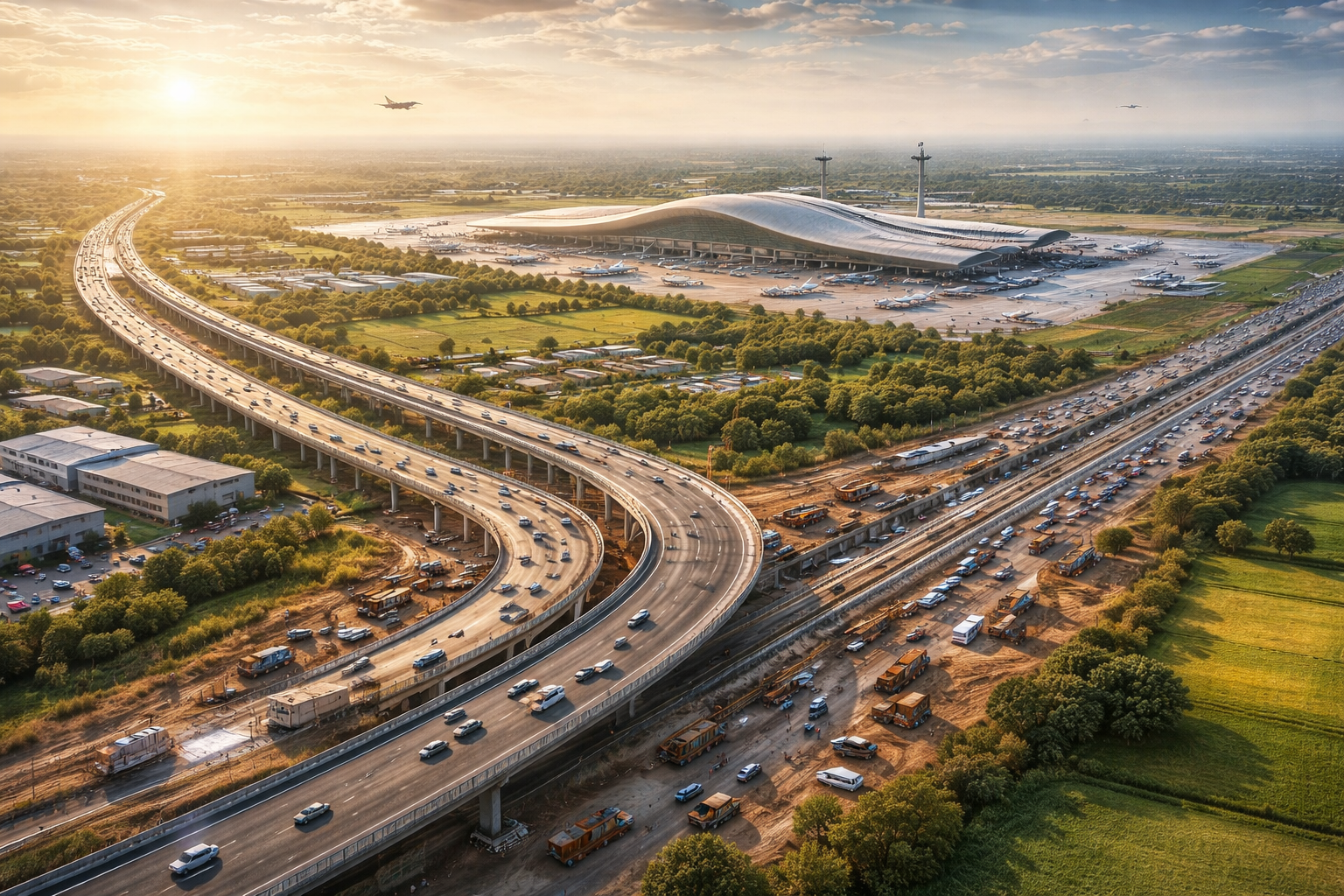
Major infrastructure projects across Delhi-NCR and Uttar Pradesh—including new expressways and the upcoming Noida International Airport—are strengthening North India’s logistics, connectivity, and investment profile in 2026.
Noida is entering a decisive infrastructure phase in 2026. What was once a region grappling with congestion and uneven connectivity is now positioning itself as a high-efficiency economic corridor. From multi-lane expressways to large-scale airport expansion, the transformation is both structural and strategic.
At the center of this shift is the rapid progress of connectivity projects aimed at integrating industrial clusters, urban centers, and export gateways more seamlessly than ever before.
Recent updates on North India infrastructure expansion projects indicate that improved logistics is becoming the foundation for sustained regional growth.
Expressway Networks Redefine Regional Mobility
The expansion of expressways across Uttar Pradesh and surrounding states is dramatically reducing travel time between major cities. Faster road connectivity is not just about convenience—it has direct economic implications.
Improved highways:
Reduce freight transit time
Lower logistics costs for manufacturers
Enable quicker movement of agricultural produce
Improve emergency and public services access
Industrial investors often evaluate connectivity before committing capital. With new expressway corridors operational or nearing completion, North India is strengthening its attractiveness as a manufacturing and warehousing destination.
Noida International Airport: A Strategic Multiplier
One of the most closely watched developments is the upcoming Noida International Airport. Positioned to ease pressure on Delhi’s aviation capacity, the airport is expected to serve as a major passenger and cargo hub.
Cargo handling capability, in particular, could significantly boost export efficiency for industries across western Uttar Pradesh, Haryana, and Rajasthan.
Air cargo speed, when combined with expressway networks, creates a powerful logistics ecosystem—particularly for high-value goods and time-sensitive shipments.
Industrial Corridors and Urban Expansion
Infrastructure expansion is also stimulating urban growth. Industrial parks and logistics hubs are emerging along major transport corridors, creating clusters of economic activity.
Real estate developers are aligning commercial and residential projects with infrastructure routes, anticipating increased demand from professionals and industrial workers.
This coordinated growth reduces pressure on central metropolitan areas while encouraging distributed economic development.
Employment and Investment Impact
Large-scale infrastructure projects generate both direct and indirect employment. Construction, engineering, materials supply, and logistics services all benefit during execution phases.
Long term, improved connectivity encourages:
Manufacturing expansion
E-commerce warehousing growth
Regional corporate headquarters establishment
For North India, this means greater economic diversification beyond traditional service-sector concentration.
Sustainability and Urban Planning Challenges
Rapid infrastructure development must balance environmental sustainability. Land acquisition, pollution control, and water resource management remain important policy considerations.
Authorities emphasize modern construction standards and green compliance measures to ensure that expansion does not compromise ecological resilience.
Sustainable urban planning will determine whether the infrastructure boom produces long-term stability or short-term strain.
What to Watch in 2026
Key indicators shaping North India’s growth outlook include:
Completion timelines of expressway corridors
Operational readiness of Noida International Airport
Industrial park occupancy rates
Logistics cost trends across the region
If delivery remains consistent, North India could experience one of its most significant structural upgrades in decades—reshaping its economic geography.
Source: Reuters
Read More: Latest News