







Astronomers studying data from the James Webb Space Telescope (JWST) have discovered unexpected features in some of the earliest galaxies formed in the universe. These findings are challenging existing theories about how galaxies developed shortly after the Big Bang and are offering scientists a deeper understanding of the universe’s early evolution.
Since its launch, the James Webb Space Telescope has become one of the most powerful tools ever used to observe deep space. Positioned nearly 1.5 million kilometers from Earth, the telescope is capable of capturing infrared light from extremely distant cosmic objects, allowing astronomers to observe galaxies that formed billions of years ago.
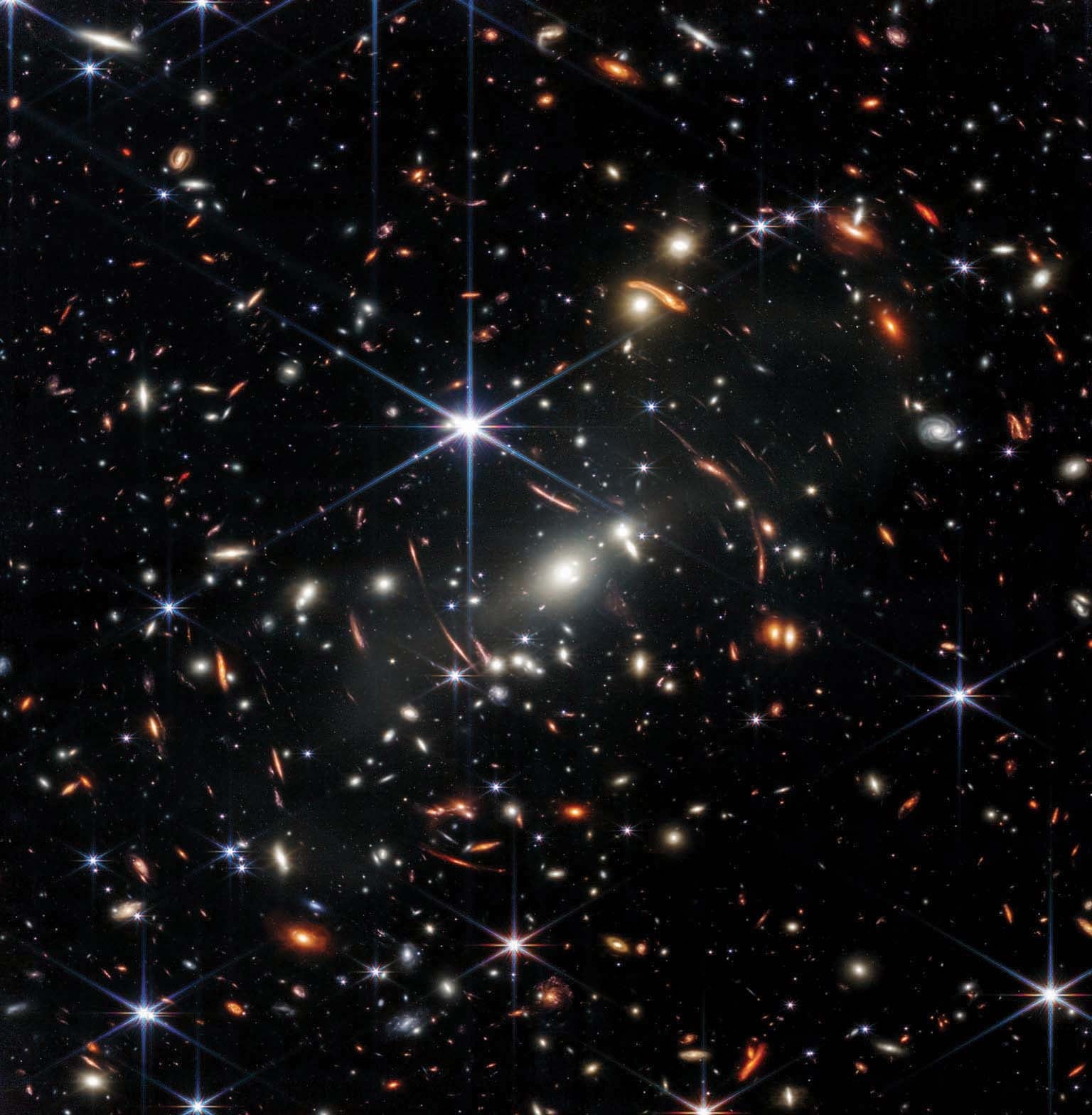
Recent observations from the telescope have revealed that some early galaxies appear to be larger, brighter, and more structured than scientists previously believed possible.
Observing the Earliest Galaxies in the Universe
The James Webb Space Telescope is designed specifically to explore the earliest stages of cosmic history. By observing infrared light emitted from ancient galaxies, the telescope can look back in time to periods just a few hundred million years after the Big Bang.
In earlier models of cosmic evolution, astronomers expected the first galaxies to be relatively small and irregular in shape. However, new data from the telescope suggests that several early galaxies already possessed surprisingly mature structures.
These observations indicate that galaxy formation may have occurred much faster than previously predicted by existing cosmological models.
According to recent discoveries from the James Webb Space Telescope, astronomers are now revisiting earlier theories about how galaxies formed and evolved in the early universe.
Unexpected Structures Challenge Existing Theories
One of the most surprising discoveries involves the structural complexity of early galaxies. Some of the galaxies detected by the telescope show clear signs of organized star formation and stable structures that resemble modern galaxies.
This level of organization was not expected so soon after the Big Bang. Scientists previously believed that galaxies required billions of years to evolve into stable shapes.
The new findings suggest that powerful gravitational forces, rapid star formation, and dense concentrations of cosmic matter may have accelerated galaxy development in the early universe.
These discoveries are prompting astrophysicists to reconsider several aspects of galaxy evolution theory.
Powerful Infrared Technology Enables Breakthroughs
The James Webb Space Telescope’s advanced infrared instruments play a crucial role in these discoveries. Unlike visible light telescopes, JWST can detect faint infrared signals that have traveled across the universe for billions of years.
As the universe expands, light from distant galaxies becomes stretched into infrared wavelengths. Webb’s sensitive detectors allow scientists to capture this ancient light and reconstruct images of galaxies that formed during the universe’s earliest epochs.
This technology enables astronomers to analyze the chemical composition, star formation rates, and structural properties of distant galaxies with unprecedented precision.
Implications for Cosmology and Astrophysics
The new observations are expected to influence multiple areas of astrophysics and cosmology. Understanding how the earliest galaxies formed can help scientists answer some of the most fundamental questions about the universe’s origins.
For example, the discoveries may provide insights into how dark matter influenced early cosmic structures and how the first generations of stars contributed to the development of larger galaxies.
Researchers are also investigating whether previously unknown physical processes may have played a role in accelerating early galaxy formation.
The findings demonstrate how modern space telescopes are transforming our understanding of the universe.
Global Collaboration in Space Research
The James Webb Space Telescope represents one of the most ambitious international space science collaborations ever undertaken. The mission is operated jointly by NASA, the European Space Agency (ESA), and the Canadian Space Agency (CSA).
Scientists from around the world analyze data collected by the telescope, contributing to a global effort to explore the deepest regions of space.
The telescope’s discoveries have already generated hundreds of scientific studies, and researchers expect many more breakthroughs in the coming years.
Future Observations May Reveal Even More Surprises
Astronomers believe that the discoveries made so far are only the beginning. As the James Webb Space Telescope continues to observe distant regions of the cosmos, scientists anticipate finding even more unexpected phenomena.
Future observations may uncover new types of galaxies, reveal details about the first stars in the universe, and help refine models that explain cosmic evolution.
These discoveries build upon earlier research into cosmic origins discussed in our article The Big Bang: The Moment When Nothing Became Everything, which explores the universe’s earliest moments and the forces that shaped its expansion.
The continued exploration of deep space promises to bring humanity closer to understanding the origins and structure of the universe.
These discoveries build upon earlier research into cosmic origins discussed in our article The Big Bang: The Moment When Nothing Became Everything.
Source: NASA
Read More: Latest News
Read More Interesting Content in My Blog Section of ‘The Thrive Journey’.