







India is preparing for a new phase of solar exploration as scientists begin planning future missions to study the Sun in greater detail. Following the success of the country’s first solar mission, Aditya-L1, the Indian Space Research Organisation is now exploring the possibility of launching advanced missions that could deepen our understanding of solar activity and its impact on Earth.
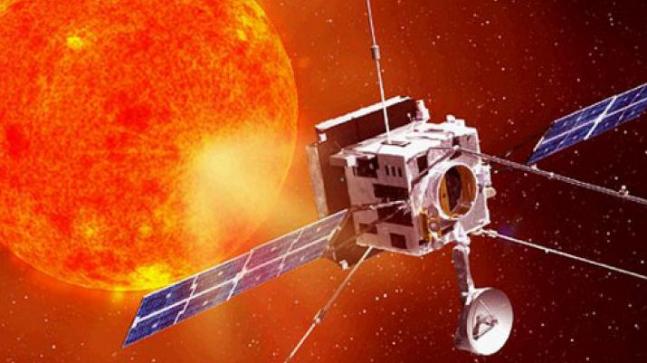
The Aditya-L1 spacecraft, launched in 2023 and successfully placed in orbit around the Sun–Earth Lagrange Point (L1), marked a historic milestone for India’s space program. Positioned about 1.5 million kilometers from Earth, the spacecraft continuously observes the Sun and studies solar winds, flares, and magnetic storms.
Encouraged by the mission’s early scientific results, ISRO scientists are now considering the next generation of solar observation missions that could expand India’s contribution to global space research.
Building on the Success of Aditya-L1
The Aditya-L1 mission was designed to observe the Sun without interruption. From its unique location in space, the spacecraft can monitor solar activity in real time and provide valuable data about the Sun’s outer atmosphere, known as the corona.
Solar eruptions such as solar flares and coronal mass ejections can send powerful streams of charged particles toward Earth. These events can disrupt satellite communication, GPS systems, and power grids.
By studying these solar events in detail, scientists hope to improve space weather forecasting, allowing governments and technology companies to better protect critical infrastructure.
Why Studying the Sun Is Important
The Sun may appear stable from Earth, but it is actually a highly dynamic and energetic star. Massive explosions and magnetic disturbances frequently occur on its surface, releasing enormous amounts of energy into space.
When these solar events interact with Earth’s magnetic field, they can trigger geomagnetic storms that affect modern technologies.
Researchers believe that better understanding solar activity will help scientists predict these disturbances earlier and reduce the risk of disruptions to communication networks and satellites.
India’s Growing Role in Solar Research
India’s solar research programs are becoming increasingly important as space agencies around the world collaborate to study the Sun.
The Aditya-L1 mission already includes multiple scientific instruments designed to observe solar radiation, charged particles, and magnetic fields.
Future missions could include more advanced imaging instruments and spectrometers capable of capturing even more detailed observations of solar phenomena.
Such missions would strengthen India’s role in international space research and provide new opportunities for collaboration with other space agencies.
Expanding India’s Space Ambitions
Over the past decade, India has rapidly expanded its presence in space exploration. Missions to the Moon, Mars, and the Sun have demonstrated the country’s growing technological capabilities and scientific expertise.
ISRO has also announced several upcoming projects, including the Gaganyaan human spaceflight program and new planetary missions.
The development of additional solar missions would add another important chapter to India’s expanding space program.
Looking Toward the Future
While the next solar mission is still in its planning stages, scientists say the data collected by Aditya-L1 will guide future research and mission design.
By continuing to study the Sun, researchers hope to better understand the processes that drive solar storms and influence space weather throughout the solar system.
For a country that has steadily built a reputation for cost-effective and innovative space missions, the next solar project could further strengthen India’s role as a major player in global space science.
Understanding the Sun and its evolution is closely linked to the larger story of how the universe formed. Readers interested in cosmic origins can explore our article The Big Bang: The Moment When Nothing Became Everything.
Space exploration is advancing rapidly across the world. In another recent report we discussed how NASA Scientists Detect Unusual Radio Signals from Deep Space, highlighting the mysteries scientists are still trying to understand beyond our solar system.
Source: Aditya-L1 solar mission overview
Read More: Latest News
Read More Interesting Content in My Blog Section of ‘The Thrive Journey’.