









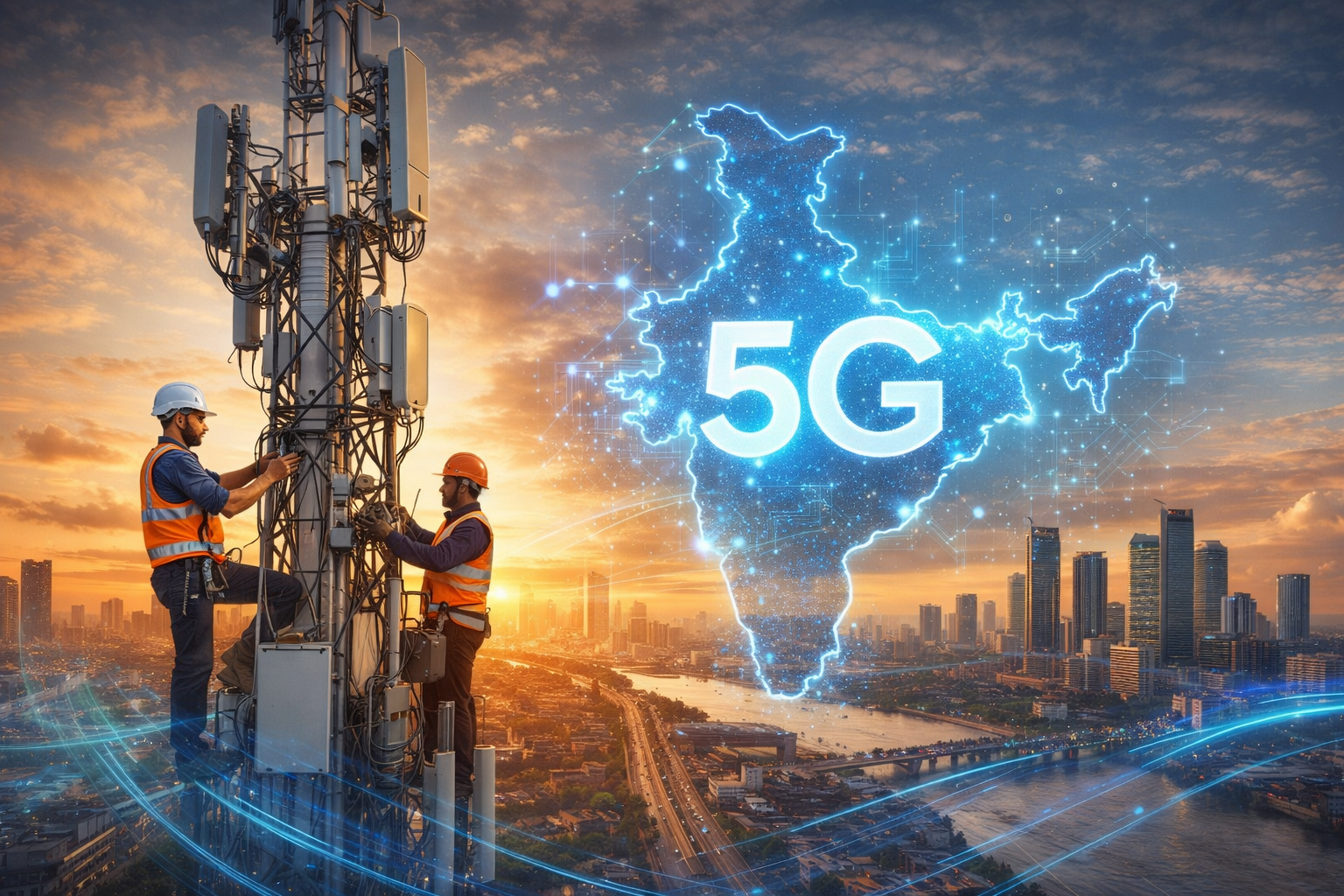
India is rapidly expanding its 5G network infrastructure as telecom operators enter the next phase of rollout, aiming to strengthen digital connectivity, boost innovation, and support emerging technologies such as AI, smart cities, and industrial automation.
India’s digital transformation journey is entering a decisive phase as 5G expansion gains momentum across urban and semi-urban regions. Telecom operators are accelerating infrastructure deployment, increasing tower density, and enhancing fiber backhaul networks to support high-speed connectivity nationwide.
The rollout of 5G technology marks a significant step in India’s ambition to become a global digital powerhouse. Beyond faster mobile internet speeds, 5G is expected to unlock new possibilities in sectors such as manufacturing, healthcare, agriculture, and transportation.
Why 5G Expansion Matters for India
5G technology offers ultra-low latency, higher bandwidth, and the capacity to connect millions of devices simultaneously. These capabilities are crucial for enabling smart infrastructure, industrial automation, and next-generation services.
As India continues to invest in digital public infrastructure—such as digital payments, identity systems, and e-governance—robust network connectivity becomes essential. Expanded 5G coverage will enhance the performance of cloud services, artificial intelligence applications, and Internet of Things (IoT) devices.
Telecom Investment and Infrastructure Growth
Major telecom providers are investing heavily in expanding coverage beyond metropolitan areas. The focus is shifting toward strengthening rural connectivity and ensuring reliable service quality across diverse geographic regions.
The expansion also involves partnerships with global technology firms to develop advanced network equipment and improve cybersecurity resilience. Fiber optic networks are being upgraded to support the higher data throughput required by 5G ecosystems.
According to India 5G rollout and digital infrastructure expansion, policymakers view the next phase of 5G expansion as central to India’s broader digital economy goals.
India technology and innovation news
Economic and Industrial Impact
The economic implications of 5G expansion are substantial. Analysts estimate that widespread 5G adoption could significantly contribute to India’s GDP growth over the coming decade. Enhanced connectivity is expected to stimulate innovation in startups, digital services, and advanced manufacturing.
Industries such as telemedicine, precision agriculture, and autonomous logistics stand to benefit from real-time data exchange and improved reliability. The technology may also play a key role in strengthening India’s semiconductor and electronics manufacturing ecosystem.
Challenges and Future Outlook
Despite rapid progress, challenges remain. Infrastructure costs, spectrum management, and regulatory coordination require careful planning. Ensuring equitable access in rural and remote areas will be crucial to avoid widening the digital divide.
Looking ahead, India’s 5G journey is likely to evolve toward advanced applications such as network slicing and edge computing. As connectivity deepens, the foundation for future technologies—including 6G research—may begin to take shape.
India’s digital infrastructure push reflects a long-term strategy rather than a short-term technological upgrade. The coming years will determine how effectively the nation leverages 5G to drive innovation, economic growth, and global competitiveness.
Source: Reuters
Read More: Latest News