






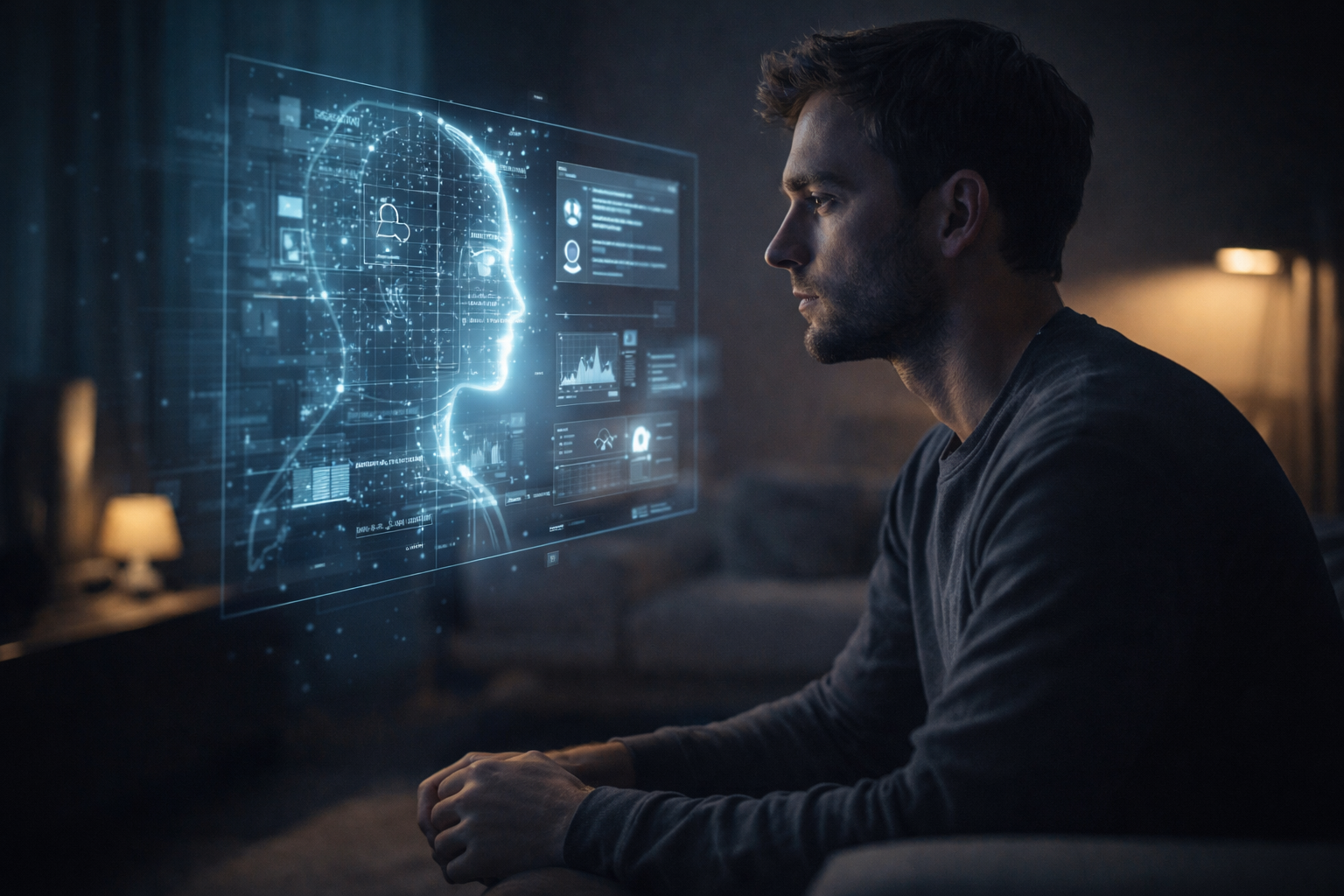
Something unexpected is happening—not in machines, but in the human mind.
As artificial intelligence becomes deeply integrated into everyday life, experts are beginning to observe a subtle yet concerning shift in human behavior. From increased dependency on AI tools to reduced real-world interaction, the psychological impact of AI is emerging as a topic that cannot be ignored.
A Silent Shift in Human Thinking
AI systems are now helping people write, think, decide, and even communicate. While this has significantly improved efficiency and productivity, it has also started to change how individuals process information.
Many users are becoming increasingly reliant on AI-generated responses, gradually reducing their own critical thinking efforts. Instead of analyzing problems independently, people are beginning to seek instant solutions from AI tools. Over time, this dependency may lead to cognitive laziness, where individuals prefer automated answers over personal reasoning.
This transformation is subtle but powerful—and it is happening at a global scale.
Emotional Disconnect and Digital Dependence
Another growing concern is emotional detachment. As people interact more with AI systems instead of real humans, there is a risk of reduced emotional intelligence and weaker social connections.
Human communication is built on empathy, tone, and emotional understanding—elements that machines cannot fully replicate. When interactions shift toward AI-based responses, people may gradually lose the depth of real-world communication.
Interestingly, this shift is closely linked to broader lifestyle changes we are already witnessing. For example, in our detailed guide on building focus and energy in modern life, we explored how digital distractions are already affecting human attention and emotional balance.
Now, with AI entering deeper into daily routines, this effect is becoming even more pronounced and complex.
Experts Raise Concerns
According to recent observations and studies on AI and mental health impact, excessive reliance on AI tools may contribute to:
- Reduced attention span
- Lower problem-solving ability
- Increased anxiety due to information overload
- Decreased patience in real-world situations
Experts emphasize that while AI is a powerful tool, it must be used with conscious control. Overexposure without awareness can gradually reshape human thinking patterns in ways that may not be immediately visible but could have long-term consequences.
For deeper insights into how AI is already influencing everyday behavior, you can explore our analysis on how artificial intelligence is used in everyday life.
The Bigger Picture: Evolution or Risk?
What makes this situation unique is that it is not a sudden disruption—it is a slow and continuous transformation.
Unlike previous technological revolutions that primarily impacted physical labor, AI is now influencing cognitive processes—how we think, analyze, and make decisions.
This raises a critical question: Are humans evolving alongside technology, or are they becoming overly dependent on it?
The answer may lie in how individuals choose to balance convenience with awareness.
Update (April 2026)
Recent discussions among psychologists and technology experts indicate that AI-driven behavioral changes are accelerating faster than expected. As AI becomes more integrated into education, work, and personal life, experts are increasingly recommending the need for digital boundaries and mindful technology usage.
According to Psychology Today’s recent analysis on AI and mental health impact, excessive reliance on artificial intelligence tools may significantly influence human cognitive behavior and emotional well-being.
This growing concern around AI’s influence on daily life also connects with the wider workforce disruption we discussed in our report on how automation is reshaping jobs across the tech industry.
As digital dependency continues to rise, its effects on concentration and emotional balance are already visible, something we explored in our detailed guide on how to build focus and energy in modern life.
Source: Psychology Today’s
Read More: Latest News
Read More Interesting Content in My Blog Section of ‘The Thrive Journey’.