









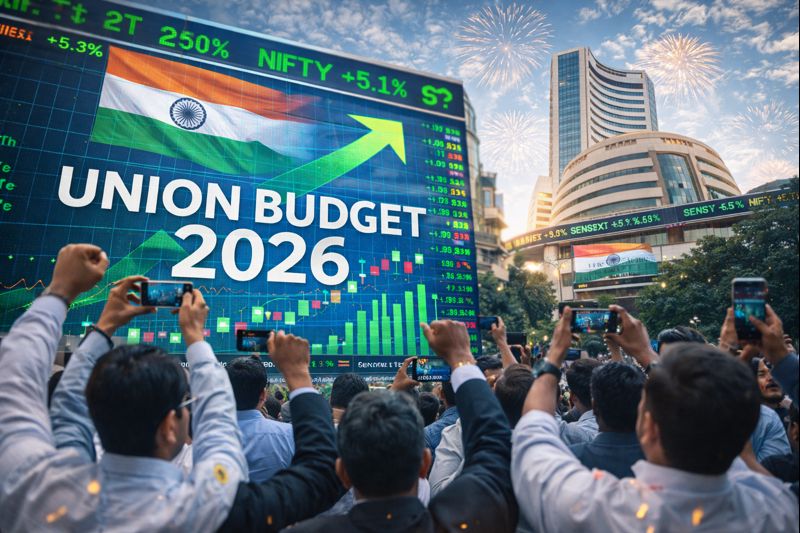
As India prepares for the upcoming Union Budget 2026, expectations are building across industries, investors, and the general public. The budget is widely seen as a critical policy moment that could shape India’s economic direction amid global uncertainty, domestic growth momentum, and rising aspirations for employment generation and infrastructure expansion.
With India continuing to position itself as one of the world’s fastest-growing major economies, policymakers are expected to strike a careful balance between fiscal discipline and growth-oriented spending.
Key Economic Context Ahead of Budget 2026
India enters the budget season with relatively strong macroeconomic fundamentals. Domestic consumption remains resilient, infrastructure activity is robust, and manufacturing is gradually benefiting from policy support. However, challenges such as global slowdown risks, inflation management, and fiscal consolidation continue to influence policy choices.
Economists note that the government’s approach in recent budgets has focused on capital expenditure-led growth, a trend that is expected to continue in 2026. This strategy aims to crowd in private investment while creating long-term productivity gains.
Infrastructure and Capital Spending in Focus
Infrastructure is expected to remain a cornerstone of the Union Budget. Continued investments in highways, railways, ports, logistics, and urban development are likely to be prioritised to sustain economic momentum and job creation.
Over the past few years, capital expenditure has played a key role in stimulating growth, particularly in construction, steel, cement, and allied industries. Analysts expect further allocations to flagship projects such as expressway networks, freight corridors, and metro rail expansions.
Employment and Skill Development Expectations
Job creation remains a major focus area as India’s working-age population continues to expand. Industry bodies are calling for targeted incentives for labour-intensive sectors such as manufacturing, textiles, electronics, and MSMEs.
Skill development, digital education, and workforce upskilling are also expected to receive attention, particularly as automation and AI reshape employment patterns. Measures that encourage formal employment and support startups may feature prominently in the budget framework.
Fiscal Discipline and Inflation Management
While growth remains a priority, the government is also expected to keep a close eye on fiscal discipline. Maintaining investor confidence and managing public debt levels will be important considerations as India navigates global financial volatility.
Inflation management remains another key factor influencing budget decisions. With food and energy prices subject to external shocks, policymakers may look to strengthen supply chains and provide targeted relief rather than broad subsidies.
India’s Global Economic Position
The upcoming budget is also being closely watched by global investors. India’s policy signals on taxation, ease of doing business, and trade openness could influence capital flows and long-term investment decisions.
According to global coverage of India’s economic policy direction, international observers view India as a key driver of global growth in the coming years, provided reform momentum is maintained and macroeconomic stability is preserved.

What Lies Ahead
As Budget 2026 approaches, expectations reflect a mix of optimism and caution. Economists believe that a growth-oriented yet fiscally responsible budget could reinforce India’s economic resilience and strengthen its position in the global economy.
The final contours of the budget will reveal how the government plans to navigate domestic priorities while responding to evolving global challenges.
Source: Reuters – India section
Read More: Latest News