







Global Trade Routes Under Pressure
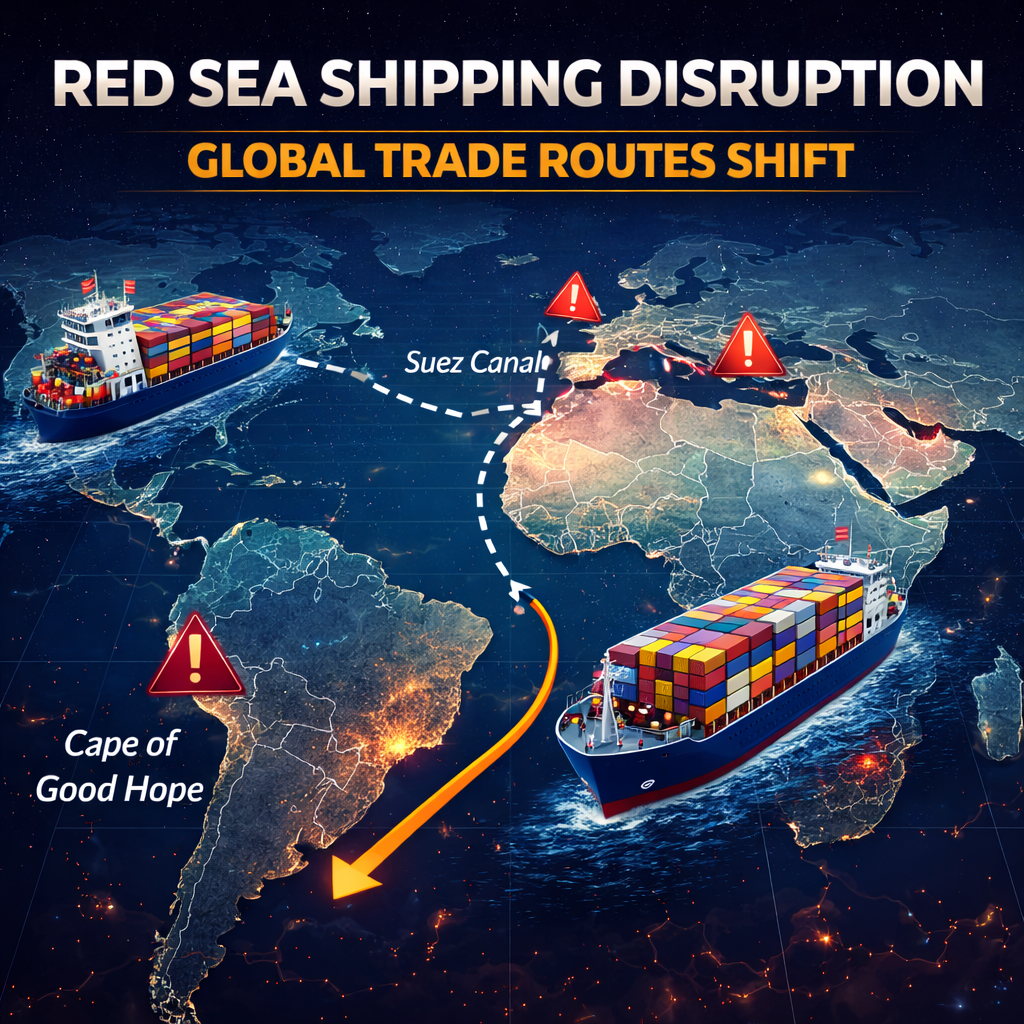
Global shipping companies are continuing to reroute vessels away from the Red Sea as security risks and regional tensions disrupt one of the world’s most critical maritime corridors. The Red Sea and the nearby Suez Canal route normally handle nearly 12 percent of global trade, making any disruption in the region a significant concern for international supply chains.
Shipping giants and logistics firms have increasingly chosen longer alternative routes around the southern tip of Africa to avoid potential threats. While this approach reduces security risks for vessels and crew, it adds thousands of kilometers to voyages between Asia and Europe.
These extended journeys are raising transportation costs, delaying deliveries, and creating ripple effects across global supply chains.
Suez Canal Pressure and Economic Impact
The Suez Canal has historically been one of the most important maritime shortcuts in global trade. When ships bypass the canal due to security concerns, cargo must travel around the Cape of Good Hope, which can add up to ten extra days to transit times.
For shipping companies, this means increased fuel costs, higher insurance premiums, and more complex logistics planning. Importers and exporters around the world are already beginning to feel the economic impact as freight costs gradually increase.
Economists warn that prolonged disruptions in this region could influence global inflation, especially if transportation costs continue rising across key shipping lanes.
Energy Markets Also Watching Closely
The Red Sea corridor is also vital for global energy shipments. Oil and liquefied natural gas cargo frequently travel through this region, connecting Middle Eastern producers with European and Asian markets.
Any instability that affects shipping routes can potentially influence global oil prices and energy supply dynamics. Energy traders and analysts are closely monitoring developments to assess how prolonged disruptions might affect the broader energy market.
So far, global energy flows have remained stable, but the risk of sudden supply shocks remains a concern for policymakers and markets.
Shipping Industry Adapts to Uncertainty
Major shipping companies are now developing contingency strategies to manage ongoing uncertainty. Some firms have increased security measures, while others are adjusting fleet schedules and exploring alternative logistical pathways.
Technology is also playing a role in helping companies monitor maritime threats and optimize shipping routes in real time. Advanced tracking systems and predictive analytics are helping logistics firms respond more quickly to evolving geopolitical risks.
Despite these efforts, the situation highlights how vulnerable global supply chains can be when critical trade routes face disruptions.
Global Trade Outlook
Analysts believe the shipping industry may continue facing uncertainty until regional security conditions stabilize. If tensions persist, companies could permanently adjust supply chains to rely less heavily on the Red Sea route.
Some experts suggest that long-term diversification of shipping routes and increased investment in port infrastructure may help reduce future risks.
However, the Red Sea and Suez Canal will likely remain central to global trade due to their strategic geographic importance.
As governments, shipping companies, and international organizations work to stabilize the region, global markets will continue closely monitoring developments that could influence trade flows and economic stability.
The economic impact of shifting trade routes also intersects with broader geopolitical dynamics discussed in our report on US–China Trade and Technology Tensions Enter New Phase.
Source: Reuters
Read More: Latest News