









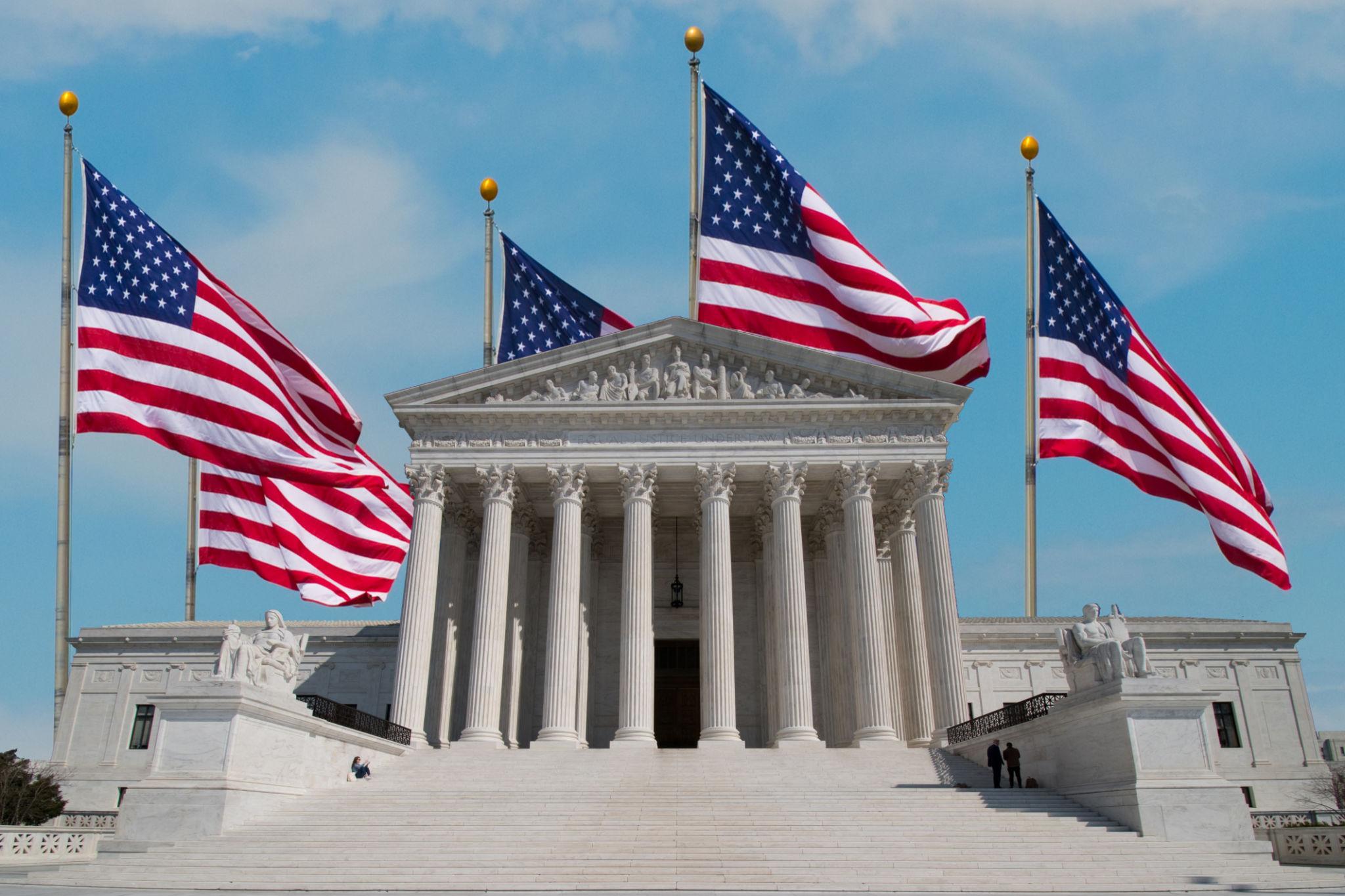
In a major legal setback for the White House, the U.S. Supreme Court ruled 6–3 that former President Donald Trump exceeded his authority in imposing sweeping global tariffs under emergency powers. The decision reinforces Congress’s constitutional authority over trade policy and triggered immediate reactions across political and financial markets.
In a landmark decision issued Friday, the U.S. Supreme Court struck down former President Donald Trump’s global tariff structure, ruling that the executive branch overstepped its authority under the International Emergency Economic Powers Act (IEEPA).
According to Reuters live coverage, the court ruled 6–3 that the president cannot unilaterally impose broad tariffs without explicit congressional authorization. The majority opinion emphasized that the U.S. Constitution grants Congress — not the executive branch — the power to levy taxes and regulate trade.
The ruling represents one of the most significant judicial interventions in modern U.S. trade policy.
Why the Court Rejected the Tariffs
The tariffs in question were imposed under emergency authority, which the administration argued was necessary to protect national security and economic stability. However, the Supreme Court concluded that using emergency powers for sweeping global tariffs stretched the statutory limits beyond congressional intent.
Legal experts note that while presidents have discretion in trade matters, large-scale tariff programs affecting global imports require legislative backing.
The decision could reshape how future administrations approach trade enforcement and economic sanctions.
Economic and Market Reaction
Following the ruling, U.S. financial markets responded positively. Investors viewed the decision as reducing uncertainty in trade policy. Major indexes saw gains, particularly in sectors heavily impacted by tariffs, including technology and manufacturing.
Businesses that had previously faced increased import costs are now assessing whether refunds or policy adjustments may follow. Analysts estimate that tariff collections under the disputed program may total over $175 billion, though questions remain about whether those funds will be returned.
Political Fallout
The ruling sparked immediate political reactions.
Supporters of the decision argue that it protects constitutional checks and balances, reaffirming separation of powers. Critics, however, say it limits executive flexibility during economic emergencies.
Trade policy has long been a politically sensitive issue, especially in relation to key global partners. This decision may influence upcoming legislative debates over how much authority presidents should hold in trade disputes.
What This Means for Global Trade
The decision could have broader international implications. Trading partners previously targeted by tariffs may reassess economic negotiations with the United States. Global markets often respond strongly to U.S. trade policy shifts, and the ruling introduces a new phase of predictability — but also uncertainty about next steps.
Congress may now face pressure to clarify trade authority laws to prevent similar disputes in the future.
Source: Reuters
Read More: Latest News