









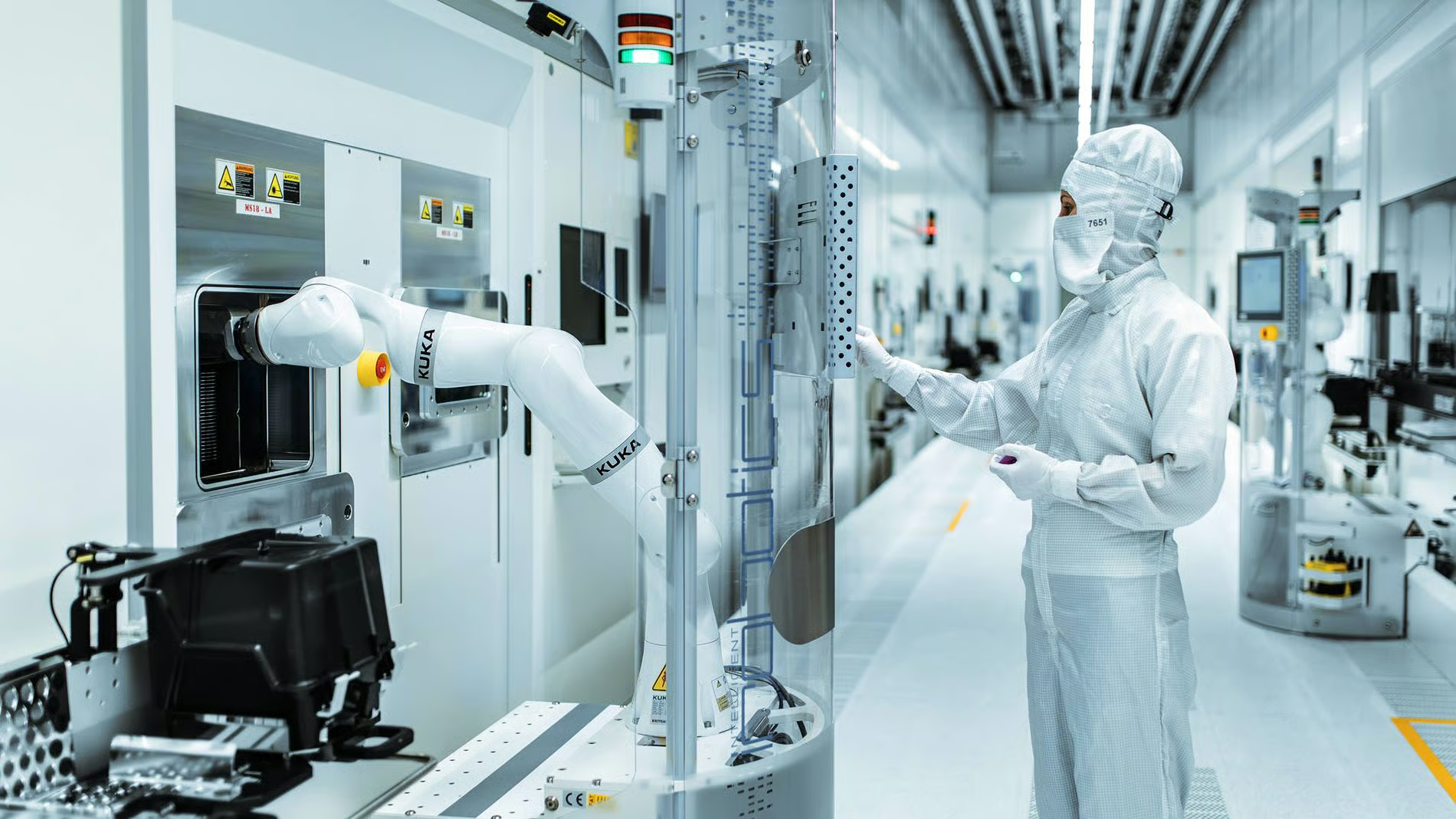
The global race to secure semiconductor supply chains is accelerating as major economies invest billions into domestic chip manufacturing, aiming to reduce dependence on foreign suppliers and strengthen technological sovereignty.
The global semiconductor industry has become a strategic battleground as governments and corporations ramp up investments in domestic chip production. Once considered a purely commercial sector, semiconductor manufacturing is now viewed as critical national infrastructure, influencing economic security, defense capabilities, and technological innovation.
Over the past few years, supply chain disruptions exposed vulnerabilities in global chip availability. From automobiles and smartphones to medical equipment and artificial intelligence systems, modern economies rely heavily on advanced semiconductors. Shortages revealed how concentrated production capacity in a few regions could disrupt entire industries.
global AI and technology updates
Why Semiconductors Matter More Than Ever
Semiconductors are the foundation of digital technology. Every modern device—from laptops to electric vehicles—depends on integrated circuits. As artificial intelligence, 5G networks, and advanced computing expand, demand for high-performance chips continues to surge.
Recognizing this dependency, major economies have launched ambitious initiatives to strengthen domestic manufacturing. Governments are offering subsidies, tax incentives, and public-private partnerships to attract chipmakers and build fabrication facilities.
Massive Public and Private Investment
The United States, European Union, China, and several Asian nations are investing heavily in new semiconductor plants. These facilities, often costing tens of billions of dollars, require cutting-edge equipment and highly skilled labor.
Industry leaders are collaborating with governments to accelerate construction timelines and secure supply chains. The push is not only about production volume but also technological leadership in advanced node manufacturing, which determines the performance and efficiency of chips.
According to global semiconductor supply chain and manufacturing investments, policymakers consider semiconductor supply security a cornerstone of economic resilience and national strategy.
Geopolitical and Economic Implications
The semiconductor race is reshaping global trade dynamics. Export controls, technology restrictions, and strategic alliances are influencing how chip technology moves across borders. Countries are carefully balancing cooperation with competition as they seek to protect intellectual property while maintaining market access.
For businesses, increased regional production could mean greater supply stability but also higher costs. Establishing advanced fabrication plants requires long-term planning, environmental approvals, and workforce development.
Long-Term Outlook
Experts suggest the semiconductor expansion is not a short-term response but a structural shift. As emerging technologies like AI, autonomous vehicles, and quantum computing mature, demand for chips will continue rising. Nations that succeed in strengthening domestic manufacturing may gain long-term economic and strategic advantages.
The next decade is expected to redefine the semiconductor landscape, with new hubs emerging and traditional power centers adapting to rapid technological change.
Source: Reuters
Read More: Latest News